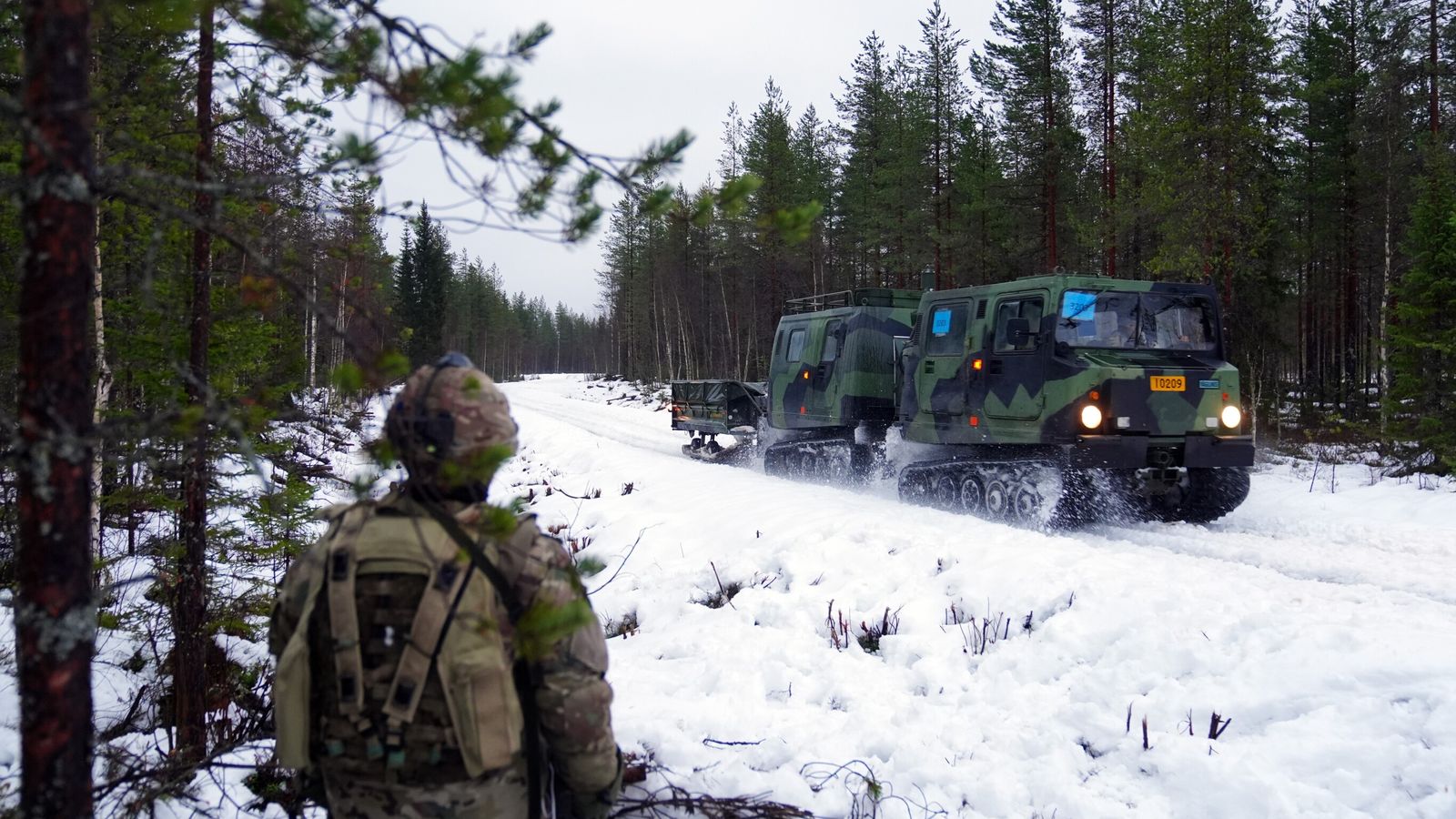
Britain's chief of the defence staff, Air Chief Marshal Sir Richard Knighton, urged the entire nation—beyond the armed forces—to 'step up' to deter a widening Russian threat in a speech at RUSI, warning that Putin's willingness to target neighbours threatens all of NATO and requires national resilience across industry, universities, transport and the NHS; MI6 chief Blaise Metreweli echoed the warning that the 'front line is everywhere.' The intervention, framed against concerns that the UK quietly dismantled Cold War mobilisation plans and that the government's 10-year path to lift defence spending from 2.3% to 3.5% of GDP is too slow, signals a push to restore whole-of-society preparedness and is likely to increase political and market pressure to accelerate defence spending and planning, with implications for defence-related supply chains and fiscal priorities.
Air Chief Marshal Sir Richard Knighton used a Royal United Services Institute lecture to call for a whole-of-nation response to the Russia/Ukraine war, warning that Vladimir Putin's willingness to target neighbours “threatens the whole of NATO, including the UK.” MI6 chief Blaise Metreweli reinforced the threat, saying the “front line is everywhere” and that the “export of chaos is a feature not a bug,” signaling intelligence and defence leadership alignment on elevated risk.
The speech sits against a policy backdrop where the UK plans to lift defence spending from 2.3% to 3.5% of GDP over 10 years, a pace senior military officers consider too slow, while officials say national mobilisation planning is being resurrected after Cold War-era plans were shelved. NATO-level comments in the article calling for large increases in air and missile defences and statements from the armed forces minister about “rapidly developing” national readiness imply growing political pressure to accelerate procurement and resilience spending.
For markets, the article’s moderately negative sentiment and a positive market-impact score (0.35) point to asymmetric implications: defence and resilience-oriented suppliers, cyber and infrastructure contractors, and logistics providers are likely near-term beneficiaries if procurement accelerates, while fiscal trade-offs and political debate over priorities create execution and timing risk for contractors and public finances.
AI-powered research, real-time alerts, and portfolio analytics for institutional investors.
Request DemoOverall Sentiment
moderately negative
Sentiment Score
-0.45
