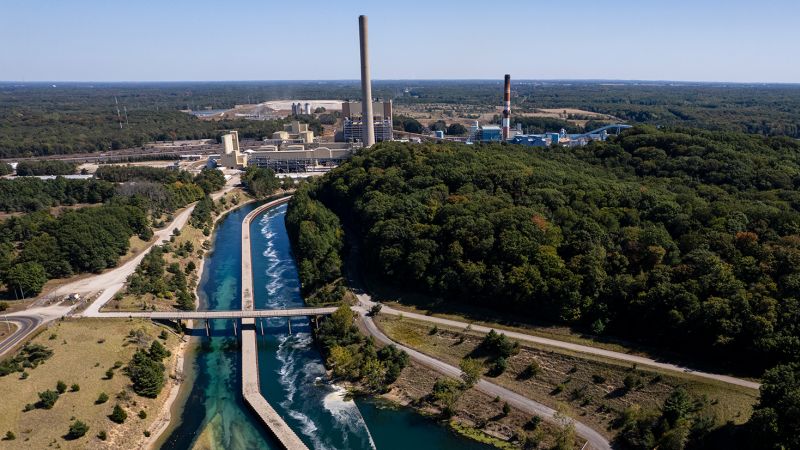
Energy Secretary Chris Wright has ordered the J.H. Campbell coal plant in Michigan, slated for closure, to remain operational through the summer, potentially costing Midwest energy customers tens of millions of dollars; Michigan officials expressed surprise, noting the plant's retirement was approved in 2022 and a natural gas alternative was already secured. The Energy Department cited concerns about summer electricity shortages as the rationale, despite Consumers Energy's existing plan and the increasing cost-effectiveness of renewable energy sources like solar, raising questions about the department's cost analysis and prompting potential legal action from the Michigan Attorney General.
The U.S. Energy Secretary's last-minute emergency order compelling Consumers Energy (CMS) to keep its J.H. Campbell coal plant operational through the summer, despite its planned and state-approved retirement, introduces significant financial and regulatory uncertainty. This directive, issued without prior consultation with Michigan state officials or the utility, is projected to impose substantial costs, estimated between tens of millions and potentially approaching $100 million, which will be passed on to electricity customers across 15 states. The Energy Department cited concerns over summer electricity shortages and the need for baseload power, yet Consumers Energy had reportedly secured a natural gas-fired plant to replace the coal facility's capacity. The decision is particularly striking given the Campbell plant's age (over 60 years), the higher operating costs and environmental impact of coal compared to natural gas and renewables, and a recent report indicating U.S. consumers paid $6.2 billion more for coal-fired power in 2024 than in 2021. Michigan's Attorney General is considering legal action against this federal intervention, described as extremely rare and typically reserved for post-disaster scenarios. This development, reflected in a strongly negative sentiment score (-0.7) for CMS, underscores the potential for abrupt federal policy shifts to override established utility transition plans, directly impacting operational costs and challenging the economic rationale of retiring aging, expensive coal assets in favor of more cost-effective and cleaner alternatives, as successfully demonstrated in states like Texas with significant renewable energy integration.
AI-powered research, real-time alerts, and portfolio analytics for institutional investors.
Request DemoOverall Sentiment
strongly negative
Sentiment Score
-0.70
Ticker Sentiment
