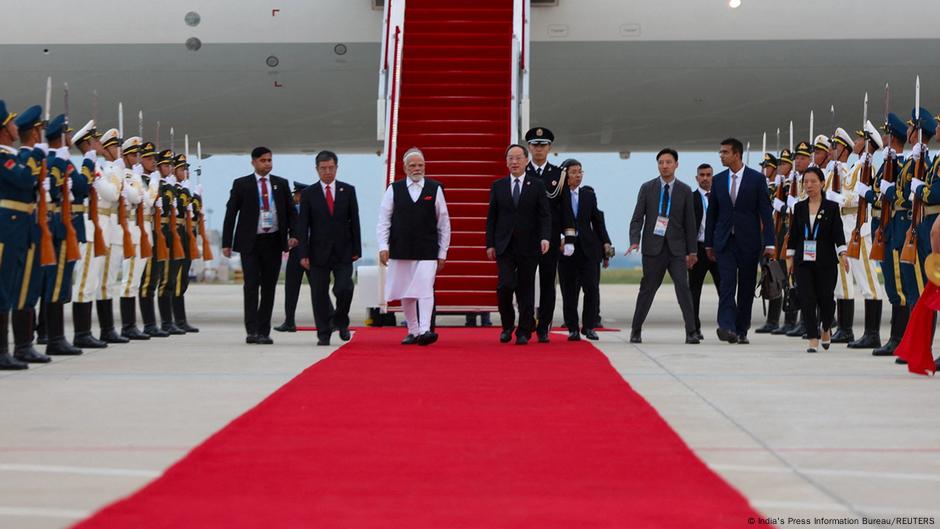
The Shanghai Cooperation Organization (SCO) summit in Tianjin is gathering leaders from over 20 nations, including China, Russia, and India, signaling evolving geopolitical alignments. Key bilateral discussions include tentative thawing of India-China relations, and Russian President Putin's talks on the Ukraine conflict and Iran's nuclear program. Of particular note for markets, Putin's discussions on Iran's nuclear program come as Western nations consider reimposing UN sanctions, a move Russia has warned could have "irreparable consequences," potentially impacting global stability and energy markets.
The Shanghai Cooperation Organization (SCO) summit in Tianjin represents a significant geopolitical event, underscoring evolving alignments among major non-Western nations. The first meeting between India's Prime Minister Modi and China's President Xi since 2018 indicates a 'tentative thawing' of relations, partly influenced by shared friction over US tariffs, suggesting a potential recalibration of trade and power dynamics in Asia. Of more immediate market significance are the planned talks between Russia's President Putin and Iran's President Pezeshkian regarding Iran's nuclear program. This discussion is critical as it coincides with a European push to reimpose UN sanctions on Tehran, a move Russia's Foreign Ministry has warned could lead to 'irreparable consequences.' This specific development introduces a tangible risk of escalating geopolitical tensions that could directly impact global stability and energy markets. While the summit's immediate market impact score is low at 0.3, the collection of high-stakes bilateral meetings points to underlying risks and potential shifts in global trade and security.
AI-powered research, real-time alerts, and portfolio analytics for institutional investors.
Request DemoOverall Sentiment
neutral
Sentiment Score
0.00
