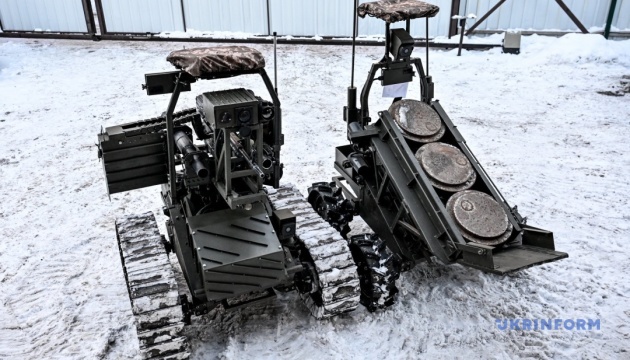
Temerland, led by CEO Eduard Trotsenko, has iteratively developed and field-tested modular unmanned ground and aerial systems for Ukraine’s Ministry of Defense since 2012, pivoting from early projects (unmanned train, 2014 prototype car) to battlefield platforms like the ~100 kg Gnom (capable of carrying mines or weapon modules such as Gnom-VP21 with two RPG-7s and a PKM) and FPV drone carriers. The firm emphasizes low-cost, AI-enabled ‘mosquito doctrine’ swarms, rapid front-line feedback (noting battlefield lifecycles as short as ~15 minutes and battery range misestimates of ~20 km requiring 2–4x capacity), and has commercialized civilian robots during COVID with export orders, signaling manufacturing and export scalability potential for defense-focused suppliers. Investors should view this as incremental positive evidence for niche defense-tech supply capacity rather than a near-term market-moving earnings event.
Market structure: Rapid robotization favors modular/scale manufacturers, AI chipmakers, battery and sensors suppliers, and niche drone/UGV specialists. Winners include public defense primes that can integrate robotics (LMT, RTX, NOC), drone specialists (KTOS, AVAV) and AI/semiconductor leaders (NVDA); losers are high-capex, single-platform builders (large tank programs) as unit economics shift to many low-cost platforms. Expect upward pressure on lithium, copper and specialty motors—spot price moves of +10–30% over 12–24 months are plausible if procurement accelerates.
Risk assessment: Tail risks include export controls on AI chips, rapid proliferation prompting strict export/usage rules, or a successful counter-EM/air defense tech that reduces drone efficacy—any of which could cut revenue forecasts by 30–60% for pure-play drone names within 6–12 months. Short-term (days–weeks) drivers are aid packages and battlefield reports; medium-term (3–12 months) are contract awards and supply-chain bottlenecks; long-term (2–5 years) is doctrinal shift to automation. Hidden dependency: Western microelectronics and GPS/SATCOM are single points of failure.
Trade implications: Favor long exposure to robotics/AI ETFs (BOTZ/ROBO), select drone/UGV contractors (KTOS, AVAV) and NVDA for edge-AI chips; overweight battery-metal exposure (LIT, ALB). Use options to size exposure (call spreads) and hedge with OTM puts; expect to act ahead of aid votes (2–8 weeks) and take profits on headline-driven pops within 3–6 months.
Contrarian angles: Consensus underprices countermeasures and commoditization—margins will compress as platforms scale, so early pure-play rallies can fade. Historical parallel: asymmetric tech waves (WWII air power vs battleships) show winners that controlled supply-chain and integration, not just vehicle builders. Unintended consequence: stricter export controls could rerate NVDA and boost domestic component makers (LHX, TDY).
AI-powered research, real-time alerts, and portfolio analytics for institutional investors.
Request DemoOverall Sentiment
mildly positive
Sentiment Score
0.25
Ticker Sentiment
