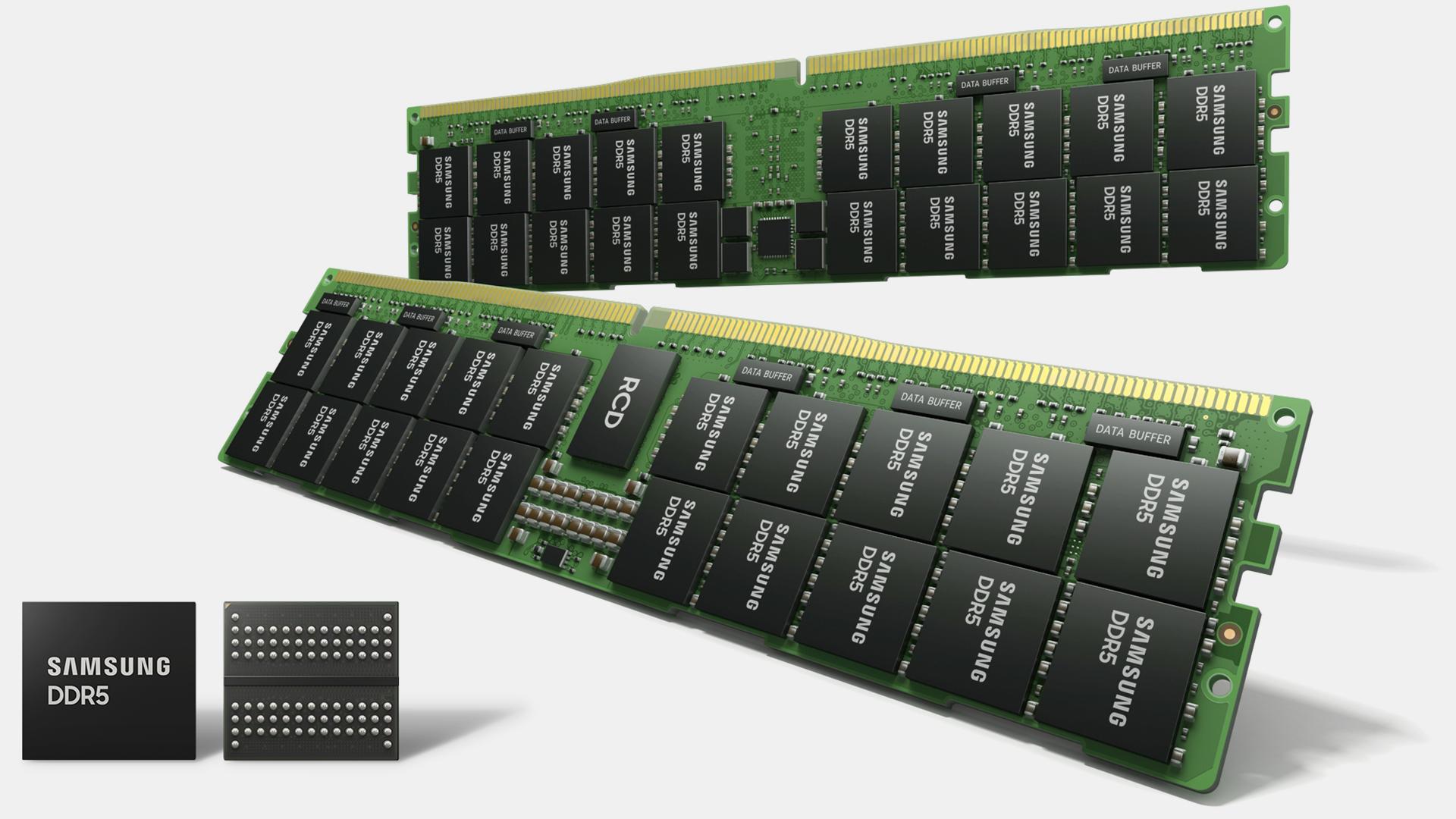
TeamGroup GM Gerry Chen warns commodity DRAM and 3D NAND contract prices have surged — December contracts rose roughly 80–100% month-on-month — and spot 16Gb DDR5 IC prices jumped from $6.84 (Sept. 20) to $27.20 (Dec. 1), implying raw memory alone costs about $217.60 for a 16GB module and $225–228 once basic BOM/assembly is added. He forecasts worsening availability through early 2026 as distribution stockpiles deplete and DRAM capacity is reallocated to HBM for AI accelerators, with normalization unlikely until 2027–2028 or later given multi-year fab lead times, creating material margin and supply risks for PC and device OEMs while benefitting prioritized large cloud/AI customers.
Market structure: Memory suppliers (Micron MU, Samsung, SK Hynix) and HBM-focused fabs are emerging as winners — they can reprice DRAM/NAND with 50–100%+ ASP moves and shift mix to higher-margin HBM used by NVDA and cloud customers. Losers include PC OEMs, DIY retail, and mid-range GPU makers who face component-driven ASP inflation and deferred upgrade cycles; expect unit volumes to fall 10–30% in affected categories through 2026. Supply/demand: the market signal is severe structural tightness — distribution stockpiles will be drawn in 1H–2H 2026 and normalization unlikely before late 2027–2029 given 3+ year fab lead times.
Risk assessment: Tail risks include regulatory export controls or anti-trust action (targeting collusion on allocations), a sudden AI demand shock collapse, or fab ramp failures; each could swing DRAM prices ±40%+ within quarters. Immediate (days) volatility will be driven by spot-price leaks; short-term (weeks–months) by 4Q/1Q inventory updates; long-term (2027+) by new capacity. Hidden dependencies: cloud customers’ multi-year booking contracts and HBM die sizes crowd out commodity DRAM capacity — pricing is supply-constrained, not cyclical demand-driven. Catalysts: fab capacity announcements, large cloud capex cuts, or a major memory supplier changing allocation policy.
Trade implications: Direct plays — overweight MU and NVDA (AI HBM beneficiary) while underweight consumer OEMs (DELL, HPQ) and memory-module retailers; target holdings 1–3% of portfolio with 6–24 month horizons. Pair trades — long MU, short DELL (or HPQ) to isolate memory pricing upside vs PC demand softness. Options — buy 9–18 month LEAP calls on MU and NVDA or call spreads (buy ATM, sell 1.5x OTM) to finance premium; hedge with puts on consumer OEMs. Sector rotation — increase exposure to cloud (AMZN, MSFT, GOOGL) by 1–2% as persistent memory tightness raises server ASPs and cloud revenue per instance.
Contrarian angles: Consensus underestimates time-to-capacity; markets may overprice near-term scarcity (spot spikes) while underpricing long-run capex reaction — a 2028+ capacity wave could compress DRAM multiples. Historical parallel: 2017 NAND cycle where spot doubled then collapsed as new fabs came online; a symmetric downside risk exists if greenfield fabs accelerate. Unintended consequences: extreme RAM inflation could retard consumer AI adoption and gaming GPU upgrades, slowing downstream silicon cycles and creating a mid-cycle bear case for AMD/NVDA performance per dollar metrics.
AI-powered research, real-time alerts, and portfolio analytics for institutional investors.
Request DemoOverall Sentiment
strongly negative
Sentiment Score
-0.65
Ticker Sentiment
