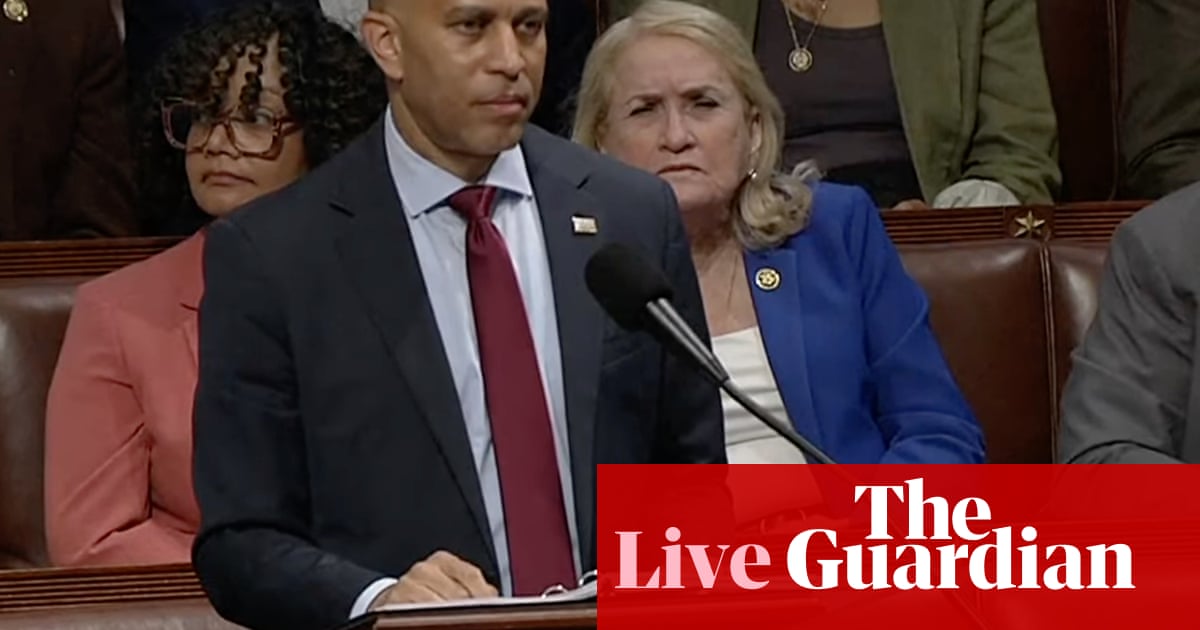
The U.S. House of Representatives has advanced a significant tax-and-spending bill proposed by Donald Trump, passing a procedural vote 219-213 after an overnight session marked by intense Democratic opposition. This legislation, which extends 2017 tax cuts, funds immigration enforcement, cuts health and food safety net programs, and includes a $5 trillion debt ceiling increase, faces strong Democratic resistance over concerns it disproportionately benefits the wealthy and could impact millions of Americans' healthcare. The narrow Republican majority (220-212) underscores the high-stakes battle over these broad fiscal and social policy changes, with a final House vote anticipated.
The U.S. House is advancing a highly consequential fiscal package, as indicated by the narrow 219-213 procedural vote, signaling significant political friction and a tight margin for final passage. The legislation's economic impact is multifaceted, combining expansionary and contractionary elements with significant sectoral implications. Key provisions include the extension of the 2017 tax cuts, which would support corporate profitability and higher-income consumer spending, alongside a substantial $5 trillion increase in the debt ceiling, temporarily mitigating the risk of a sovereign default but signaling a higher future debt burden. Conversely, the bill proposes significant headwinds for specific sectors, including the elimination of green-energy incentives, which directly threatens the renewable energy industry. Most critically, proposed cuts to Medicaid and other safety-net programs could, according to the nonpartisan Congressional Budget Office, result in 12 million people losing health insurance, posing a direct revenue risk to healthcare providers and insurers dependent on these programs. The bill also allocates $45 billion for immigration enforcement, representing a targeted fiscal stimulus for defense and construction-related contractors. The high market impact score of 0.75 is justified, as this legislation stands to alter fiscal policy, reshape industrial incentives, and directly impact consumer welfare.
AI-powered research, real-time alerts, and portfolio analytics for institutional investors.
Request DemoOverall Sentiment
strongly negative
Sentiment Score
-0.60
