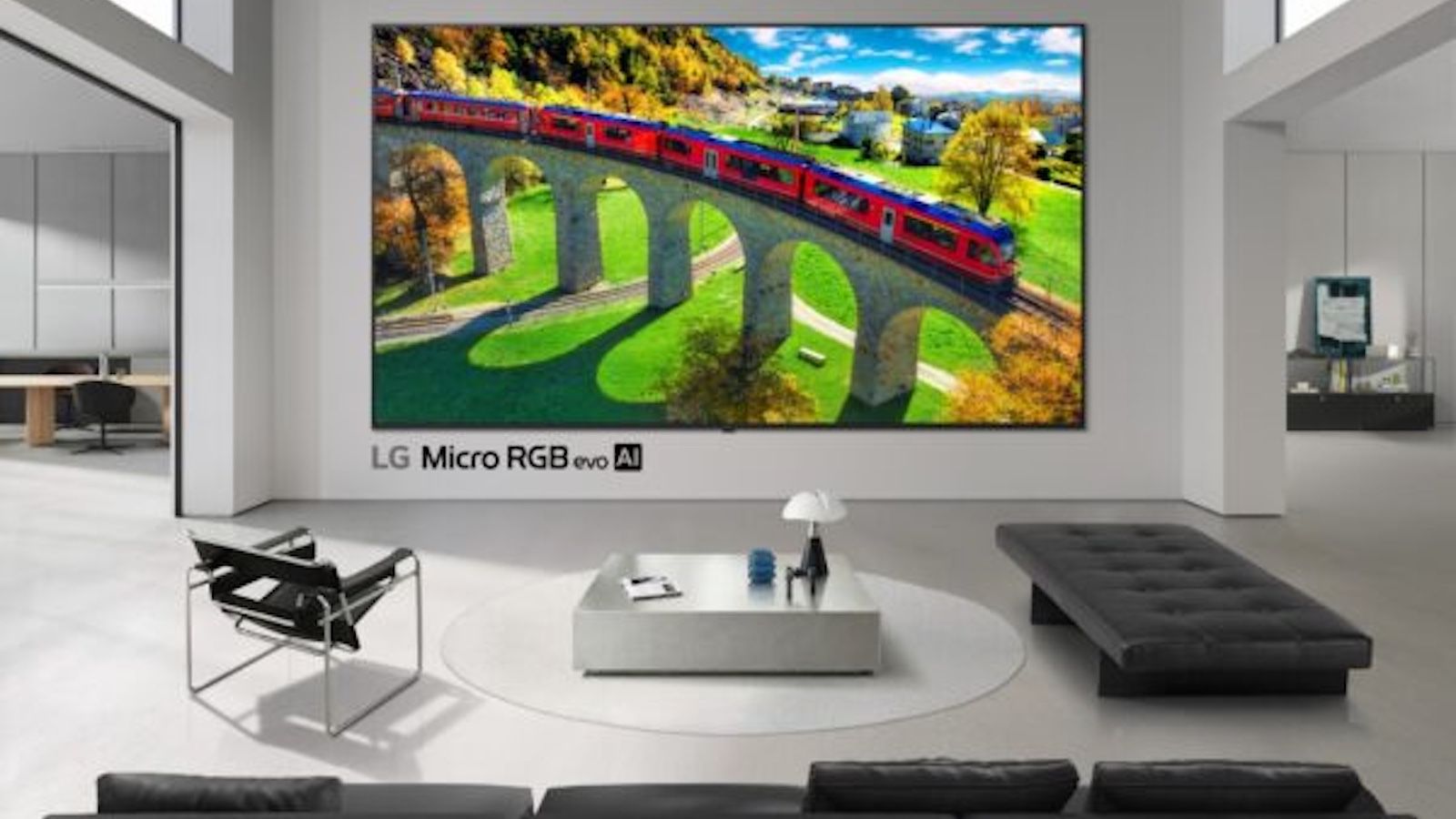
LG announced the MRGB95 'Micro RGB Evo' TV for 2026, adopting RGB Mini LED backlighting (not true MicroLED) with over a thousand dimming zones and the Alpha 11 Gen 3 processor—the first time that top LG silicon is used outside OLED models. The company claims full coverage of BT.2020, DCI‑P3 and Adobe RGB, Dual Super Upscaling AI, and is launching only in large sizes (75, 86 and 100 inches); no pricing or release date was provided. The product signals a potential competitive challenge to OLED in premium TV segments, but absent commercial details the announcement is unlikely to move markets in the near term.
Market structure: RGB Mini‑LED (LG’s MRGB95) reallocates value from OLED margin pool to backlit LCD supply chains — LED chipmakers, precision driver IC designers and high‑end TV OEMs (Sony, LG Electronics) stand to gain pricing power if unit ASPs for 75–100" sets remain >$3k. Downstream losers are pure OLED component specialists if adoption accelerates; however OLED keeps a pixel‑level dimming premium that will defend a 20–30% price premium for at least 18–24 months. Supply/demand: adoption will be supply‑constrained initially (limited panel fabs and RGB LED yields), supporting component lead times and spot prices for red/blue LEDs for 6–12 months.
Risk assessment: Tail risks include a rapid MicroLED or cheaper OLED gen (QD‑OLED 2.0) leapfrogging RGB Mini‑LED within 12–36 months and component commoditization that halves ASPs; regulatory or IP litigation between LG, Samsung and Sony over RGB backlight patents is a 10–25% probability within 24 months. Short horizon (days–weeks): limited market reaction until pricing/availability announced; medium (3–12 months): supply chain re‑rating; long (12–36 months): potential structural share shifts. Hidden dependencies: success hinges on Alpha 11 Gen 3 software mastery (AI upscaling) and game console/HDMI 2.1 adoption — poor HW/firmware execution can blunt premium pricing.
Trade implications: Tactical longs: selective exposure to SONY (ticker SONY) and AMS/Osram‑class LED suppliers; consider 0.5–1.5% portfolio positions, targeting 12–18 month horizon. Pair trade: long SONY (0.75%) / short a high‑OLED‑exposed supplier (e.g., LG Display proxies) 0.5% to hedge panel risk. Options: buy 12–18 month call spreads on SONY (e.g., $X strike to $Y strike) sized to limit max loss to 25 bps of NAV; consider buying short‑dated puts on component suppliers to hedge inventory shocks.
Contrarian angles: Consensus assumes OLED decline; that may be underdone — OLED’s per‑pixel advantage keeps it indispensable for >30% of premium buyers and cinema use cases, creating a two‑tier market for years. Mispricing opportunity: avoid aggressive shorting of OLED specialists and instead exploit event risk (launch/pricing) windows; historical parallel: 2018 QLED vs OLED where QLED improved share but OLED retained margin. Unintended consequence: aggressive RGB Mini‑LED push could trigger supply shortages that inflate LED supplier equities short‑term but compress OEM margins once competition commoditizes the tech.
AI-powered research, real-time alerts, and portfolio analytics for institutional investors.
Request DemoOverall Sentiment
mildly positive
Sentiment Score
0.30
Ticker Sentiment
