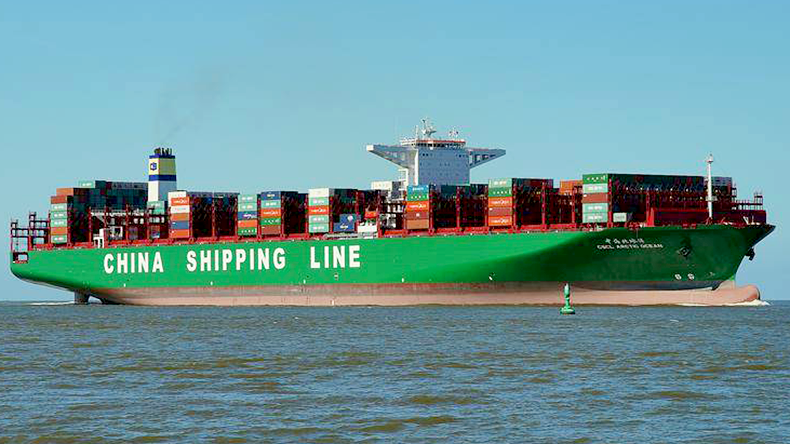
Two COSCO ultra-large container vessels (ULCs) successfully transited the Strait of Hormuz near Iran’s Larak Island on a second attempt after initially turning back, and one Chinese-owned bulk carrier also cleared the strait after more than a week nearby. These are the first Chinese state-owned vessels to exit the Gulf since Iran seized control, but COSCO’s tanker fleet remains trapped in the Middle East Gulf and Iran appears to be issuing selective clearances. The development signals a limited diplomatic breakthrough between Beijing and Tehran that may ease some container-routing pressure but leaves material downside risk and volatility for tanker movements and regional energy/shipping markets.
A pattern of politically selective maritime access creates an asymmetric premium on marginal voyages rather than a uniform shock to global trade — that means episodic spikes in spot freight and insurance rather than steady-state higher costs. Insurers and charter markets will price frequency and unpredictability: a 1-in-10 probability of an interdiction priced into routes can double war‑risk surcharges for those sailings even if average transit volumes are unchanged.
Operationally, shippers face two adjustable levers: pay spot premiums for transit or reroute around long alternatives that add days-to-weeks and reduce effective fleet utilization. Even a modest regional capacity hit (10% of available voyage slots) can translate into 20–40% higher spot rates within 30–90 days because of the convexity of maritime time-charter economics and the short-run immobility of large tonnage.
Winners will be carriers and owners with flexible ballast ability, diversified global pools, and short-term access to open-market charter tonnage; losers are fixed-route forwarders and charterers locked into spot tendering and companies with just-in-time inventory models. Key catalysts to monitor that could reverse or entrench these effects include formal state-level security guarantees (weeks–months), expanded naval escort regimes (days–weeks), or punitive secondary sanctions (months–years), with tail risk being a targeted seizure or expanded interdiction that freezes the insurance market for a segment of routes.
AI-powered research, real-time alerts, and portfolio analytics for institutional investors.
Request DemoOverall Sentiment
mixed
Sentiment Score
0.05
