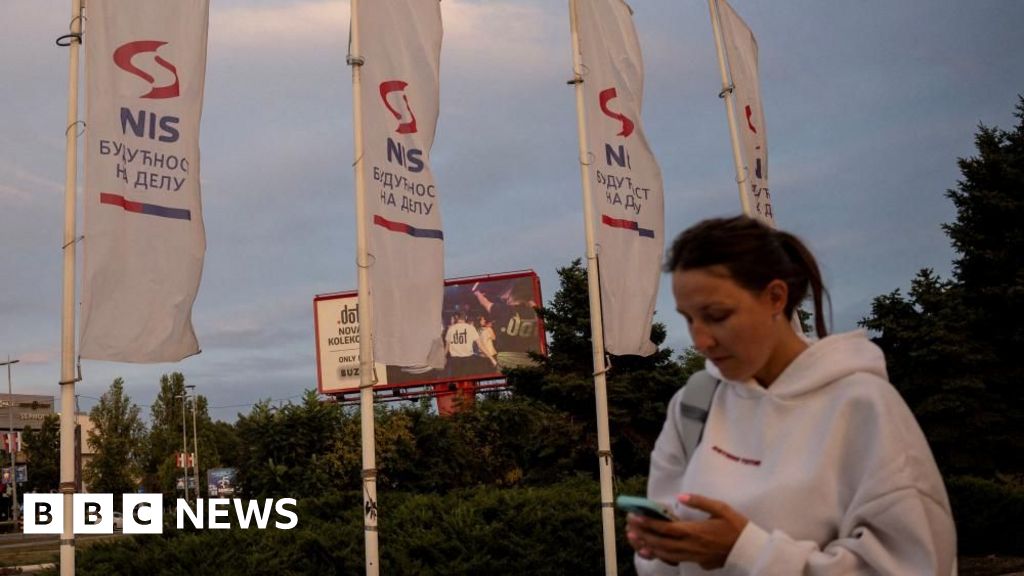
Serbia's energy sector faces an imminent crisis as US sanctions against its national oil company, NIS, majority-owned by Russia's Gazprom and Gazprom Neft, threaten to halt fuel production by late November due to severed crude oil supplies and disrupted payment systems. The situation has prompted NIS's Russian owners to seek a US waiver, indicating a willingness to transfer control, while straining Serbia's long-standing alliance with Russia, impacting its favorable gas supply deal, and potentially accelerating its geopolitical alignment towards the European Union, with significant economic implications for the country.
Serbia's energy sector faces an imminent crisis due to US sanctions imposed on its national oil company, NIS, which is majority-owned by Russia's Gazprom and Gazprom Neft. These sanctions have severed crude oil supplies via Croatia's Janaf pipeline, threatening to deplete refinery stocks by late November, and disrupted payment processing for Visa and Mastercard at NIS petrol stations. NIS operates both of Serbia's oil refineries, supplying over 80% of the nation's petrol and diesel, making the situation critical for national energy security and the 13,500 employees.
The crisis has significantly strained Serbia's long-standing relationship with Russia, evidenced by stalled gas supply negotiations and disagreements over arms exports. NIS's Russian owners are reportedly seeking a US waiver and are prepared to transfer control, suggesting a potential path to alleviate sanctions. This geopolitical pressure may accelerate Serbia's alignment towards the European Union, as indicated by President Vucic's statements.
The strongly negative sentiment and high market impact score reflect the severe economic consequences for Serbia, including potential fuel shortages and broader economic instability. While NIS's contribution to Gazprom's overall income is deemed insignificant, its market dominance in Serbia makes the sanctions highly detrimental to the Serbian populace and economy.
AI-powered research, real-time alerts, and portfolio analytics for institutional investors.
Overall Sentiment
strongly negative
Sentiment Score
-0.75
Ticker Sentiment
