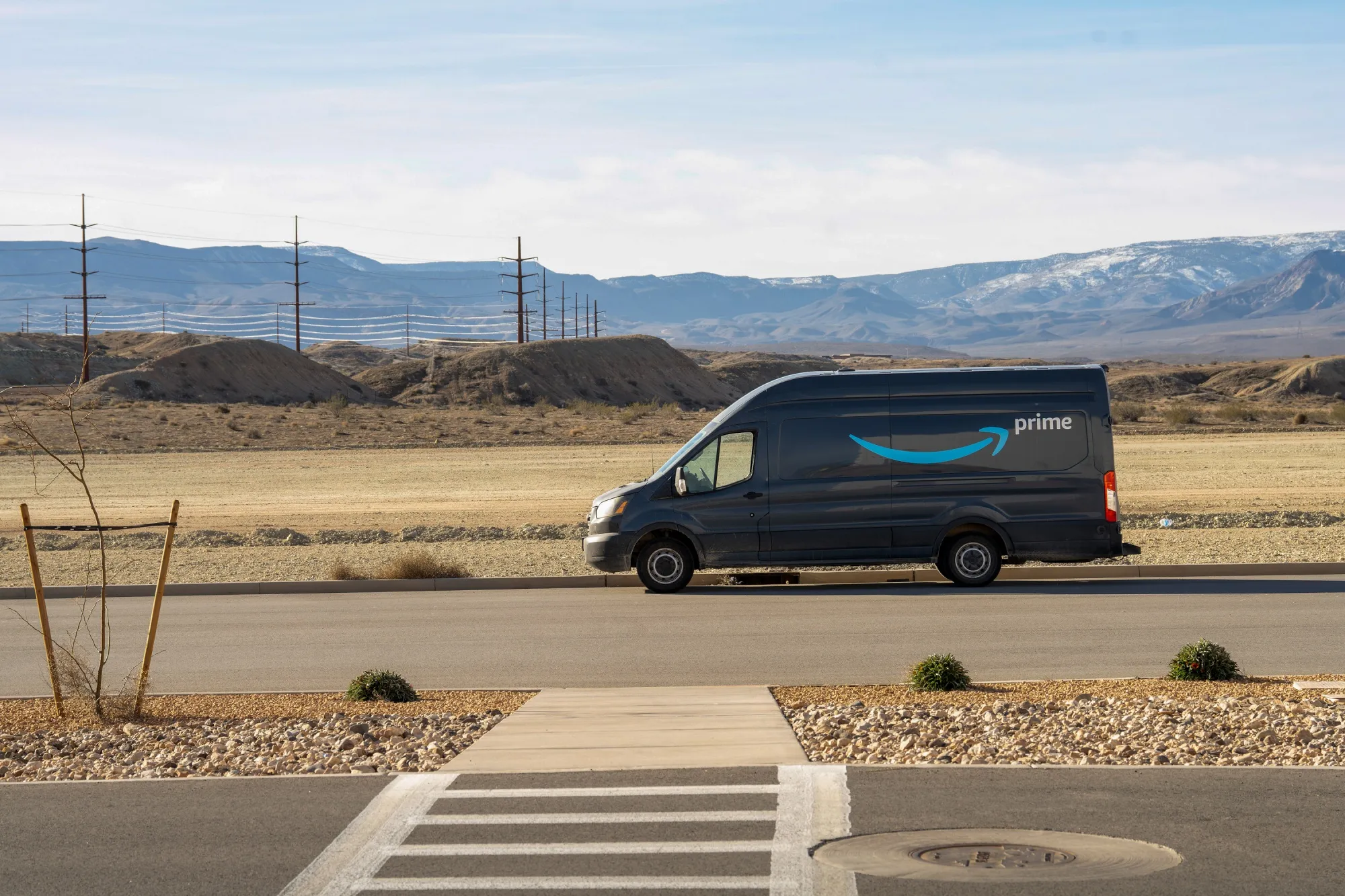
Amazon is committing $4 billion to expand rural delivery and plans 200 rural delivery stations by year-end (up from 70) to cut delivery times roughly in half; Bloomberg found <24-hour delivery now reaches 1-in-5 rural households and 48-hour delivery covers 62% of rural households. The initiative targets roughly $1 trillion in annual rural retail spending and could help Amazon become the largest US parcel carrier by 2028, but faces entrenched competition from Walmart (4,600 US stores and stores within ~10 miles of nearly two-thirds of rural households). Operational frictions include driver pay disputes, navigation/mapping challenges and a contentious USPS contract renewal that injects execution risk.
Amazon’s rural rollout is less a single-product improvement than a geographic redefinition of last-mile economics: moving delivery density into low-population areas changes which asset bases win (flexible local labor and light-footprint hubs) and which lose (large fixed-cost carriers and mail monopolies). Expect the geographic overlap between e-commerce demand and low-cost local delivery partners to grow steadily over 12–36 months, shifting margin pools from legacy parcel networks into platform-controlled fulfillment and small-business micro-entrepreneurs.
The immediate second-order pressure will fall on pricing power and utilization for legacy carriers: falling parcel volumes through large national routes compress density and raise per-package costs, while Amazon’s control of routing/inventory can reallocate inventory turns to priors with higher lifetime value (apparel, electronics) and away from low-margin grocery. Simultaneously, rural adoption patterns (price sensitivity, grocery stickiness) mean share gains will be lumpy by category — faster in non-perishable or specialty verticals, slower in staples — creating asymmetric revenue risk for competitors who lean heavily on grocery delivery economics.
Key catalysts to watch are contract-renewal outcomes, union/legislative responses to delivery labor practices, and retailer countermeasures that use physical stores as micro-hubs; each can flip the unit economics within quarters. On valuation, the market is under-pricing both (a) upside optionality for platform owners that convert low-frequency rural buyers into higher-frequency customers, and (b) downside for incumbent parcel carriers if density loss accelerates — creating clean pair-trade opportunities with event windows centered on upcoming contract decisions and quarterly shipment data releases.
AI-powered research, real-time alerts, and portfolio analytics for institutional investors.
Request DemoOverall Sentiment
mildly positive
Sentiment Score
0.25
Ticker Sentiment
