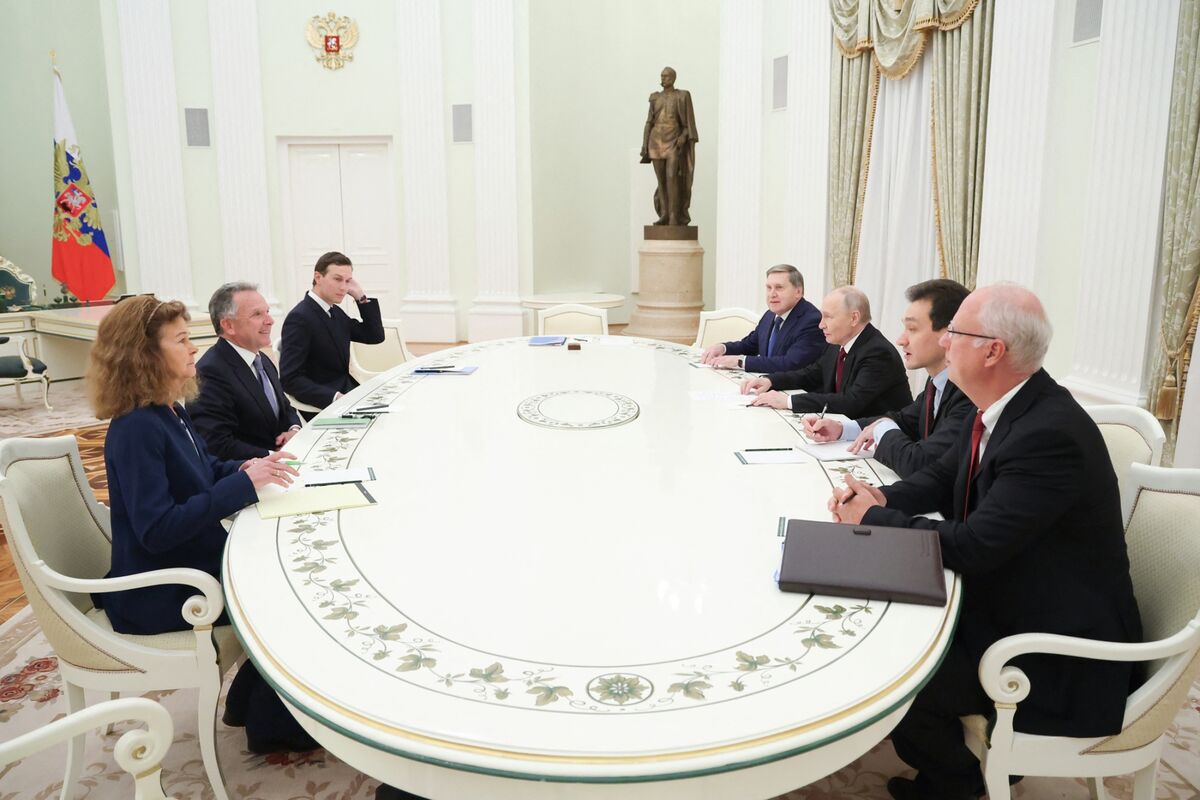
Vladimir Putin emerged politically advantaged after U.S. envoy Steve Witkoff's mission to Moscow produced no breakthrough toward ending the war in Ukraine, with the Kremlin appearing content with the slow pace of progress. For investors, the likely persistence of the conflict implies ongoing geopolitical risk premia—supporting defense-related assets, maintaining sanctions and supply‑chain uncertainty and keeping energy-market volatility elevated—warranting positioning for prolonged uncertainty rather than a near-term resolution.
Market structure: A prolonged, low-trajectory Russo‑Ukrainian stalemate favors defense contractors (LMT, RTX, GD) and integrated energy majors (XOM, CVX) while pressuring European cyclicals, travel, and banks with EM/Ukraine exposure. Pricing power shifts toward suppliers of military systems and diversified oil producers as governments commit multi‑year budgets and energy risk premia embed into forward curves; expect Brent volatility to remain elevated (+/- 15–30% shocks vs current). Cross‑asset: near‑term risk‑off supports USD, Treasuries and gold, while European sovereign spreads and equity vols widen.
Risk assessment: Tail risks include NATO escalation or full Russian export cutoff driving Brent >$120 and a global equity drawdown >15% (low probability, high impact), or a sudden negotiated peace collapsing defense rerating (high impact). Timeline: immediate (days) = volatility spikes; short (weeks–months) = reallocation into defense/energy and hedges; long (quarters–years) = sustained defense budgets and strategic energy re‑sourcing. Hidden dependencies: EU winter storage levels, Chinese demand, and US sanctions enforcement cadence are second‑order drivers that could flip trades.
Trade implications: Implement tactical hedges now (USD and gold) and build conservative core longs in US defense/energy over 2–8 weeks, scaling into rallies; prefer cash equities over levered exposures and use options to cap cost (3‑6 month tenors). Relative trades: short European cyclical beta vs US defensives; use put spreads to insure 1–2% portfolio downside rather than expensive outright long‑vol. Monitor milestones (major diplomatic announcements, EU gas storage reports, weekly oil flows) as re‑weight triggers.
Contrarian angles: Markets may underprice a multi‑year baseline of elevated defense spend even if headline ceasefire talk continues — a “frozen war” supports steady revenue growth for primes. Conversely, near‑term fear premia could be overbought (puts/vol) if negotiations progress; history (post‑2014) shows multi‑year defense re‑rating, so avoid selling winners into headline noise. Watch for unintended consequences: rapid peace would crush cyclical shorts and defense longs, so size positions assuming a 20–30% event risk.
AI-powered research, real-time alerts, and portfolio analytics for institutional investors.
Request DemoOverall Sentiment
mildly negative
Sentiment Score
-0.30
