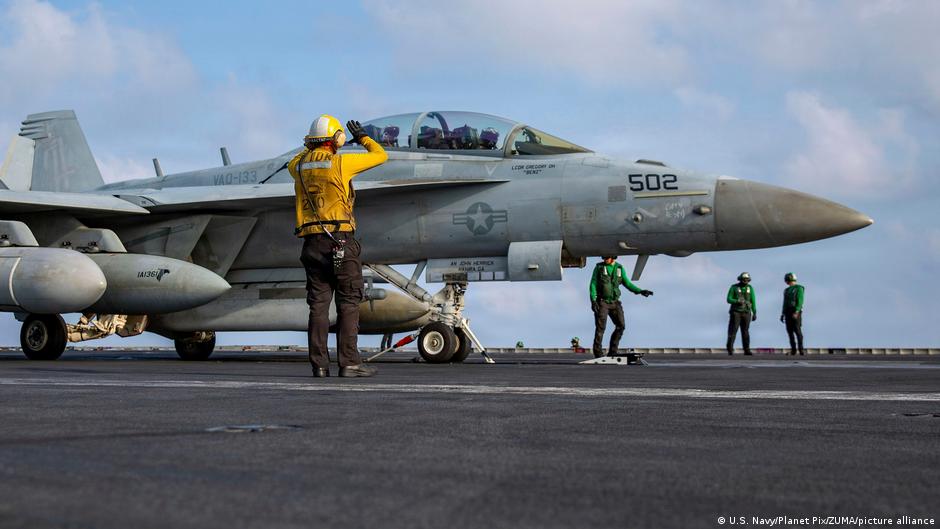
US Defense Secretary Pete Hegseth said the US has sufficient weapons stockpiles to resume military operations against Iran if talks fail, underscoring a renewed escalation risk. Israeli evacuation warnings for seven villages in southern Lebanon add to regional tensions, while US officials described Israel-Lebanon military talks as 'productive.' The article points to elevated geopolitical risk across the Middle East, with potential implications for defense assets, oil, and broader risk sentiment.
The market should treat this less as a binary war/no-war headline and more as a forced re-pricing of tail risk across energy, defense, shipping, and regional credit. A credible U.S. claim of stockpile sufficiency shortens the perceived decision cycle: once policymakers believe they can re-escalate without munitions constraints, the deterrent threshold drops, which typically raises the probability of “limited” kinetic action before a full diplomatic breakdown. That is bullish for defense primes and select ISR/missile-defense supply chains, but the second-order winner is likely U.S. industrial capacity tied to replenishment—rocket motors, guidance components, and hardened communications—because sustained inventory rebuilds usually outlast the headline conflict by quarters.
The larger underappreciated risk is spillover into logistics rather than direct battlefield damage. Even without a broad regional war, any renewed U.S.-Iran confrontation tends to widen insurance premia, lengthen voyage routing, and tighten spare-capacity assumptions for Gulf transport and adjacent sea lanes; that hits refiners, tanker operators, and airlines before it hits broad equities. Lebanon-related escalation adds another layer: if cross-border friction intensifies while Hezbollah remains outside talks, the diplomatic track can fail even if the military track shows progress, creating a false sense of de-escalation that leaves positioning crowded and vulnerable to a gap move.
Consensus may be underpricing how quickly this can flip from “risk-off headline” to “energy/defense factor rotation.” The immediate macro impact is modest, but the convexity is high over the next 1-6 weeks: one strike, one retaliatory proxy event, or one maritime disruption can move Brent, tanker rates, and defense names sharply. The better contrarian view is that the market will likely chase the first selloff in broader risk assets while under-owning the beneficiaries that monetize prolonged uncertainty rather than war itself.
AI-powered research, real-time alerts, and portfolio analytics for institutional investors.
Request TrialOverall Sentiment
mildly negative
Sentiment Score
-0.30
