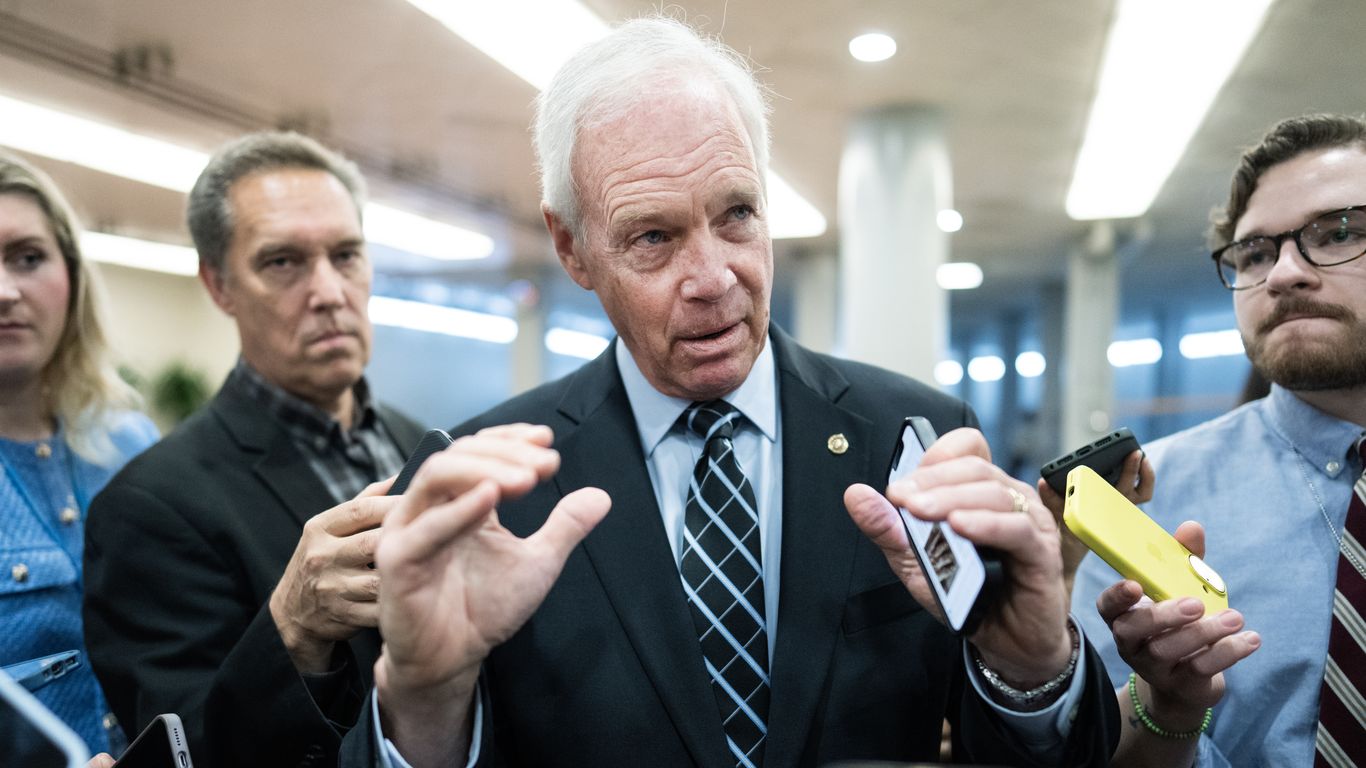
Senator Ron Johnson (R-Wis.) stated he believes there are enough Senate Republicans to halt the House's reconciliation bill, which aims to extend Trump's tax cuts, until significant spending reductions are addressed. Johnson criticized the bill for increasing the deficit by an estimated $3.8 trillion over the next decade, according to the Congressional Budget Office, a figure he agrees with. Senator Rand Paul (R-Ky.) also criticized the bill, calling the spending cuts "wimpy and anemic," adding to the uncertainty of the bill's passage in the Senate.
Senator Ron Johnson (R-Wis.) has signaled significant opposition within the Senate Republican caucus to the House-passed reconciliation bill, threatening to halt its progress unless substantial spending reductions are incorporated. Johnson, citing Congressional Budget Office (CBO) estimates of a $3.8 trillion deficit increase between 2026 and 2034, and independent projections suggesting up to a $4 trillion increase, argues the bill, which aims to extend Trump-era tax cuts, would exacerbate the national debt. This stance is echoed by Senator Rand Paul (R-Ky.), who described the bill's spending cuts as "wimpy and anemic." House Speaker Mike Johnson (R-La.) defends the bill, asserting that CBO estimates are "dramatically overstated" by not accounting for dynamic scoring and potential economic growth. However, Senator Ron Johnson's claim that "we have enough to stop the process" introduces considerable uncertainty regarding the bill's passage and its final form. This legislative impasse, characterized by a "moderately negative" sentiment and a "market_impact_score" of 0.6, points to potential fiscal instability and challenges in enacting key components of the proposed fiscal agenda, including tax policy and deficit management, which are critical for market expectations.
AI-powered research, real-time alerts, and portfolio analytics for institutional investors.
Overall Sentiment
moderately negative
Sentiment Score
-0.50
