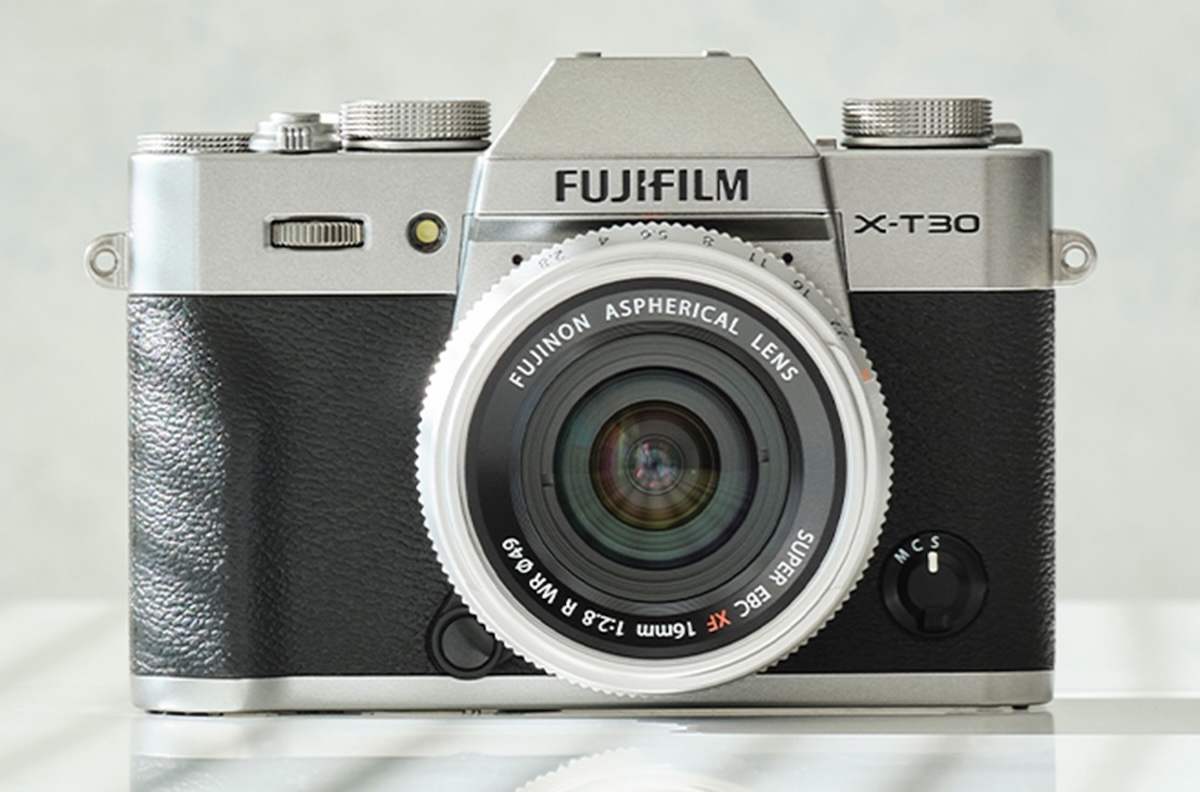
Fujifilm's X-T30 II mirrorless camera appears to be nearing discontinuation, evidenced by retailer stock status changes and limited availability, although no official announcement has been made. This strategic move is likely driven by intensifying competition from rivals like Canon, Nikon, and Sony, whose newer models offer superior shooting speeds and advanced subject tracking at comparable price points. The anticipated successor, rumored as the X-T30 III or X-T40, is expected to feature significant upgrades, including enhanced autofocus, faster shooting, and potentially in-body image stabilization, to bolster Fujifilm's competitive standing in the mid-range camera market.
Fujifilm Likely Discontinues X-T30 II Mirrorless Camera Table of Contents 2019's Fujifilm X-T30 was a beloved intermediate-level mirrorless camera among users and reviewers. Its 2021 successor, the X-T30 II, inspired similar affection but was nearly identical. (Prices start at $999, body only.) Meanwhile, competing brands such as Canon, Nikon, and Sony have outstripped this Fujifilm line in some areas, such as shooting speed and subject tracking. So, the apparent discontinuation of the X-T30 II is a reason for cautious optimism, as rumors of a X-T30 III or X-T40 swirl about. Fujifilm has not officially announced the end of the X-T30 II. But the site Fujiaddict recently spotted it listed as "Discontinued" on the B&H site for the body only as well as kit options. However, the retailer has since revised that to the less-definitive "Temporarily Out of Stock" designation. Other circumstantial evidence can be found on Amazon short-supply warnings, such as, "Only 4 left in stock - order soon." Vendors do not appear to be offering close-out discounts, however. For instance, B&H still lists the original prices of $999 for the body-only version and 1,099 for the 15-45mm kit lens bundle. So, at the moment, there's no need to rush out and snap up deals on this aging camera. However, it's not a given that a possible replacement model will come in at the same prices. Possible Fujifilm X-T30 III or X-T40 Upgrades Fujifilm has not even announced the existence of a X-T30 III or X-T40, let alone its specs. But to stay competitive, it may upgrade the shooting speed from 8 fps with mechanical shutter and 20 fps with electronic shutter. For instance, the similarly priced Nikon Z50 II from 2024 (starting at $849, body only) shoots at 11 fps mechanical and up to 30 fps electronic. 2022's Canon EOS R10 (starting at $949) achieves 15 fps/23 fps. While the X-T30 II autofocus and subject tracking are reported to be very accurate for its time, these technologies have improved even more with the trickle-down of smartphone technologies into traditional cameras. For instance, Fujifilm's model can detect human faces and eyes, whereas most other cameras in this class go further. The Canon R10 and Sony A6700 ($1399) are also able to recognize animals and people. The Nikon Z50 II detects nine subject types, including people, animals (like dogs and cats), cars, trains, and planes. Realistic Expectations for a Successor The biggest improvement, though, would be in-body image stabilization (IBIS), which could buy up to 4–5 stops for sharp photos or videos. This is still a rarity, not present in most rivals. Adding it while staying in this price range would be a substantial deal. For instance, the 2025 Olympus OM-3 offers 5-axis IBIS but starts at $1,849.99 (body-only). One area that shouldn't need an upgrade is resolution. The X-T30 II still leads the pack with a 26.1-megapixel APS-C back-illuminated sensor. Its 4K/30 fps video is still industry standard for full-frame oversampling (from 6K), but some rivals use cropping to offer a 60 fps option-another area for possible upgrades. With no significant price drops on the older models and precedent for improvements in a possible X-T30 II successor, Fujifilm fans may have reason for hopeful anticipation. Fujifilm's X-T30 II mirrorless camera is likely being discontinued, a strategic move indicated by retailer inventory signals such as a "Discontinued" listing on B&H (later revised) and low stock warnings on Amazon (AMZN). This product cycle refresh appears driven by intense competition from rivals whose recent models offer superior performance at comparable prices. For instance, the Nikon Z50 II ($849) and Canon EOS R10 ($949) both surpass the X-T30 II's shooting speeds and feature more advanced subject-tracking autofocus capable of recognizing animals and vehicles, a significant leap from Fujifilm's human-only detection. While Fujifilm's model maintains a competitive edge in resolution with its 26.1MP sensor, the market's focus has shifted to performance features. The lack of clearance pricing on the outgoing model suggests a managed transition, fueling speculation of an imminent successor—the X-T30 III or X-T40. To regain its footing, a new model would need to match competitors' speed and autofocus capabilities and could potentially disrupt the market by introducing in-body image stabilization (IBIS), a feature currently reserved for more expensive cameras.
AI-powered research, real-time alerts, and portfolio analytics for institutional investors.
Request DemoOverall Sentiment
mildly positive
Sentiment Score
0.25
Ticker Sentiment
