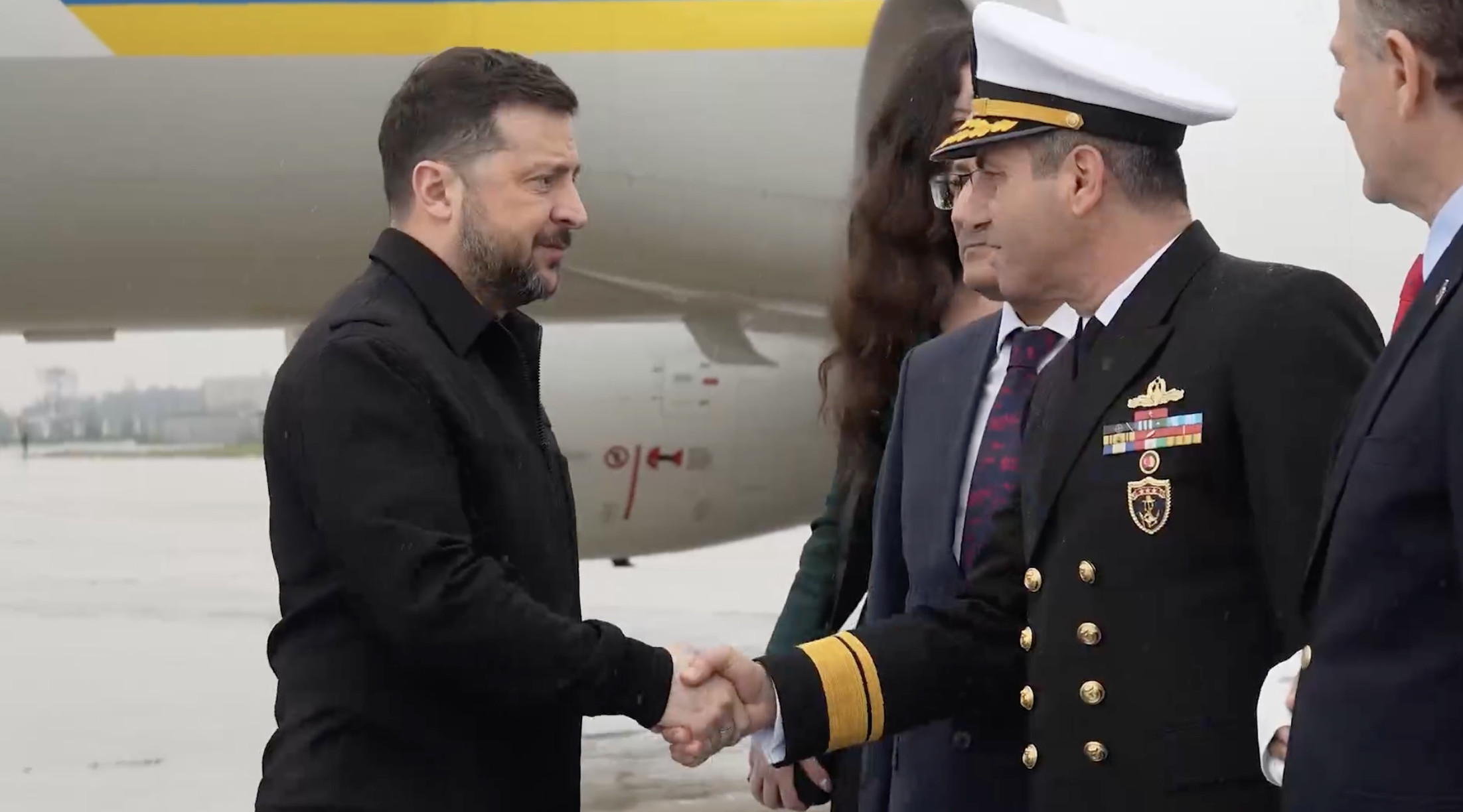
President Volodymyr Zelensky arrived in Turkey on April 4 for a working visit with President Erdogan to discuss regional security and Black Sea grain and energy logistics. Talks come after Erdogan’s call with Putin calling for an immediate Middle East ceasefire and amid Moscow and Gazprom alleging and repelling a drone attack on the TurkStream pipeline that supplies Turkey and parts of Europe. Kyiv has relayed an Easter ceasefire proposal (including protection for energy infrastructure) to Moscow via the US, but Russia has publicly signaled unreadiness, keeping energy-security and supply risks elevated.
The meeting platform increases the probability that Black Sea energy and maritime security will become operational priorities for regional actors rather than purely rhetorical talking points. A purposeful, even temporary, disruption to a single major subsea pipeline or to Black Sea shipping lanes forces immediate logistical arbitrage: European buyers shift to spot LNG cargos (taking weeks to materialize), insurers hike war-risk premia (instant), and short-sea grain/logistics reroutes strain river/rail corridors across Southeast Europe (days-to-weeks). The immediate market impact is therefore multi-modal — shipping charters and insurance prices spike in days, spot gas/TFF-like spreads widen over weeks, and contract reallocation/capacity additions play out over months.
Second-order winners are flexible LNG sellers and owners of short-term tonnage; losers are pipeline-dependent utilities and any downstream industries with limited storage that rely on predictable scheduled volumes. Over a 3–9 month horizon, incremental European demand for spot cargoes will mechanically lift charter rates and time-charter equivalent (TCE) for mid/large LNG carriers, creating convex earnings upside for owners with free liquidity or short-term contracts. Conversely, pipeline outages amplify counterparty and sovereign risk for banks and traders financing long-term take-or-pay arrangements.
Key catalysts to watch: (1) a successful insurance premium spike or ship-escorting policy by a regional navy that compresses maritime risk premia within days; (2) a confirmed physical impairment to a subsea asset that forces rerouting and raises spot gas spreads for multiple weeks; (3) diplomatic de-escalation or a brokered energy-infrastructure ceasefire that can unwind most price moves within 30–90 days. The largest tail is purposeful weaponization of energy flows ahead of winter — low probability now but extremely high impact for European markets over 3–12 months.
Contrarian lens: the market often overweights the permanence of pipeline damage and underweights LNG supply elasticity over a 6–12 month window. If insurers and charter markets stabilize quickly and existing LNG liquefaction and reloading can be reallocated, much of the spot premium will compress before long-term capex decisions are made, leaving a run-up in shipping equities that reverts sharply once spreads normalize.
AI-powered research, real-time alerts, and portfolio analytics for institutional investors.
Request DemoOverall Sentiment
neutral
Sentiment Score
0.00
