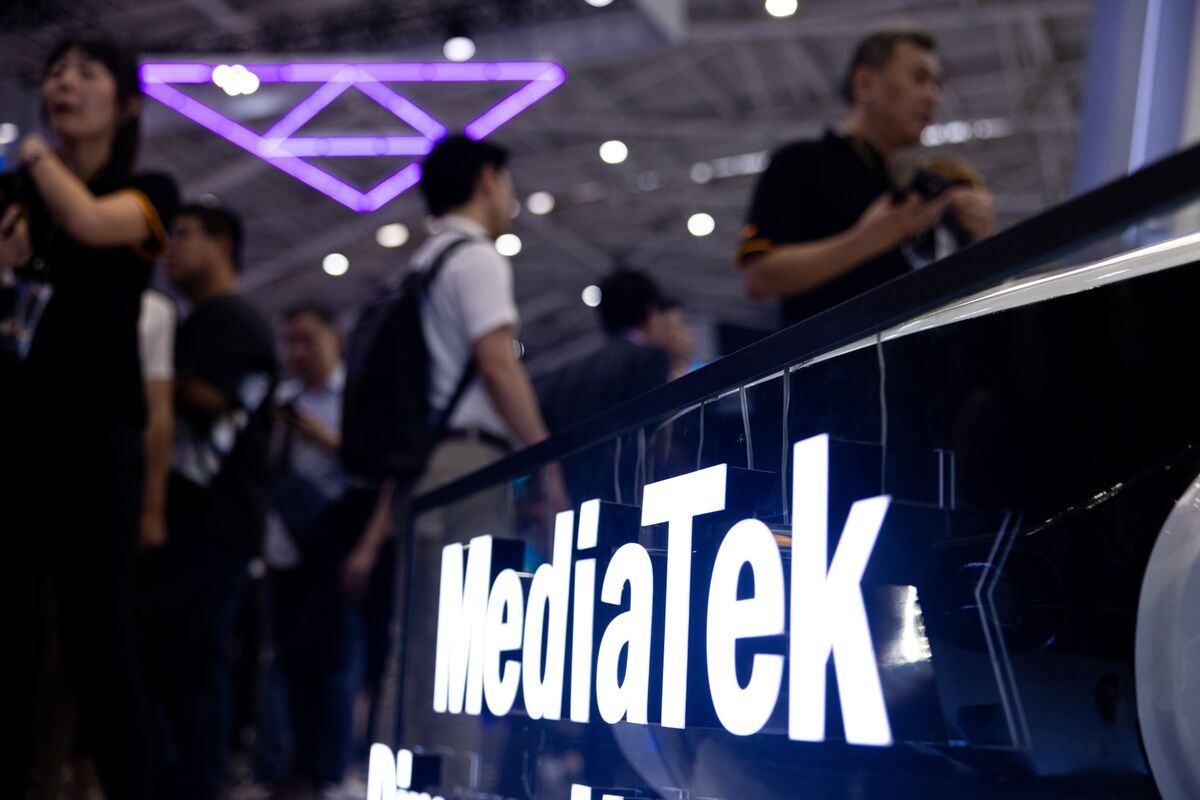
MediaTek shares are poised for their best week since 2002 after a fifth straight day of gains in Taipei, lifting the stock more than 20% on the week amid investor enthusiasm around Google’s Gemini model and recent AI chip deals. Reports that MediaTek has partnered with Alphabet’s unit on designing tensor processing units — now viewed as potential rivals to Nvidia’s AI chips — have materially improved the Taiwanese chipmaker’s growth outlook and could reposition it in the high-performance AI accelerator market.
Market structure: The immediate winners are MediaTek (2454.TW) and Google (GOOGL/GOOG) for AI-inference and TPU-led stacks; losers are incumbent GPU-dominated suppliers (NVDA) in the inference layer where ASPs and margins can compress. Expect a 10–30% share shift in inference/edge accelerators over 12–36 months if TPUs scale, and upward pressure on TSMC/advanced-node capacity (supply tightness risk) with knock-on price power for foundries.
Risk assessment: Tail risks include antitrust or export-control actions (non-trivial 10–25% conditional risk), Google design setbacks, or MediaTek execution/SKU mix failures that could erase momentum. Immediate effect (days) is flow-driven momentum; short-term (weeks–months) depends on Google announcements and benchmarks; long-term (12–36 months) hinges on ecosystem adoption and TSMC node allocation. Hidden dependencies: MediaTek needs TSMC capacity and software stack wins; Nvidia’s entrenched training moat limits full displacement.
Trade implications: Direct plays — size risk-managed longs in MediaTek (2454.TW) and tactical GOOGL call spreads; hedge NVDA exposure via short-dated put spreads or bear-call spreads rather than outright shorts. Sector rotation into Asian fab services and inference-software vendors (small caps) is warranted; use entry on <=10% pullbacks or confirmed Google technical/benchmark releases within 30–60 days and trim at 30–40% gains.
Contrarian angles: The market may be overpricing immediate revenue impact — a 20% weekly jump likely bakes in multi-quarter adoption. Historical parallels (ARM ecosystem vs x86) show architectural leadership doesn’t guarantee rapid TAM capture; failure to convert design partnerships into volume would trigger 30–50% retracements in speculation-heavy names. Unintended consequence: Google internalizing TPUs could reduce licensing/TAM for third parties, hurting chipmakers reliant on cloud design wins.
AI-powered research, real-time alerts, and portfolio analytics for institutional investors.
Request DemoOverall Sentiment
strongly positive
Sentiment Score
0.65
Ticker Sentiment
