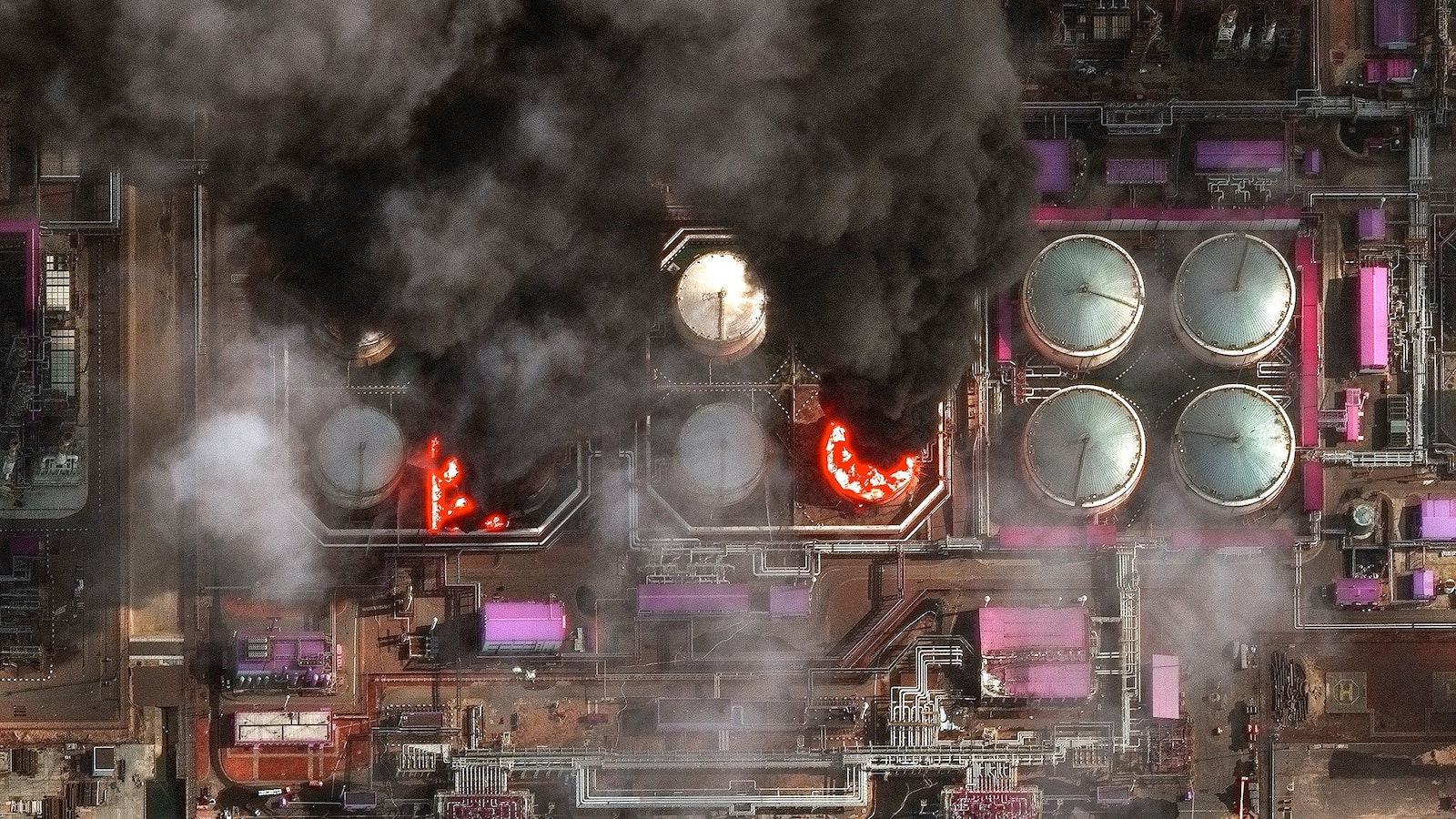
Russia reported downing 7,347 Ukrainian drones in March (≈237/day) while Ukraine recorded facing 6,462 Russian drones and 138 missiles in the month, intercepting ~5,833 drones (~90%) and 102 missiles (~74%). March 24 was the largest single-day barrage by either side (948 drones and 34 missiles launched by Moscow), and Ukraine says it now launches more cross-border attack drones than Russia for the first time. The data suggest a potential shift in strike capabilities toward Kyiv—supporting continued targeting of Russian oil export hubs—which raises upside risk for defense suppliers and short-term volatility in energy markets. Monitor further changes in strike tempo and confirmation of damage/attrition rates for implications to regional risk premia and sector exposures.
The tactical economics of low-cost swarm drones are shifting the marginal calculus of attrition warfare: when platform unit costs fall below the cost of an interceptor or the political cost of a strike, adversaries must either absorb persistent damage or pay to reconfigure defenses at scale. That reconfiguration favors investments in layered sensors, electronic warfare and interceptor networks rather than raw missile inventories — a structural demand pivot for certain defense sub-sectors and a negative for high-cost single-shot munitions makers.
A second-order winner set emerges down the supply chain: producers of high-volume COTS sensors, brushless motors, power electronics, and avionics modules see durable demand irrespective of which state wins the campaign. Conversely, firms whose revenues hinge on large, infrequent weapon sales face lumpiness and longer procurement cycles as buyers allocate more to continuous production lines and distributed manufacturing support. Energy market mechanics will also be affected through episodic hits to export infrastructure and precautionary rerouting of crude flows, raising logistics premiums and favoring flexible refineries and storage owners.
Key risks and catalysts cluster by cadence: in the near term (days–weeks) headline strikes and NATO airspace incidents drive knee-jerk volatility; over months, Western production transfers and standardized counter-UAS procurements will determine who captures market share. Reversal scenarios include a rapid surge in defensive SAM/air-defense integration that restores high intercept rates, or a bottleneck in Ukrainian production scaling if component sanctions bite — either could compress the growth premium priced into drone-centric equities.
AI-powered research, real-time alerts, and portfolio analytics for institutional investors.
Request DemoOverall Sentiment
mildly negative
Sentiment Score
-0.30
