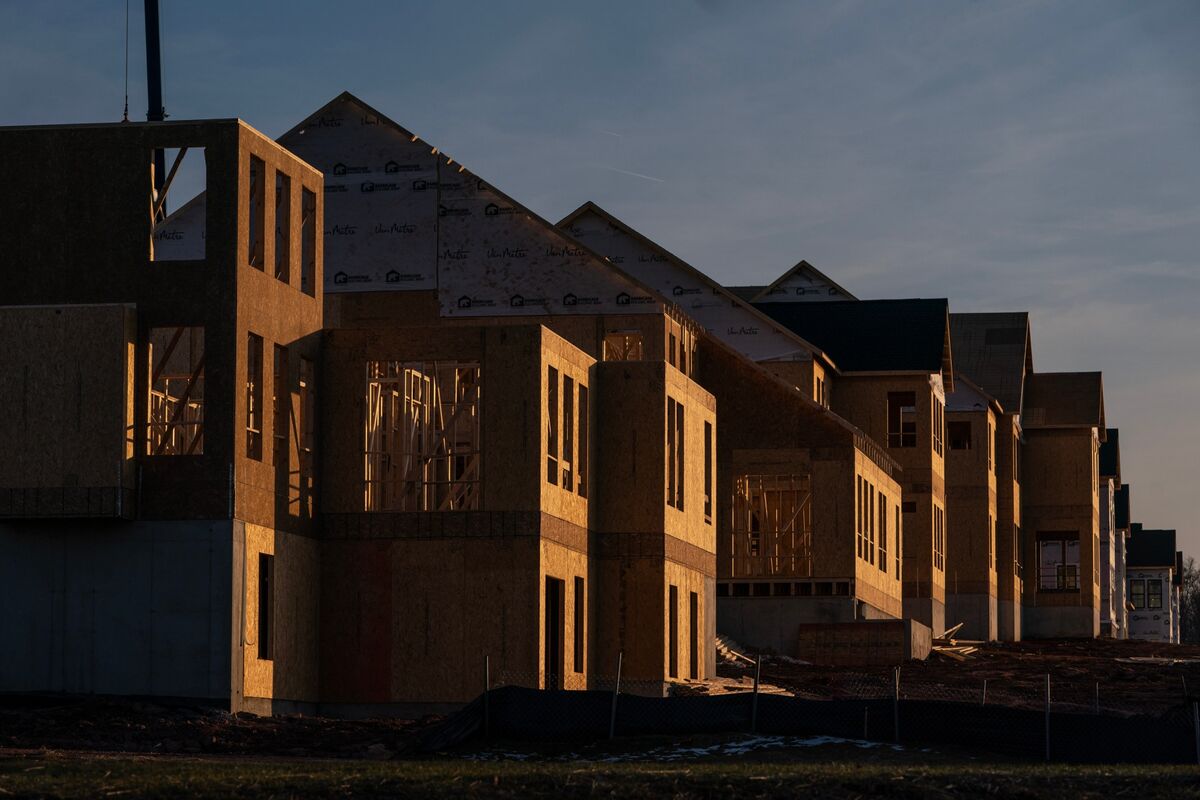
US housing starts fell 9.8% in May to an annualized rate of 1.26 million, the lowest level since the pandemic began, according to government data released Wednesday. This decline, which was below all estimates in a Bloomberg survey, reflects the impact of elevated housing inventory and high mortgage rates dampening builder sentiment and new construction activity.
New residential construction in the US experienced a significant downturn in May, with housing starts decreasing 9.8% to an annualized rate of 1.26 million homes. This marks the slowest pace of new construction since the early stages of the pandemic and notably fell below all economist estimates in a Bloomberg survey, signaling a more pronounced weakening than anticipated. The decline is attributed to a confluence of factors, primarily an elevated inventory of homes for sale and persistently high mortgage rates, which collectively have diminished builders' motivation to initiate new projects. This development points to a cooling housing market, where demand-side pressures from high financing costs are now visibly impacting supply-side activity.
AI-powered research, real-time alerts, and portfolio analytics for institutional investors.
Request DemoOverall Sentiment
strongly negative
Sentiment Score
-0.70
