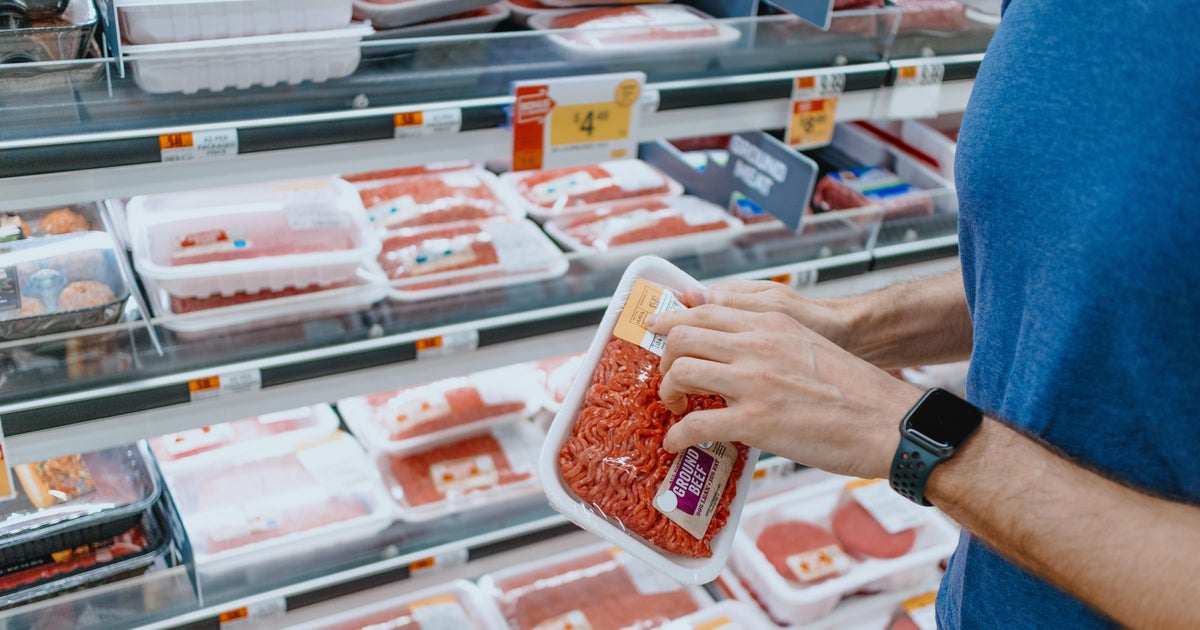
Mountain West Food Group has recalled 2,855 pounds of 16-oz vacuum-sealed Forward Farms grass-fed ground beef distributed to California, Colorado, Idaho, Montana, Pennsylvania and Washington after USDA/FSIS routine testing detected E. coli O26; the package bears a 01/13/26 use-or-freeze date and EST 2083. No illnesses have been reported; consumers are advised to discard or return the product. The recall represents a localized food-safety and reputational risk for the supplier and its distributors with minimal apparent supply disruption or material financial impact at this scale.
Market structure: This is a localized, small-volume recall (2,855 lbs) that disproportionately hurts niche grass‑fed suppliers and regional distributors while slightly advantaging large, integrated protein processors (TSN, PPC) and discount retailers (WMT, COST) that can absorb compliance costs and capture switched demand. Expect 1–3% transient share loss for premium grass‑fed SKUs in affected states over 2–8 weeks and modest downward pressure (1–2%) on spot fed‑cattle prices as buyers substitute to cheaper proteins.
Risk assessment: Tail risk is a larger outbreak or litigation cascade forcing multi-state recalls (>100k lbs) and federal tightening of testing standards, which could compress margins by 1–3% for small processors and spark M&A; that outcome has low probability but high impact over 3–12 months. Immediate risk window is days–weeks for headline volatility; medium term (1–3 months) sees sales and pricing shifts; long term (6–24 months) potential consolidation and higher QA capex favoring large public processors.
Trade implications: Tactical trades favor longs in large, diversified protein producers and poultry specialists (TSN, PPC) and a short bias in live‑cattle futures for 1–8 weeks to capture substitution effects; consider call spreads to express upside while limiting headline risk. Retailers with broad categories (WMT, COST) should outperform specialty grocers; fixed‑income and FX impact is negligible but a small disinflationary impulse to food CPI could mildly ease near‑term TIPS breakevens.
Contrarian angles: The market underprices regulatory friction that advantages scale — a sustained modest increase in FSIS testing would raise small‑processor costs and accelerate rollups, creating a 6–12 month structural gain for TSN/PPC of 2–5% revenue share. Reaction is likely underdone for large processors and overdone for local grass‑fed brands; historical parallels (romaine E. coli recalls) show durable brand share shifts toward larger suppliers within a year.
AI-powered research, real-time alerts, and portfolio analytics for institutional investors.
Request DemoOverall Sentiment
mildly negative
Sentiment Score
-0.25
