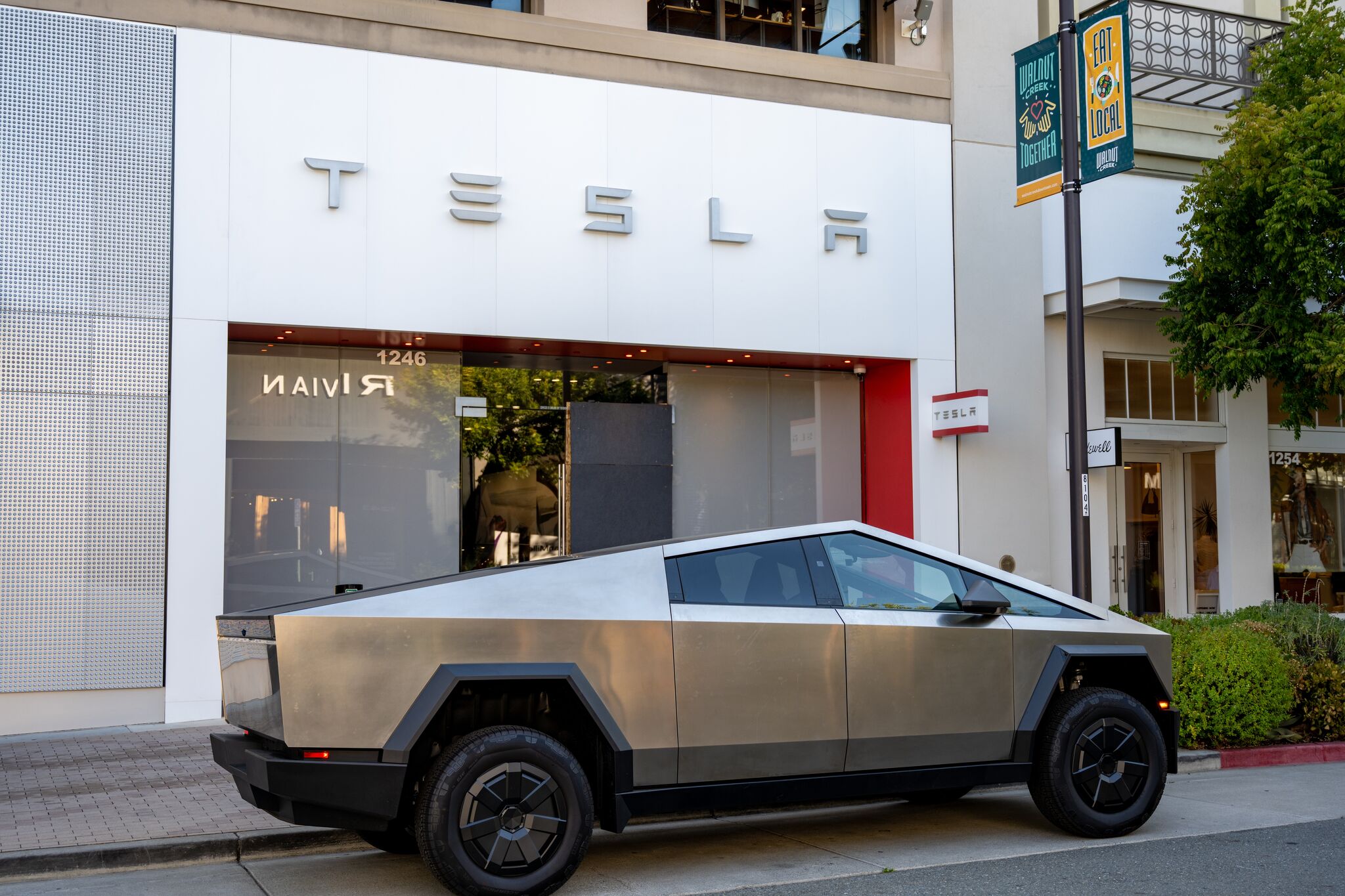
Tesla is facing lawsuits from families of Cybertruck crash victims, alleging that the vehicle's electric door systems failed post-collision, trapping occupants and leading to their deaths by smoke inhalation. The lawsuits claim the manual release mechanism was inaccessible, raising significant concerns about EV emergency egress and Tesla's design safety. This legal challenge could impact Tesla's liability, brand perception, and future product development, despite the company's ongoing efforts to redesign door handles.
About 10 months after a fiery Cybertruck crash in Piedmont killed three college students, two of their families are suing Tesla with allegations that the electric vehicle’s rear door design turned a survivable collision into a deadly disaster. The tragic crash plunged the sleepy Bay Area city into mourning last November. As SFGATE reported, a passerby managed to pull one survivor out of the burning car before police arrived. But Soren Dixon — later found to have been driving with a blood alcohol concentration of 0.195% — and rear passengers Krysta Tsukahara and Jack Nelson didn’t escape the vehicle. Each died of smoke inhalation; they were class of 2023 Piedmont High School grads, back in the Bay Area from college for Thanksgiving break. Advertisement Article continues below this ad Tsukahara’s family had already filed a lawsuit earlier this year against Dixon’s estate in Alameda County Superior Court. But on Thursday, they added Tesla to the same complaint, and Nelson’s family filed a suit of their own. Each says that the respective victims survived the initial crash but that the Cybertruck’s electric door systems shut down, meaning Tsukahara and Nelson would have had to find the “mechanical release cable” tucked under a rubber mat at the bottom of each door to escape. Parents Todd and Stannye Nelson, in a statement, called the Cybertruck’s manual door system “hidden, unlabeled, and impractical to locate or use in the smoke and chaos of a post-crash fire.” Carl Tsukahara indicated Tesla’s lack of public comment about his daughter’s death in his statement: “We’ve had to endure not only the loss of our daughter, but the silence surrounding how this happened and why she couldn’t get out. This company is worth a trillion dollars — how can you release a machine that’s not safe in so many ways?” Advertisement Article continues below this ad Tsukahara’s lawsuit includes a list of 34 occasions where people expressed concern about their Teslas’ door systems, meant to rebut a statement from CEO Elon Musk in 2013 in which he said “door-handle incidents have gone virtually to zero.” It also linked to a recent Bloomberg investigation, which pointed out that battery cells burn intensely, once caught, and said, “flush door handles, electrical power, mechanical releases” are “flummoxing occupants and first responders.” SFGATE reported in June on basketball phenom Alijah Arenas’ harrowing escape from a Cybertruck whose doors wouldn’t open. Tesla design chief Franz von Holzhausen said in the Sept. 19 episode of Bloomberg’s “Hot Pursuit!” podcast that the company is currently redesigning its door handles, and that combining the manual and electronic openings “makes a lot of sense.” Each of the Piedmont lawsuits seek various damages from Tesla, as well as payment for the deceased students’ funerals and burials. The Nelson family clarified in their statement that while they had to name Dixon’s estate as a defendant, they don’t seek to punish his family. Tesla did not respond to SFGATE’s request for comment. Advertisement Article continues below this ad “This lawsuit is about truth and accountability,” attorney Roger Dreyer, representing the Tsukahara family, said in a statement. “The design of this vehicle failed Krysta. There was no functioning, accessible manual override or emergency release for her to escape. Her death was preventable.” — Invasive disease-spreading mosquitoes found in Bay Area — California university jumps rankings to best in the nation, new list shows — United, TSA start testing new luggage procedure at SFO — Local San Francisco TV news anchors leave KGO Sign up for daily SFGATE breaking news alerts here. Google now allows you to add preferred news sources. Set SFGATE as one of yours to see more of us when you search. Tesla is facing significant legal and reputational risk from two lawsuits alleging that a Cybertruck's door design is fatally flawed. The complaints stem from a crash where three occupants died of smoke inhalation, claiming the vehicle's electric doors failed post-collision and the manual release was "hidden, unlabeled, and impractical to locate or use." While the driver was intoxicated, the legal focus is on the vehicle's post-crash survivability, a critical distinction for product liability. The plaintiffs' case is strengthened by citing a history of 34 prior complaints about Tesla's door systems and a Bloomberg investigation into EV egress challenges. A statement from Tesla's design chief, Franz von Holzhausen, acknowledging the company is redesigning its door handles could be interpreted as a tacit admission of existing design weaknesses. The incident, marked by a strongly negative sentiment score (-0.8 for TSLA) and high market impact (0.7), moves beyond a single tragedy to question the fundamental safety engineering of a flagship product, exposing the company to potential financial damages, regulatory scrutiny, and erosion of consumer trust.
AI-powered research, real-time alerts, and portfolio analytics for institutional investors.
Request DemoOverall Sentiment
strongly negative
Sentiment Score
-0.70
Ticker Sentiment
