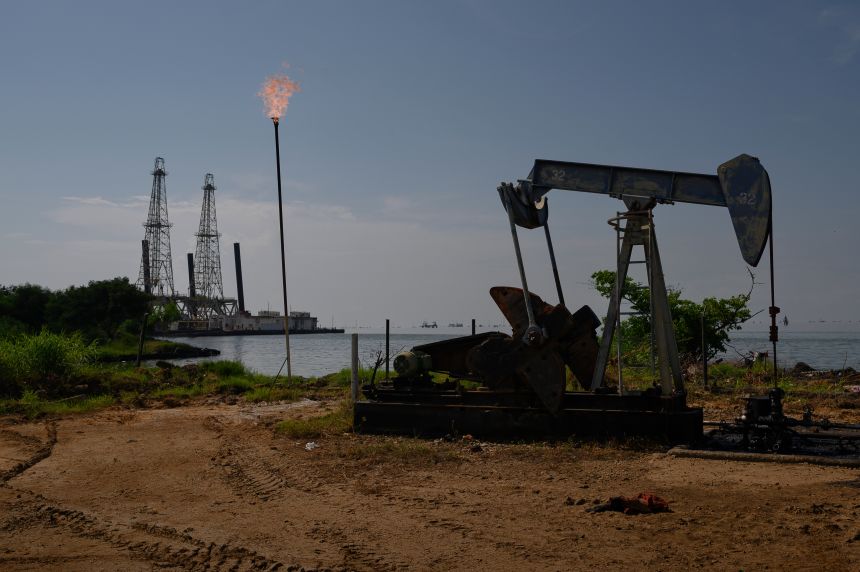
Venezuelan President Nicolás Maduro resurfaced publicly amid heightened tensions after the U.S. deployed more than a dozen warships and roughly 15,000 troops to the region and confirmed recent phone contact between Maduro and President Trump. Maduro sent a Nov. 30 letter to OPEC accusing the U.S. of threatening Venezuelan oil reserves and warned that such threats endanger Venezuelan oil production and international markets, while Caracas has publicly accused the U.S. of 'murder' after strikes on suspected drug boats killed Venezuelan citizens. The developments increase geopolitical and commodity-risk exposure — signaling potential upside volatility in oil markets and elevated political risk for investments with Venezuelan or regional supply-chain exposure.
Market structure: Immediate winners are global heavy-crude refiners and integrated majors (Exxon Mobil, Shell-type exposures) and defense suppliers; losers are Venezuelan production (PDVSA), regional EM assets and carriers exposed to Caribbean routes. Pricing power shifts toward buyers of heavy sour barrels and to US shale in the medium term; a 3–8% near-term spike in Brent or widening heavy/light differentials is plausible if Venezuelan exports or tanker routes are disrupted.
Risk assessment: Tail risks include escalation to land strikes or asset seizures that could add $15–25/bbl to oil and provoke EM capital flight; probability low (<15%) but impact high. Timeline: immediate (days) = volatility in oil, FX and sovereign CDS; short-term (1–3 months) = commodity repricing and EM outflows; long-term (6–24 months) = capex shifts back to US shale if higher prices persist. Hidden dependencies: China/India purchasing via intermediaries, shipping-insurance market reactions, and OPEC responses could blunt or amplify shocks.
Trade implications: Tactical plays favor convex bullish exposure to oil (3-month call spreads) and selective longs in XOM/XLE and refiners (VLO, MPC); hedge with long USD and gold (GLD) and reduce EM duration (EMB/EEM). Defense longs (LMT/RTX) as 6–12 month asymmetric hedges. Use tight stop-losses and size initial positions small (1–3% each) due to headline risk.
Contrarian angles: Consensus of a sustained Venezuelan supply shock may be overdone because current production is low (~<1mbpd) and buyers can route around sanctions; a de-escalation would reverse oil spikes 5–15% quickly. Historical parallels (short-lived tanker incidents) suggest favoring short-dated volatility plays over large directional outrights. Unintended consequence: sustained price rise accelerates US shale supply response, capping long-term upside.
AI-powered research, real-time alerts, and portfolio analytics for institutional investors.
Request DemoOverall Sentiment
moderately negative
Sentiment Score
-0.35
Ticker Sentiment
