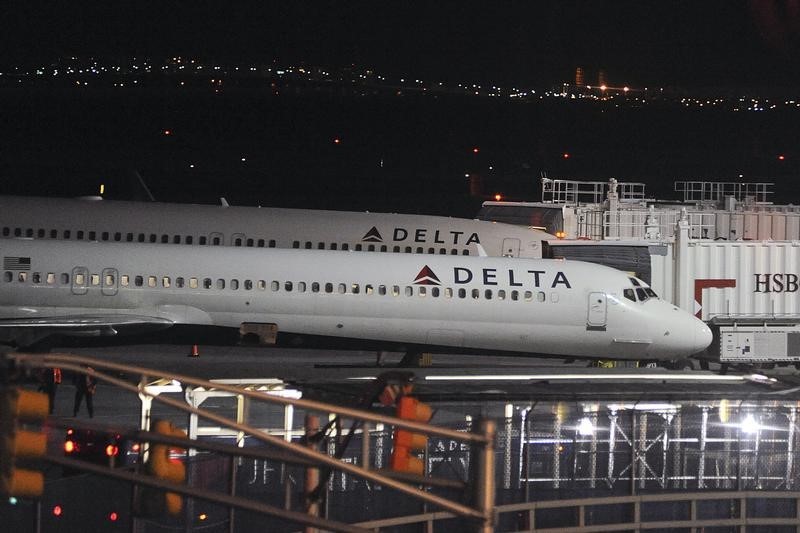
Delta reported Q1 EPS of $0.64 vs. $0.61 consensus and revenue of $14.2B vs. $13.97B, with operating income $652M and a 4.6% operating margin. The company trimmed planned Q2 capacity growth by ~3.5 percentage points and guided Q2 EPS of $1.00–$1.50 (Street $1.70) with an expected operating margin of 6%–8% and low-teens revenue growth. Guidance assumes all-in fuel of about $4.30/gal including a ~$300M refinery benefit. Shares were up >12% intraday, boosted by a U.S.-Iran ceasefire that pushed oil prices lower and lifted airline stocks.
Delta’s explicit shift from growth to margin-defense is a structural lever that trades through multiple channels: reduced ASM growth tightens seat supply in key hub-to-hub and premium transcontinental markets where Delta earns price power, while lower unit growth pushes some demand onto competitors or drives higher yields if leisure demand remains inelastic. The immediate margin relief from lower capacity compounds with working-capital and asset-utilization effects — fewer incremental aircraft deliveries and slower leasing demand compress medium-term capex and order visibility for OEMs and lessors.
Second-order winners include premium-heavy network carriers and airports concentrated around Delta hubs (higher reciprocal pricing power), as well as bondholders of airlines if cash-flow stability improves; losers include regional partners and aircraft lessors whose utilization/redeployment optionality falls and whose forward earnings are more cyclical. Fuel-curve dynamics are a live swing factor: if refinery/backwardation patterns reverse, any near-term refinery-derived tailwind to carriers can evaporate quickly and become a multi-quarter drag as hedges roll.
Timing and catalyst map: days-weeks — oil/geo headlines and short-cycle fare moves; weeks-months — revenue-per-ASM and unit cost re-steering as capacity changes flow into schedules and corporate travel returns; 6–18 months — fleet order book, leasing market and labor/contract negotiations. The path is asymmetric: limited upside from a benign oil path is already partially priced into defensive guidance, while re-escalation in fuel costs or demand softness can compress margins quickly given airlines’ high fixed-cost base and operational fragility.
AI-powered research, real-time alerts, and portfolio analytics for institutional investors.
Request DemoOverall Sentiment
mixed
Sentiment Score
0.10
Ticker Sentiment
