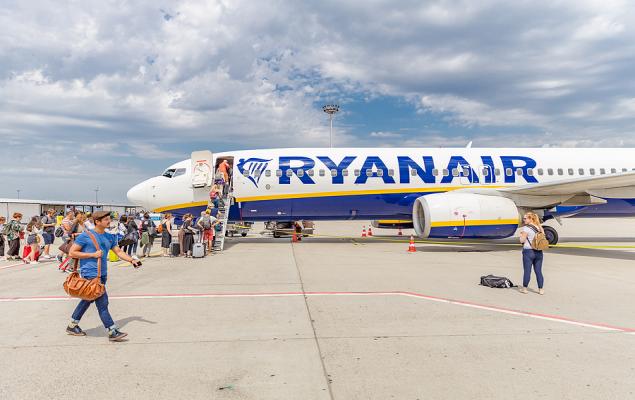
Ryanair is expanding operations at Pescara after the Abruzzo Region abolished a municipal tax, a move the carrier says drove an 80% surge in passengers and supported over 1,000 jobs. The airline is investing $200 million, basing two aircraft year-round (its first winter deployment at Pescara), and launching a record number of routes for Winter 2025 and Summer 2026 while urging national tax removal that it projects could unlock 20 million additional passengers, 40 aircraft and 250+ routes across Italy. Ryanair shares (RYAAY) have risen ~51.1% over the last year versus a 9.4% industry gain, highlighting potential investor upside tied to regional policy-driven capacity growth.
Market structure: The immediate winners are Ryanair (RYAAY), other low-cost carriers and regional airports in Italy — they gain pricing power on short-haul flows and can capture market share from legacy carriers; losers are higher‑cost/full‑service airlines and tax‑dependent regional competitors. Ryanair’s claim of +20m passengers and 40 aircraft (if realized over 12–36 months) implies a ~5–10% incremental supply to the Italy short‑haul market, pressuring yields but increasing ancillary revenues and local tourism spend.
Risk assessment: Tail risks include a reversal of municipal/national tax policy, EU state‑aid scrutiny, fuel spikes >$100/bbl or coordinated labor action; these could compress margins within weeks and crater expectations. Expect immediate market moves on announcements (days), route/aircraft basing updates in 1–3 months, and structural capacity/ROI realization over 12–36 months; hidden dependencies include local airport capacity, slot availability and seasonality which can cap upside.
Trade implications: Direct trade: asymmetric long RYAAY exposure via defined‑risk options (9–12 month bull call spreads) to capture upside from nationwide tax removal; pair trade: long RYAAY vs short legacy European carriers (e.g., IAG) for 6–12 months to express market‑share shift. Allocate small tactical longs to EXPD and SKYW (1–2% each) for logistics/regional lift; use protective stops of 10–15%.
Contrarian angles: Consensus under‑estimates execution friction — airport capex and slot limits often force slower route ramp; Ryanair’s 20m figure is aggressive and could be 50–70% realized. Historical parallels (post‑deregulation LCC booms) show initial price erosion then consolidation; position size for RYAAY should assume 30–50% volatility and be scaled accordingly.
AI-powered research, real-time alerts, and portfolio analytics for institutional investors.
Request DemoOverall Sentiment
moderately positive
Sentiment Score
0.48
Ticker Sentiment
