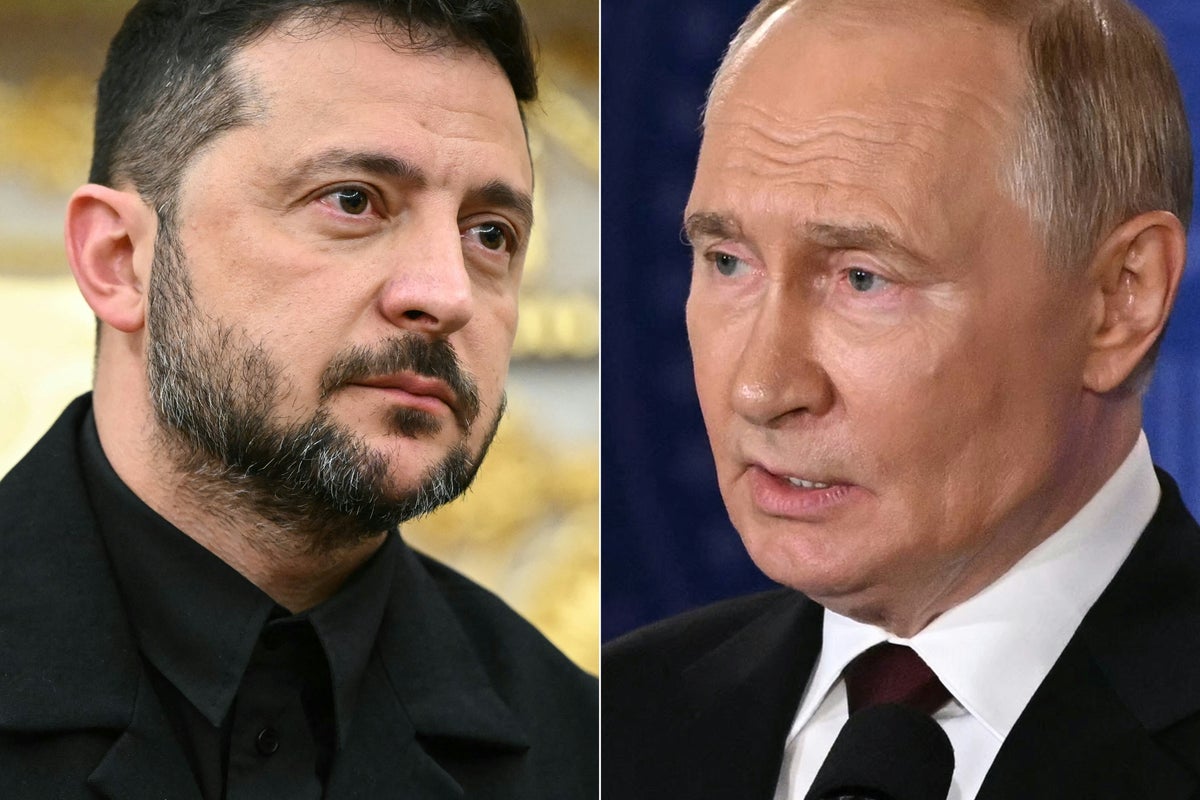
Ukraine said there was no silence on the front line, with 180 battlefield clashes reported over 24 hours and at least three civilians killed, while Zelensky warned Russia has 'no intention' of ending the war. The EU imposed sanctions on 16 individuals and seven entities linked to the unlawful deportation and indoctrination of roughly 20,500 Ukrainian children. The article reinforces persistent geopolitical risk and a prolonged conflict backdrop, with elevated implications for European security and defense spending.
The market implication is not “peace risk,” but a higher probability of prolonged, uneven escalation with periodic headline-driven de-escalation attempts. That combination tends to support defense procurement, counter-drone, EW, and missile-defense demand while keeping a lid on any meaningful re-risking of European cyclicals tied to eastern logistics. The most underappreciated second-order effect is that even unsuccessful ceasefire talk can tighten air-defense spending in Europe: policymakers will be pressured to show tangible protection of airports, critical infrastructure, and civilian nodes rather than rely on diplomatic signaling.
The sanctions package on child deportation is not just moral posturing; it broadens the legal perimeter around Russian elite exposure and keeps optionality open for future asset seizures, travel restrictions, and compliance frictions. That matters for Europe’s banks, insurers, and services firms with residual Russia-linked legal tail risk, but the bigger read-through is that sanctions escalation has shifted from energy to identity/war-crimes domains where rollback is politically harder. In other words, even if battlefield intensity cools temporarily, the sanction architecture likely becomes stickier over the next 6-12 months, limiting any rebound in cross-border flows, underwriting, and transaction services.
Ukraine’s domestic corruption probe is a negative for aid durability and headline trust, but it may paradoxically improve medium-term funding odds if it is perceived as institutional cleansing rather than political infighting. Near term, though, it raises execution risk for foreign support packages and can widen the spread between “war-exposed” beneficiaries and pure Ukraine proxies: investors will demand a discount for governance uncertainty. The consensus may be overpricing a fast settlement and underpricing a slow-burn war economy in which defense, industrial de-risking, and sanctions compliance remain the dominant trade vectors.
AI-powered research, real-time alerts, and portfolio analytics for institutional investors.
Request DemoOverall Sentiment
strongly negative
Sentiment Score
-0.55
