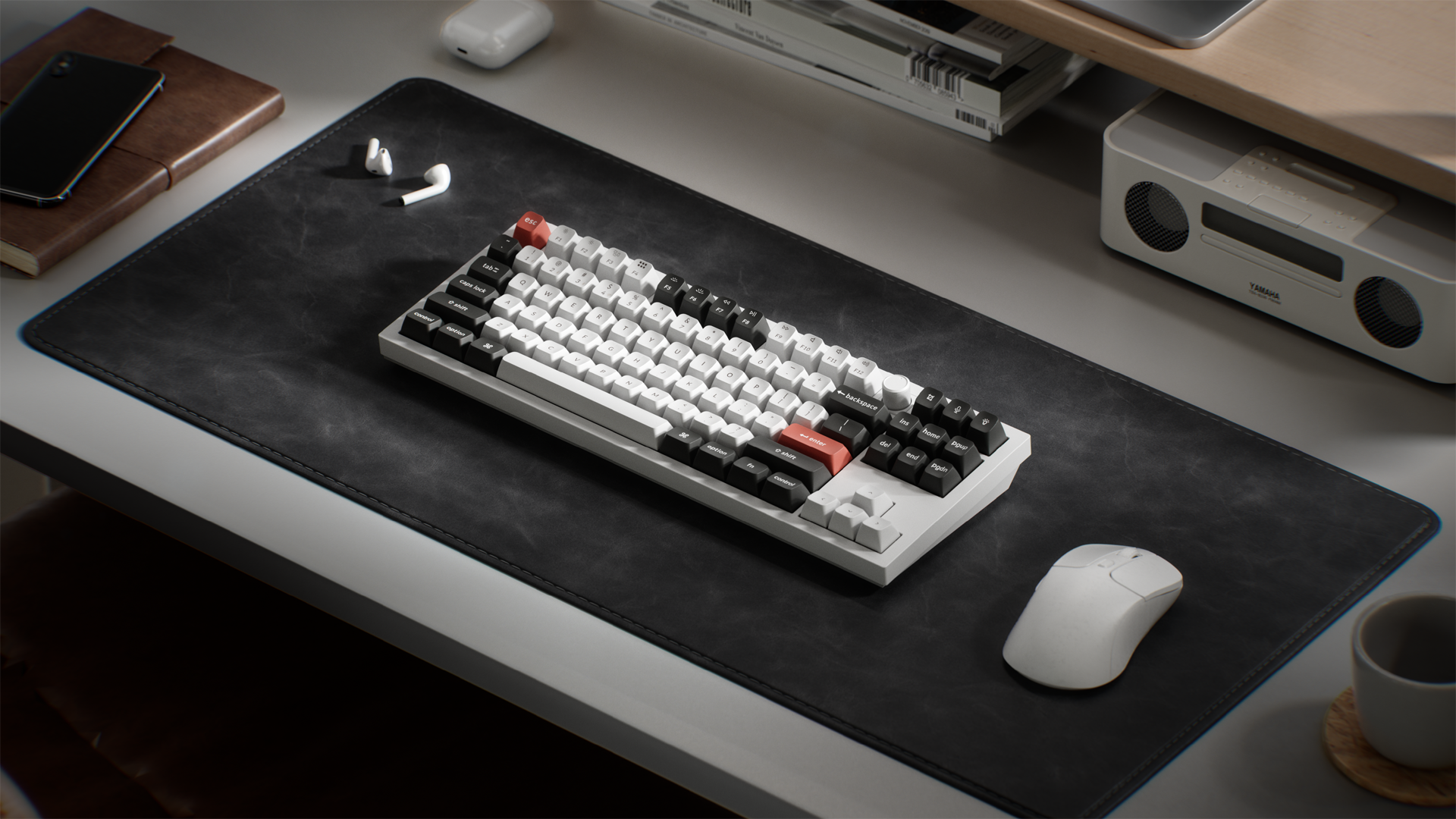
Keychron launched its Q Ultra wireless mechanical keyboard series at CES 2026 featuring ZMK firmware that the company says enables up to 660 hours of battery life at an 8K polling rate, along with new Silk POM switches, full aluminum construction, and double-shot PBT keycaps. The lineup includes Q6 Ultra (full-size) at $239.99, Q3 Ultra (TKL) and Q1 Ultra (75%) at $229.99; updated V Ultra models (V5 $119.99, V3 and V1 $114.99) with similar specs will ship later in the month. The move to ZMK (MIT-licensed, wireless-focused) and premium material/special-edition offerings (resin, concrete, marble cases) signal a product and differentiation push in the premium peripheral market, likely affecting consumer demand and brand positioning more than near-term financials.
Market structure: Keychron’s CES launch signals accelerating feature-convergence in peripherals — higher battery life, 8K polling, and premium materials at $115–$240 price points compresses premium differentiation. Winners: large OEMs and component suppliers able to scale ZMK-support and low-power RF MCUs (Logitech LOGI, STMicroelectronics STM, Texas Instruments TXN); losers: small boutique vendors and incumbents slow to adopt wireless-first firmware. Expect modest downward pricing pressure on mid-tier wireless boards over 12–24 months and stronger bargaining power for chassis/switch suppliers.
Risk assessment: Tail risks include performance shortfalls (battery life <50% of claims) triggering returns/reviews-led selloffs, or IP/licensing disputes around firmware in 6–18 months; supply shocks on exotic cases (concrete/marble) could lift costs >20%. Immediate risk window is 0–90 days (CES hype/reviews), short-term 3–9 months (shipments, channel inventory), long-term 12–36 months (firmware standardization altering OEM margins). Hidden dependency: adoption depends on ZMK ecosystem growth (driver tools, vendor support), not just hardware.
Trade implications: Favor scale players with distribution and MCU exposure: overweight LOGI (core peripherals) and STM/TXN (chipset suppliers) for 6–18 month upside; underweight small-cap peripheral names (HEAR, RAZR/1337.HK equivalents) where pricing and SKU churn amplify volatility. Use limited-cost options (6–9 month call spreads on LOGI, protective puts on smaller peripherals) and size positions 1–3% portfolio per idea, rebalancing after first product reviews within 30–60 days.
Contrarian angles: Consensus may overstate disruption — brand, retail channels, and enterprise procurement slow firmware shifts; ZMK’s MIT license lowers legal friction but raises commoditization risk, capping margins. Luxury stone/resin SKUs are low-volume margin plays that won’t move bulk volumes — avoid extrapolating niche gross margins to the broader market. Historical parallel: Bluetooth audio codec arms races show standards-driven cost declines over 24–36 months, not instant share flips.
AI-powered research, real-time alerts, and portfolio analytics for institutional investors.
Request DemoOverall Sentiment
mildly positive
Sentiment Score
0.30
