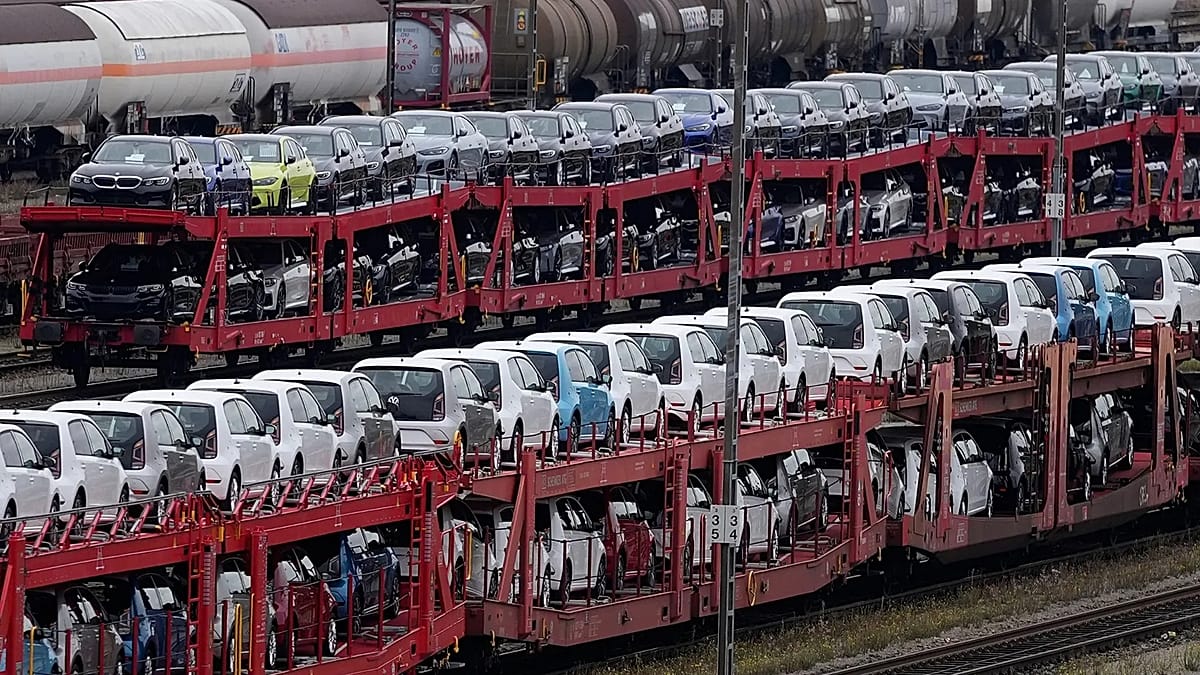
The European Commission rolled back its planned 2035 ban on combustion-engine car sales from 100% to 90%, allowing continued sales of hybrids and obliging manufacturers to offset the remaining 10% of emissions via EU low‑carbon steel or sustainable fuels; small, affordable EVs produced in the EU can receive ‘super credits’. Climate Commissioner Wopke Hoekstra framed the change as a competitiveness-minded, climate‑neutral compromise amid pressure from automakers facing higher energy costs, tariffs and Chinese competition, while the proposal still requires approval by EU lawmakers and member states. The adjustment reduces regulatory risk for European carmakers and related suppliers (steel, fuel, EV components) but raises political and ESG scrutiny that could influence policy outcomes and investor sentiment ahead of legislative negotiations.
Market structure: The 90% target favors legacy OEMs that can stretch hybrid/ICE sales and use EU-sourced offsets — beneficiaries include VWAGY, BMWYY and STLA which can buy time on capex and avoid margin-dilutive EV pushes. Demand signal: modest near-term upside for low‑carbon steel and e‑fuel producers (ArcelorMittal MT, SSABY, NUE) as OEMs will need offsets; pressure on battery raw‑material miners (LIT, ALB) is muted but growth trajectories for pure EV players (TSLA) could soften in Europe. Cross-asset: expect modest tightening in senior industrial credit spreads (Germany autos supply chain) and a small EUR appreciation if competitiveness rhetoric succeeds; oil downside is limited — e‑fuels introduce new crude demand optionality.
Risk assessment: Tail risks include a Parliament rollback back to 100% ban (high impact, <30% probability over 3–6 months), a shortage/price spike in certified green steel (mid probability, 6–18 months) or WTO/China retaliation on subsidies (low probability, systemic). Immediate (days) volatility centers on political headlines; short (weeks/months) risks are amendment votes and certification rules; long (2–5 years) risk is structural reallocation of R&D and supply chains. Hidden dependencies: availability of EU green‑steel capacity and the design of offset crediting markets — if certificates are scarce, OEMs face sudden capex or input inflation.
Trade implications: Direct plays — establish a 2–3% long in VWAGY and STLA (EU exposure, relative pricing power) and 1–2% long in MT or SSABY to capture green‑steel premium within 6–12 months. Pair trade — long VWAGY (1.5%) / short TSLA (0.8%) to express slower EU EV penetration; monitor regional volumes monthly. Options — buy 3‑ to 6‑month call spreads on MT (bullish steel) and a 3‑month put spread on TSLA (hedge if EU demand softens); size to limit portfolio VaR to 1–1.5%. Enter ahead of the EU Parliament vote expected within 60–90 days; trim positions if Parliament restores >95% ban or green‑steel certificates trade below €X/t (set threshold at €100–150/t).
Contrarian angles: The market underestimates bottlenecks in certified low‑carbon steel — prices could rally 10–25% if demand outstrips supply in 12–24 months, benefiting integrated steelmakers. Consensus may overvalue pure EV growth in Europe; that makes short/hedge on EU EV pure‑plays underpriced. Historical parallel: fuel‑standard rollbacks in other regions show policy reversals can create multi‑year winners among incumbents and input suppliers rather than disruptors. Unintended consequence: stronger demand for e‑fuels and biofuels could create a mid‑cycle oil price floor; consider cyclical energy hedges if spreads compress.
AI-powered research, real-time alerts, and portfolio analytics for institutional investors.
Request DemoOverall Sentiment
mildly positive
Sentiment Score
0.25
