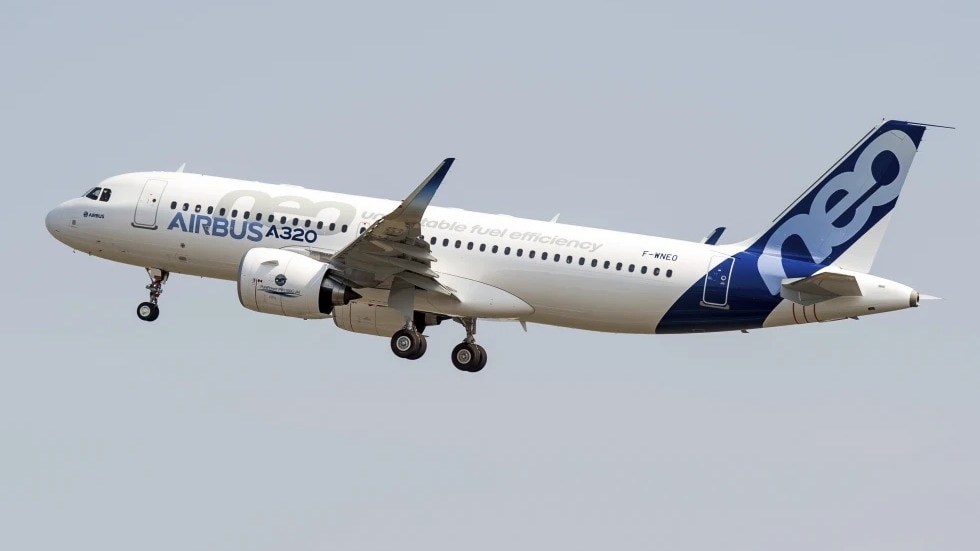
Airbus has been forced to ground roughly 6,000 A320-family aircraft worldwide after EASA issued an Emergency Airworthiness Directive (Nov. 28, 2025) following an investigation that linked a JetBlue A320 pitch-down incident on Oct. 30 to data corruption in ELAC B software version L104 caused by intense solar radiation. Regulators require operators to revert ELAC software to L103 or replace hardware (about three hours per aircraft) before passenger flights resume, disrupting carriers including American, Delta and IndiGo and representing the largest recall in Airbus’s 55‑year history with material operational and maintenance cost implications during peak travel.
Market structure: The immediate winners are aftermarket MROs and avionics/hardware suppliers who can be paid to revert software or replace ELAC boxes; expect a multi-week spike in billable hours across ~6,000 aircraft (3 hours/plane = ~18,000 labor-hours minimum). Losers are airlines with heavy A320 exposure (notably JBLU, AAL) facing revenue loss from cancelled flights during peak travel; short-term capacity shock will push fares up on unaffected routes but overall pax volumes fall in next 2–6 weeks.
Risk assessment: Tail risks include an expanded EASA/FAA directive that lengthens ferry-only operations, multi-month groundings, large liability claims or compensation obligations (>hundreds of $M across carriers), and a synchronized solar event causing repeat faults. Timeline: immediate (days) = cancellations, short (weeks–months) = repairs, operational rerouting and ticket refunds, long (quarters) = potential shift in aircraft ordering and demand for radiation-hardened avionics. Monitor EASA/FAA updates and weekly aircraft reinstatement counts; if <25% fixed after 14 days, probability of protracted disruption rises materially.
Trade implications: Tactical shorts on high-exposure airlines (JBLU, AAL) and tactical longs in avionics/MRO (e.g., RTX, HON) are warranted. Options: buy 30–60d ATM puts on JBLU sized 2–3% portfolio for a targeted 15–30% move; implement 3–9m call spreads on RTX sized 1–2% to capture aftermarket revenue. Reduce outright airline beta by 3–5% and rotate into aerospace suppliers and industrials for 3–12 months.
Contrarian angles: The market may overshoot on fear—repairs (reversion to L103) take ~3 hours and are deterministic, so a staged rebound is likely once repair cadence reaches ~300–500 aircraft/week; 2019 737 MAX groundings show OEM reputational damage can be long but sales only shift slowly. Unintended consequence: aggressive shorting risks reversal if Airbus secures reimbursement/insured losses or regulators limit airline liability; use tight triggers and hedges.
AI-powered research, real-time alerts, and portfolio analytics for institutional investors.
Request DemoOverall Sentiment
strongly negative
Sentiment Score
-0.65
Ticker Sentiment
