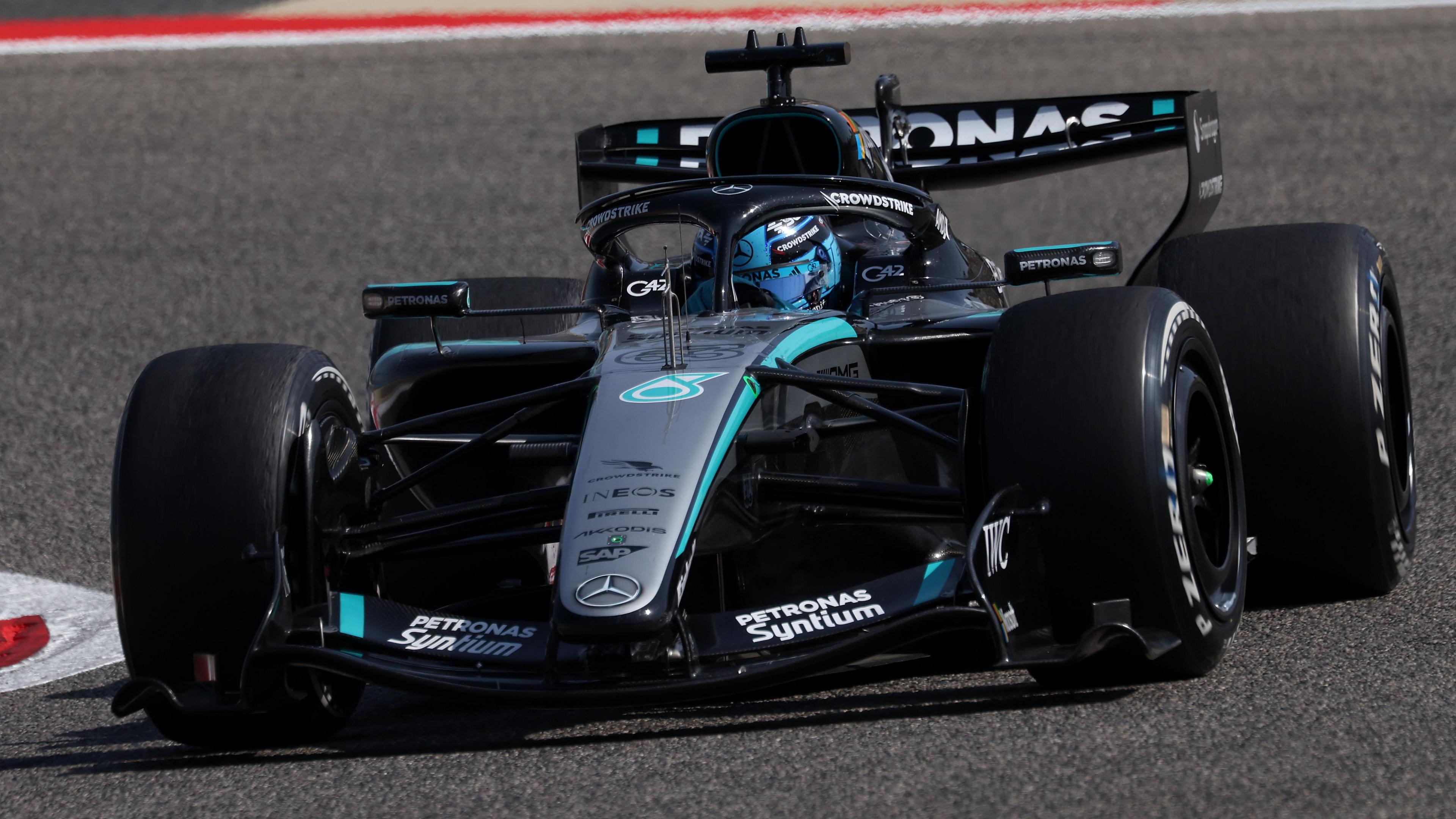
Bahrain pre-season testing under the new energy-focused regulations exposed clear performance dispersion: Mercedes posted the fastest lap (Kimi Antonelli 1:33.669) while Red Bull showed an apparent engine advantage in sustained energy deployment even though Verstappen recorded the seventh fastest lap (1:34.798). A brewing regulatory dispute over engine compression-ratio interpretation (Mercedes at the centre) and the switch to carbon‑neutral fuel introduce governance and rule‑risk that could alter competitive order, while Aston Martin — with Alonso — sits roughly four seconds off the leaders, creating potential near‑term commercial and equity pressure for the publicly linked team and its suppliers.
Market structure: Testing signals a bifurcated grid — a 0.6s/ lap Red Bull straight-line energy advantage vs rivals and a clear 1.5–2.0s gap separating top-four from midfield; Ferrari (RACE) and Mercedes look best-placed to capture lap-time share early while Aston Martin (AML.L) appears ~4s off in Bahrain, implying immediate competitive weakness for that team and its suppliers. Energy-recovery and sustainable-fuel rules shift value to OEMs/engine IP owners and software/energy-management suppliers (ERUs, control electronics) rather than pure aero specialists.
Risk assessment: Key tail risks are an FIA technical intervention on engine/thermal loopholes within 30–60 days (which could re-rate Mercedes or knock-down winners) and supply/partner execution failures (e.g., Honda integration at Aston Martin) over 3–12 months. Hidden dependency: on-track lap-time masking via fuel/load/engine-modes — first three races (Bahrain, Saudi Arabia, Australia) will materially de-risk or validate test narratives; market moves before those races carry >30% chance of reversal.
Trade implications: Near-term (days–weeks) favor event-driven, relative-value trades: long liquid exposure to RACE (expect asymmetric upside if Red Bull not dominant), short AML.L or auto-supplier names tied to Aston Martin underperformance; use 1–3 month option spreads to cap risk. Cross-asset: modest upside to sustainable-fuel producers and EUR exporters if Ferrari/Mercedes outperform; small directional credit widening risk for small suppliers to struggling teams if the season's first month shows persistent underperformance.
Contrarian angles: Consensus assumes Red Bull engine superiority is decisive — but FIA action or map-tuning parity could compress gaps by 0.3–0.6s quickly; therefore outright long of Mercedes (MBG.DE) or short of Ferrari is premature. If Aston Martin's deficit is executional (Newey late/hardware), mean reversion to midfield within 3–4 races is plausible, creating a tactical long after validated upgrades.
AI-powered research, real-time alerts, and portfolio analytics for institutional investors.
Request DemoOverall Sentiment
neutral
Sentiment Score
-0.12
Ticker Sentiment
