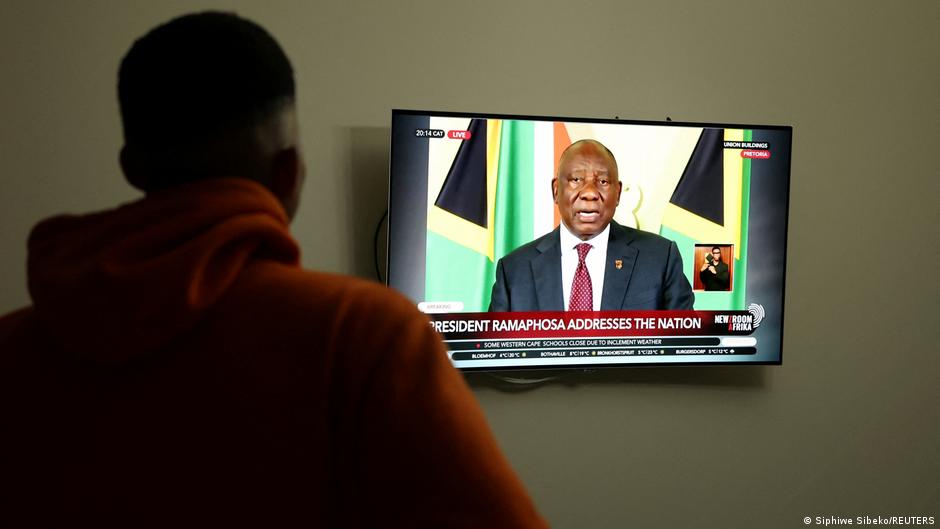
South Africa's President Cyril Ramaphosa said he will not resign and will challenge impeachment proceedings in court over the Phala Phala cash scandal. He faces allegations tied to the alleged hiding of $580,000 in foreign currency from a 2020 farm break-in, and the Constitutional Court has ordered the case referred to an impeachment committee. The issue is politically significant but is unlikely to have immediate broad market impact.
This is less about one politician’s survival than about the near-term pricing of institutional instability in South Africa. The key market mechanism is not a binary impeachment outcome; it is the extended period of coalition distraction and policy paralysis that can freeze fiscal decision-making, delay SOE support, and widen the discount rate investors apply to rand assets. That matters because South Africa’s risk premium is already highly sensitive to governance headlines, so even a low-probability removal process can keep local bonds under pressure for weeks to months.
The second-order effect is inside the governing coalition: partners now have leverage to extract concessions on cabinet posts, budget priorities, and procurement oversight. That raises the odds of a slower reform agenda and more fragmented implementation, which is typically worse for banks, retailers, and domestically exposed cyclicals than for exporters. A weaker governance backdrop can also push capital toward hard-currency earners and away from duration-heavy South African assets, particularly if global risk appetite softens at the same time.
The tail risk is not just impeachment itself, but a forced succession fight or confidence shock that triggers ratings pressure and outflows before the legal process resolves. On the other hand, if ANC discipline holds and the committee process becomes procedural rather than substantive, the market may fade the headline within 2-6 weeks. The contrarian angle is that this may be an over-discounted scandal in the equity market, but under-discounted in local rates and FX, where institutional credibility matters more than the final verdict.
For trades, the cleaner expression is to stay tactically bearish on the rand versus the dollar into procedural milestones, while avoiding broad South Africa equity shorts unless coalition stress visibly escalates. Any improvement in coalition coordination or a court-led narrowing of the case would likely squeeze short rand positioning quickly, so risk should be tightly time-boxed around hearing dates and committee announcements.
AI-powered research, real-time alerts, and portfolio analytics for institutional investors.
Request DemoOverall Sentiment
mildly negative
Sentiment Score
-0.25
