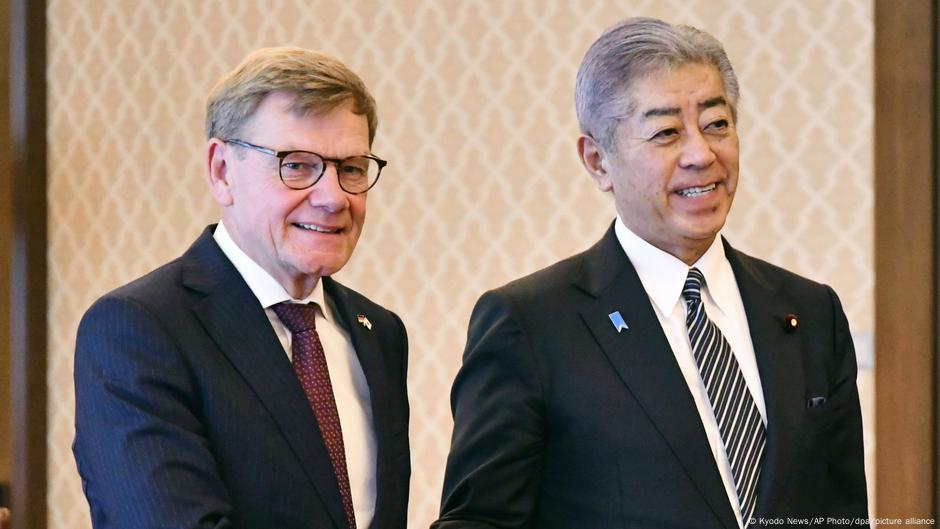
German Foreign Minister Johann Wadephul, during a visit to Japan, explicitly criticized China's "increasingly aggressive" actions in the Asia-Pacific and its enabling of Russia's war in Ukraine, framing the Germany-Japan partnership as a united front against threats to the international order. This strong diplomatic stance, despite Germany's significant economic dependence on Chinese rare earths, signals escalating geopolitical tensions with potential implications for global trade and supply chains, drawing a swift warning from Beijing against "inciting confrontation."
Germany's foreign minister has signaled a significant hardening of diplomatic posture towards China, using a strategic visit to Japan to publicly label Beijing's actions in the Asia-Pacific as "increasingly aggressive" and accusing it of enabling Russia's war in Ukraine through the supply of dual-use goods. This alignment with Japan, a fellow G7 member, frames the issue as a defense of the established international order against a direct threat. The statements carry substantial weight, as any escalation in the Taiwan Strait is cited as having "serious consequences for the world economy." However, this assertive stance is set against a backdrop of critical economic vulnerability, underscored by Germany's 90% import dependency on Chinese rare earths. This paradox, where diplomatic condemnation conflicts with deep economic reliance, highlights a major source of geopolitical and market risk, reflected in the strongly negative sentiment and high market impact score. China's immediate warning against "inciting confrontation" indicates that these tensions are likely to escalate, with potential repercussions for global trade policy and supply chains.
AI-powered research, real-time alerts, and portfolio analytics for institutional investors.
Request DemoOverall Sentiment
strongly negative
Sentiment Score
-0.60
