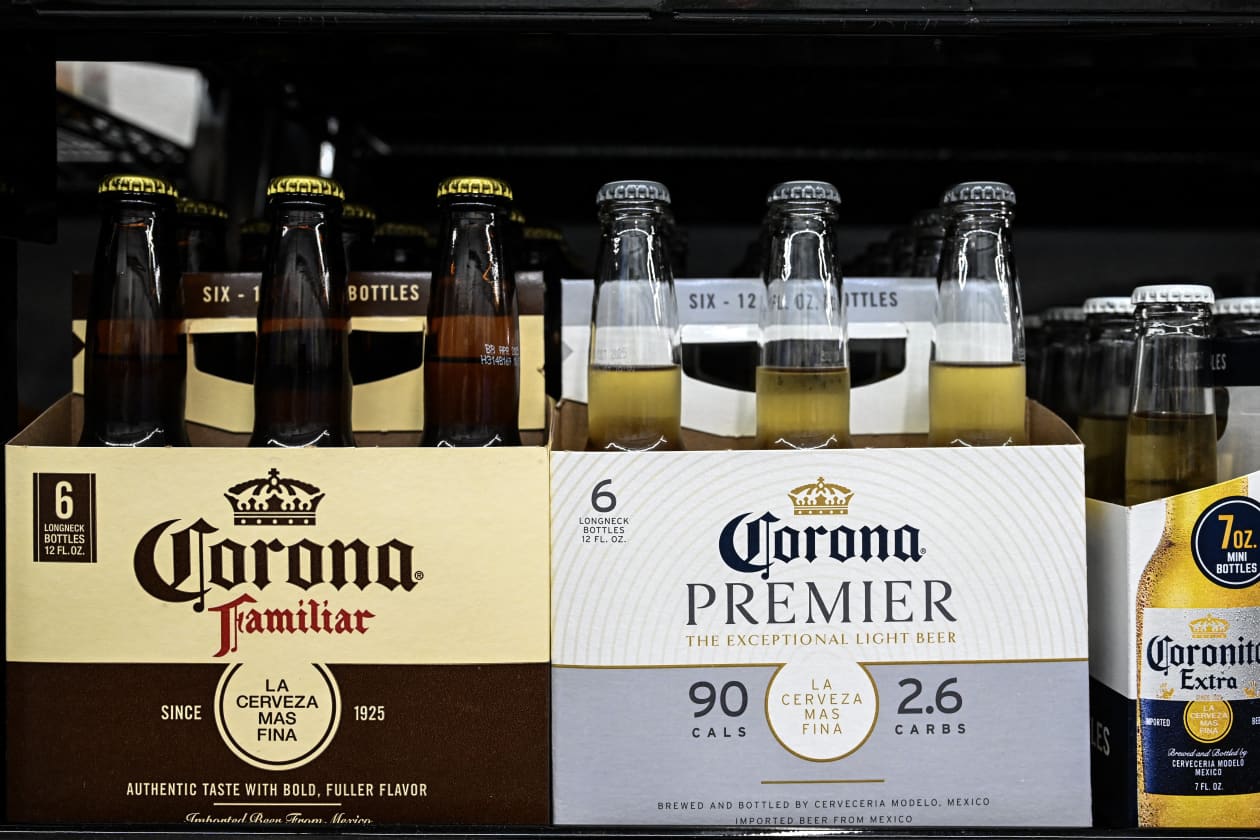
Constellation Brands pulled its longer-term outlook, citing an "evolving socioeconomic backdrop and limited near-term visibility." Management said consumers are trading down to cheaper beer and wine, beer demand is hurt by a weaker construction market, and prior comments noted Hispanic consumers were staying away due to ICE raid concerns and higher prices. Shares fell in after-hours trading after the guidance withdrawal and cautious commentary.
A durable flight-to-value in alcoholic beverage consumption will compress supplier blended ASPs faster than commodity-cost deflation can offset them; if just 5-8% of consumers trade down, modeled blended price realization falls ~2-3% and corporate EBIT margins can contract 150–250bps over 6–12 months unless cost cuts or SKU rationalization are executed aggressively. Bigger retailers will exploit this by accelerating promotional cadence and extracting incremental slotting or co-op funds, turning a margin issue at suppliers into a working-capital and gross-to-net problem over the next two fiscal quarters.
Competitive dynamics favor scale and low fixed-cost producers: large domestic brewers and private-label suppliers can defend share with lower marketing intensity and simpler SKUs, while premium-focused portfolios face disproportionate mix risk. Upstream vendors with fixed-capacity (e.g., can and packaging suppliers) get a convex outcome — volume could be stable but revenue mix shifts toward lower-margin SKUs, pressuring per-unit realization but preserving utilization and fixed-cost absorption.
Key catalysts to watch are monthly retail alcohol POS and wholesaler inventory turns over the next 3 months, the cadence of retailer promotional schedules, and any commodity-cost inflection (aluminum, freight) that changes passthrough math. Tail risks include a sharper macro slowdown or policy shocks that create transient consumption pauses; conversely, a meaningful real-wage pickup or tourism rebound could reverse mix within 3–6 months, compressing the window for profitable share defense.
Positioning should be tactical and asymmetric: hedge directional exposure to premium-brand earnings while keeping optionality for a recovery. Use relative-value structures to express flight-to-value without large directional gamma and size cash positions to add on confirmed downside in sell-side weekly checks.
AI-powered research, real-time alerts, and portfolio analytics for institutional investors.
Request DemoOverall Sentiment
mildly negative
Sentiment Score
-0.30
Ticker Sentiment
