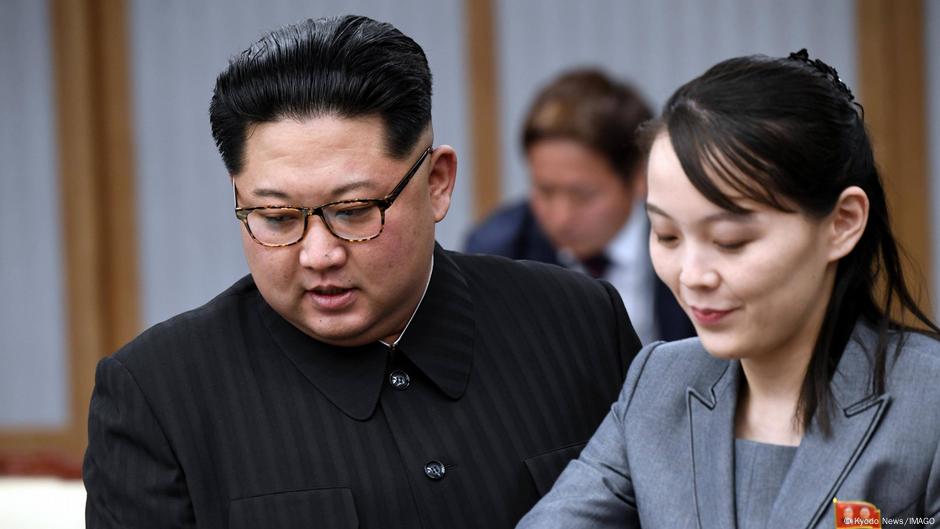
South Korea's president formally expressed regret after a January drone incursion that an investigation found involved a National Intelligence Service official and an active-duty soldier; North Korea's Kim Yo Jong called Seoul's apology 'wise'. Pyongyang had warned in February of a 'terrible response' to further airspace transgressions, and Kim Jong Un in March labeled Seoul the 'most hostile state.' The exchange raises geopolitical risk on the Korean Peninsula but is unlikely to move markets materially absent further escalation.
This episode is a signaling event with asymmetric policy implications: a publicized apology by Seoul lowers the near-term probability of kinetic escalation but raises the political cost of uncontrolled deniable operations inside South Korea. Expect Seoul to tighten oversight and accelerate procurement of attribution and counter-drone capabilities — spending cycles for ISR, EW, and C-UAS procurement that typically manifest as RFPs and budget line-items 6–18 months out.
Second-order supply-chain effects favor modular, software-rich vendors over heavy platforms: companies that sell sensors, datalinks, AI attribution and cloud-based analytics capture repeatable subscription-like revenue and shorter delivery lead times (6–12 months) compared with multi-year fighter or ship programs. Taiwanese/South Korean semiconductor and RF component suppliers that feed these systems could see 10–20% incremental demand if Taipei/Seoul triage similar asymmetric threats.
Tail risk is asymmetric: a genuine rapprochement could compress defense spend expectations and trigger a 10–20% drawdown in defense equities within weeks, while a follow-on provocation or domestic political blow-up in Seoul (e.g., leaked intelligence failures) could produce a multi-quarter procurement surge and rerate defensives higher. Monitor two catalysts closely: ROK budget proposals in Q3 (six-month horizon) and any RFPs for C-UAS/ISR before year-end.
AI-powered research, real-time alerts, and portfolio analytics for institutional investors.
Request DemoOverall Sentiment
neutral
Sentiment Score
0.00
