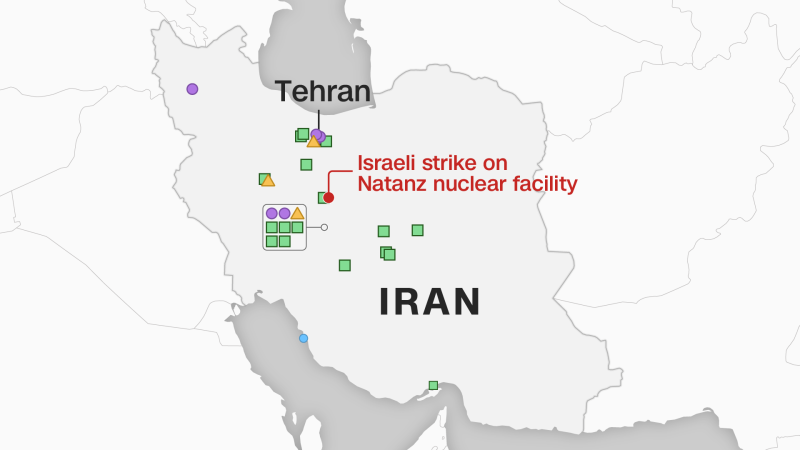
Israel launched an attack on Iran, targeting its nuclear sites and scientists, with Prime Minister Netanyahu claiming it struck at the core of Iran's nuclear weaponization program. Despite Iran's insistence that its nuclear program is for peaceful purposes, the IAEA recently reported that Iran's stockpile of uranium enriched to 60% purity has grown to 408 kilograms, enough for approximately nine nuclear weapons if further enriched, and has declared Iran in breach of its non-proliferation obligations. While it's unclear how close Iran is to building a nuclear bomb, its reduced breakout time, now estimated at one to two weeks, and advanced centrifuge technology raise concerns about its nuclear ambitions.
Israel's recent attack targeting Iran's nuclear sites, killing six nuclear scientists, and striking military leaders, described by Prime Minister Netanyahu as impacting Iran's "nuclear weaponization program," significantly escalates regional tensions. While international assessments suggest Iran's program is not currently weaponized and Tehran maintains its peaceful energy intentions, the IAEA's latest findings are critical. The UN nuclear watchdog notes that no other country possesses uranium of the kind Iran has stockpiled without also having a nuclear weapons program, fueling suspicions about Tehran's transparency. Iran now possesses 408 kilograms of uranium enriched to 60% purity, enough material, if enriched further, for approximately nine nuclear weapons, and its "breakout time" to produce fissile material for one bomb has been reduced to about one to two weeks, largely due to its advanced centrifuge technology. Compounding this, the IAEA board recently passed a significant resolution, its first in almost 20 years, officially declaring Iran in breach of its non-proliferation obligations, prompting Iran to vow an escalation of its nuclear activities. The Israeli attack reportedly hit the Natanz facility, a key uranium enrichment site, although the full extent of damage to Iran's hardened and geographically dispersed nuclear infrastructure, some of which is buried deep underground, remains unclear. This direct military action introduces substantial uncertainty and risk, particularly given Iran's history of using its nuclear program as a bargaining chip and its progressive non-compliance with the defunct 2015 nuclear deal following the US withdrawal in 2018.
AI-powered research, real-time alerts, and portfolio analytics for institutional investors.
Request DemoOverall Sentiment
strongly negative
Sentiment Score
-0.60
