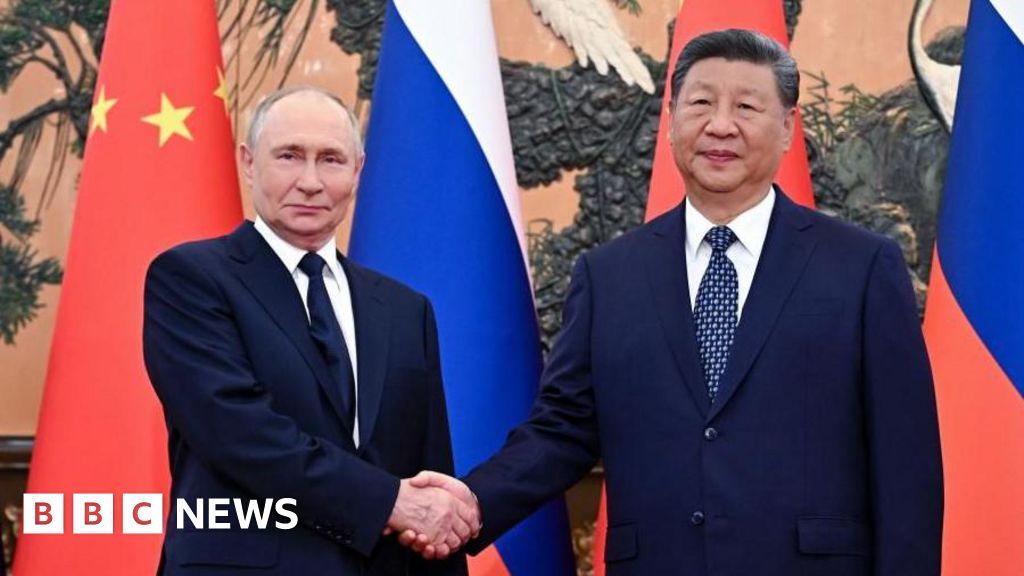
The New START treaty between the US and Russia expired, leaving no major bilateral nuclear limits and prompting President Trump to say he wants a new, improved treaty that would include China. Analysts and former officials warn that adding China and restoring verification will be difficult and could take years; New START previously capped deployed strategic warheads at 1,550 each while current inventories are roughly Russia 4,309, US 3,700 and China ~600 (potentially ~1,000 by decade's end). Moscow says it is no longer bound by New START and on-site inspections have been suspended, elevating geopolitical and defense-sector risk and increasing the potential for higher market volatility and risk premia.
Market structure: The lapse of New START raises a persistent upside for US/Russian defense primes (LMT, NOC, RTX, GD) as governments accelerate modernization; expect a directional re-rating of ~10–30% over 6–18 months if FY2026 US/Nato defense budgets increase by ≥3%. Energy and commodities face asymmetric supply risk: a sanctions escalation or Russian tactical escalation could push Brent/WTI +15–30% in 1–3 months; safe-haven flows should bid Treasuries and gold near-term, pressuring risk assets.
Risk assessment: Tail risks include low-probability nuclear escalation (catastrophic) or full-scale energy sanctions causing oil >$120/bbl; plan for these as stress scenarios rather than base cases. Time buckets: days—risk-off volatility spikes and FX moves (RUB down >20%); weeks–months—bond yields fall, defense procurement news drives stock moves; quarters/years—structural rerouting of capex to defense and deterrence tech if China is excluded from credible treaties.
Trade implications: Favor long defense equities via cost-limited long-dated call spreads and overweight long-duration Treasuries/GLD as volatility hedges; run short-duration risk to limit cycle exposure. Use pair trades: long LMT/NOC vs short commercial aerospace (AAL, UAL or JETS ETF) to capture sectoral divergence; consider 3–6 month Brent call spreads and VIX call spreads to hedge geopolitical spikes.
Contrarian angles: Consensus assumes perpetual escalation; missing is political friction in Congress and budget constraints that can cap upside—if appropriations stall, defense names may underperform by 10–20%. Also a Trump-led diplomatic breakthrough with Russia/China could cause a rapid de-rating; condition positions on on-chain catalysts (defense bill language, Russia troop movements, China warhead estimates) to avoid being caught on the wrong side.
AI-powered research, real-time alerts, and portfolio analytics for institutional investors.
Request DemoOverall Sentiment
moderately negative
Sentiment Score
-0.35
Ticker Sentiment
