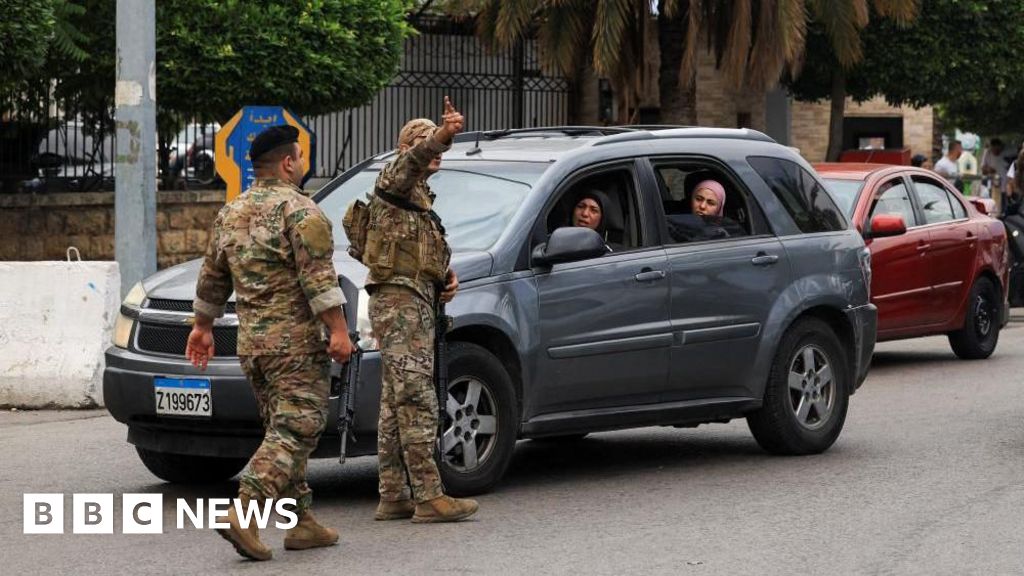
Iran warned that Israeli strikes in Lebanon could jeopardize its ceasefire with the US, while state-linked reporting suggested Tehran could suspend indirect talks and activate other fronts, including the Bab al-Mandab Strait. Brent crude jumped almost $5 to $97.44 a barrel as tensions also escalated in the Strait of Hormuz, where the US said it hit Iranian military sites and Tehran said it targeted a US base in Kuwait. The situation raises the risk of broader regional escalation and further disruption to global oil and LNG flows.
The immediate market read is not just higher oil beta; it is a rising probability that the conflict migrates from a contained regional shock to a multi-node supply-chain disruption. The key second-order effect is that even without a full Hormuz closure, the combination of Lebanon escalation, indirect US-Iran переговорs breaking down, and threats to widen into Red Sea routes raises the implied floor on freight, insurance, and inventory carrying costs across energy-intensive sectors. That tends to hit cyclicals twice: first through input costs, then through margin compression if end-demand cannot reprice quickly.
The crude move is important less for the level than for the volatility regime shift. When headline risk starts to move Brent by multiple dollars in a session, commodity options become expensive but still attractive because the distribution becomes skewed: downside is capped by any de-escalation headline, while upside is convex if shipping lanes, Gulf infrastructure, or US retaliation broaden the conflict. The biggest hidden winner is not necessarily upstream producers already crowded in performance, but tanker, defense logistics, and select US midstream names with export exposure and minimal direct geopolitical asset risk.
Consensus is likely underestimating how fast the policy response can flatten the price spike if the US and Israel push back toward a partial diplomatic off-ramp. If Washington can separate Lebanon from the Iran track again, the risk premium can collapse within days, not months, which makes outright long crude a poor standalone expression. The better trade is to own optionality on escalation while funding it with relative-value shorts in sectors that are most vulnerable to a short-lived energy shock but cannot pass through costs quickly.
AI-powered research, real-time alerts, and portfolio analytics for institutional investors.
Request TrialOverall Sentiment
strongly negative
Sentiment Score
-0.65
