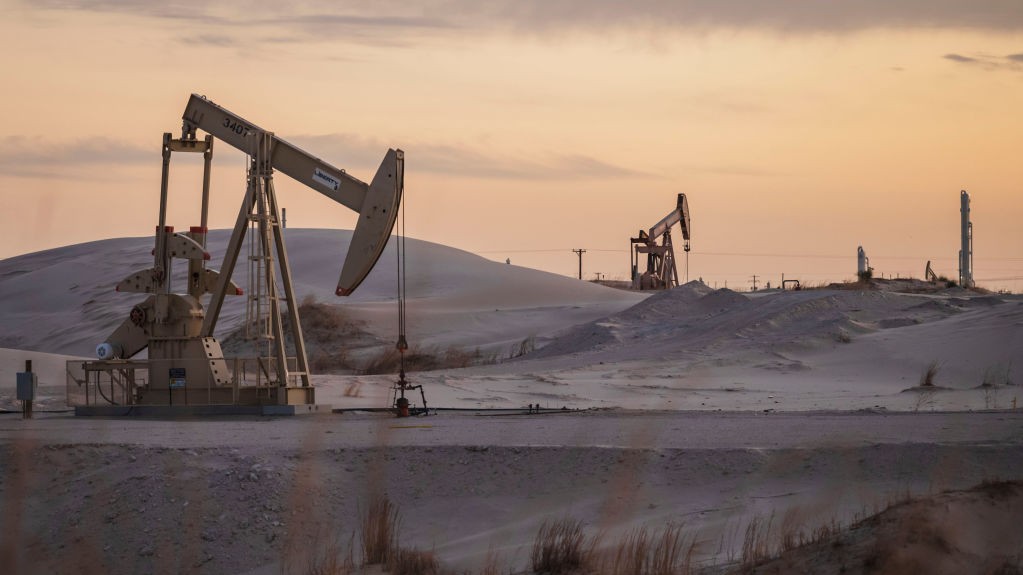
A CME outage has halted trading in WTI and a broad set of futures (S&P, Treasuries, gold, copper), creating short-term liquidity and execution risks during a thin holiday session. Market fundamentals skew bearish: Western sanctions have not materially curtailed Russian oil flows, and a potential peace deal with sanctions relief would add downside; OPEC+ has signaled a production-hold after 2025 raises and is likely to keep output steady, but could be forced into cuts if oversupply persists into 2026. Hedge funds should price in elevated volatility and limited execution capacity in the near term, and position for continued downside pressure on oil amid improving supply dynamics next year.
Market structure: The immediate loser is CME (CME) — reputational and liquidity risk that can reroute executed futures volume to ICE (ICE) and OTC brokers; if the outage persists >48–72 hours expect a 5–15% shift of futures ADV to ICE/OTC over 1–3 months, compressing CME’s fee growth. Commodities markets face transient price discovery impairment: WTI/Brent can gap wider intraday while hedgers stay sidelined, but fundamentals point to an increasingly well‑supplied oil market into 2026 (bearish bias of roughly $5–10/bbl over current levels absent shocks). Cross-asset: Treasury futures illiquidity will raise on‑the‑run basis risk (5–10bp volatility in yields intraday), lift dealer balance‑sheet usage, and push options implied vol up across equity and commodity products until normal trading resumes.
Risk assessment: Tail scenarios include a prolonged CME outage or clearing impairment (>72 hours) triggering forced cash market disorder, regulatory fines and class actions (>$100m) and temporary systemic de‑risking that can move US rates >50bp intraday and equity VIX +50% in days. Near term (days) expect elevated realized/implied vol and basis dislocations; short term (weeks–months) is migration of flow and contract renegotiation to ICE/OTC; long term (quarters) is higher regulatory scrutiny, potential capex for CME and market share loss if fixes are judged inadequate. Hidden risks: ETF issuers and energy producers that hedge with listed futures face margin squeezes and forced cash moves; CCP margin linkages could amplify stress if liquidity remains impaired.
Trade implications: Priority is a relative‑value exchange play — go long ICE (ICE) and hedge/reduce CME equity exposure. Tactical oil exposure should be skewed bearish into H1 2026: use put spreads on NYMEX crude or short calendar spreads to capture a structurally softer market if OPEC holds. Implement volatility hedges for 30–90 days: modest SPX put spreads (30–45 day) or buy protection via TLT (2–3% portfolio) because Treasury futures illiquidity can spike rates volatility.
Contrarian angles: The market may over‑penalize CME; outages historically trigger temporary flow reallocation but not permanent elimination — if CME resolves issues within 2–6 weeks, discounted CME equity and implied vol should revert. Conversely, permanent migration to OTC increases counterparty and margining risk that is underpriced; consider owning optional exposure to CME recovery (3–6 month calls) while hedging downside through pair trades. Monitor ICE market share changes, CME daily volumes, and regulator findings as trigger points for rebalancing.
AI-powered research, real-time alerts, and portfolio analytics for institutional investors.
Request DemoOverall Sentiment
mildly negative
Sentiment Score
-0.25
Ticker Sentiment
