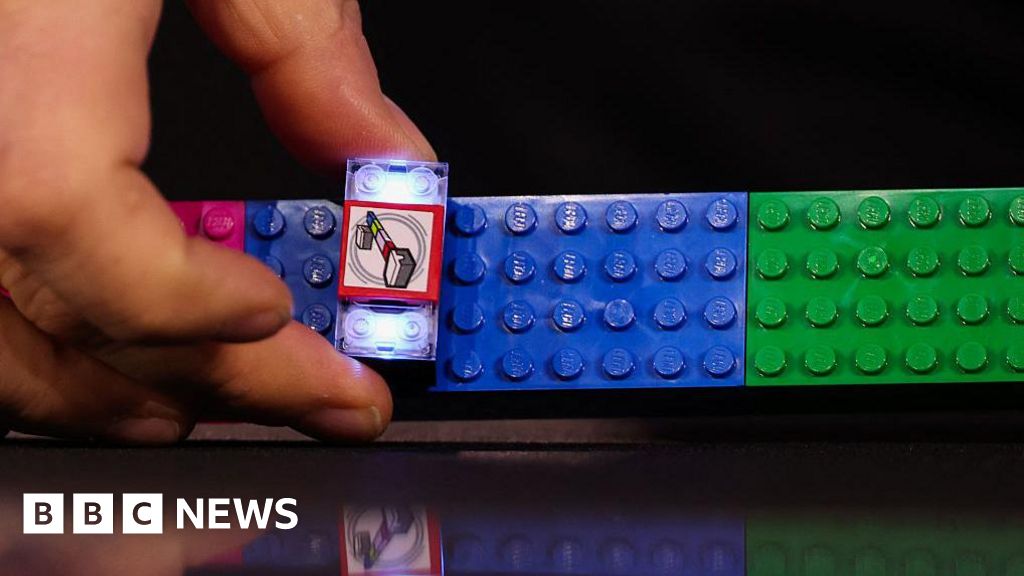
At CES 2026 Lego unveiled Smart Play and its Smart Bricks — electronic 2x4 bricks with sensors, lights, a sound synthesiser, an accelerometer and a custom chip — rolling out in March with a new Star Wars set as part of a broader push into digital-enabled products. The company frames the range as a multi-year platform to expand physical play and said it has accelerated digital spending as a strategic area, while child-welfare and academic experts warn the tech risks undermining imaginative play and raise security/privacy concerns around smart toys and AI integration.
Market structure: Lego’s Smart Bricks primarily transfer value to component and software suppliers (semiconductors, MEMS, audio ICs, cloud/AR engines) and to platform owners who monetize recurring interactions. Direct losers are legacy toy OEMs with weaker tech roadmaps (public: HAS, MAT) and low-margin white‑label manufacturers; retailers with limited e‑commerce will see slower sell‑through. Pricing power shifts to Lego (premium SKUs, platform lock‑in) and to suppliers with scarce sensor/MCU capacity, but incremental semiconductor demand is modest relative to overall TAM so broad cyclical effects are limited.
Risk assessment: Tail risks include regulatory/ privacy fines (COPPA/GDPR) or a product safety recall (battery/EMC) that could cost $50m–$500m and spook retailers; supply shocks for specialized MCUs could push component lead times 3–6 months. Immediate market reaction will occur around the March launch; medium term (6–18 months) depends on platform developer uptake and licensing deals; long term (2+ years) hinges on recurring software/consumables revenue. Hidden dependencies: SDK adoption, app store ratings, and licensor relationships (Star Wars/Disney).
Trade implications: Express a technology‑supplier long and traditional‑toy short: overweight STM (ticker: STM) 1.5–2% portfolio weight via 9–12 month 20% OTM call spread; overweight NXPI or TXN 0.5–1% for MCU exposure. Short HAS 0.5–1% or buy 3–6 month 10% OTM puts as downside hedge versus toy incumbents. Rotate 3–5% from pure toy equities into semis and select e‑commerce retailers (AMZN, TGT) that will capture faster sell‑through; enter ahead of March launch and trim if 12‑week sell‑through <40%.
Contrarian angles: The market will underprice platform optionality—if Lego converts 3–5% of revenue to recurring digital services within 2 years, supplier earnings could re‑rate; conversely, social backlash could be transitory as seen with prior Lego digital tie‑ins (Super Mario) which ultimately expanded sales. Watch sell‑through and app MAU: 12‑week sell‑through >60% or first‑quarter SDK integrations >10 partners should trigger adding to longs; privacy enforcement actions or >$50m fines should trigger cutting semis exposure to neutral.
AI-powered research, real-time alerts, and portfolio analytics for institutional investors.
Request DemoOverall Sentiment
mixed
Sentiment Score
0.00
