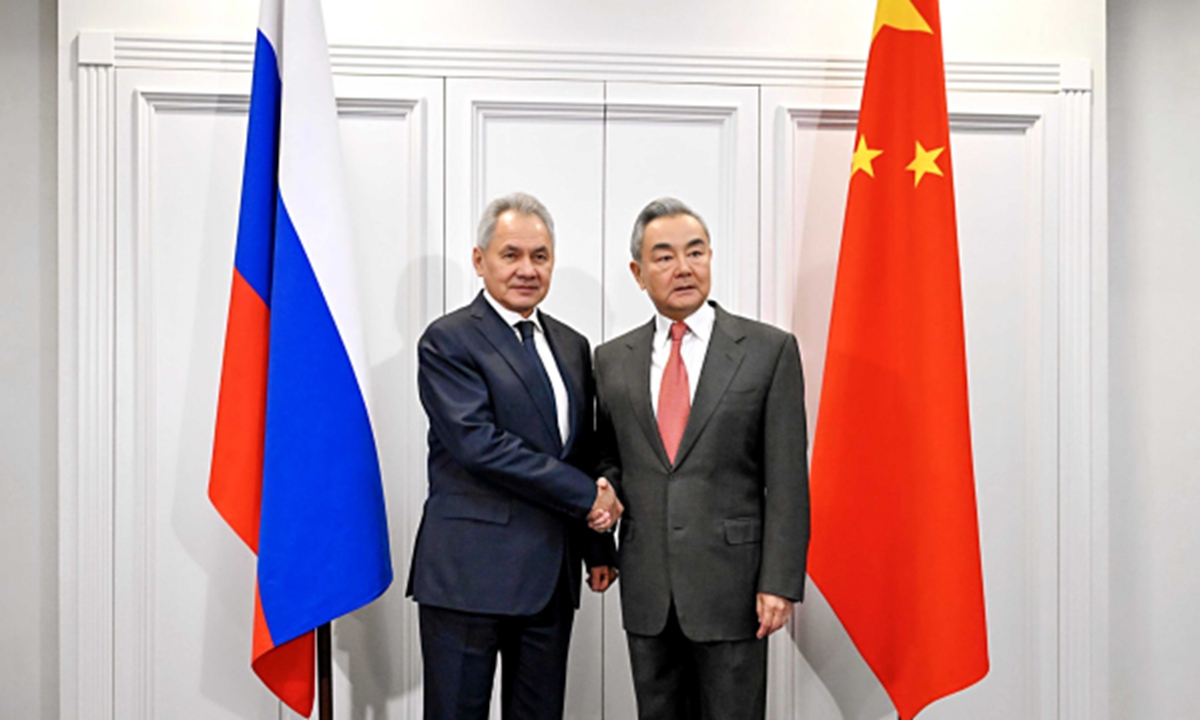
China and Russia held their 20th strategic security consultation in Moscow, reaching new consensuses to deepen strategic mutual trust, implement leaders' agreements and expand high-level coordination across regional security issues including positions on Taiwan and Japan. The readout emphasizes reinforced strategic alignment and opposition to perceived historical revisionism by Japan, signaling greater diplomatic and defense cooperation that could reduce short-term geopolitical uncertainty in Eurasia but is unlikely to produce immediate market-moving fiscal or economic data.
Market structure: A deeper China–Russia security alignment mechanically benefits commodity exporters (Russian oil/gas, metals) and defense/surge-capex suppliers while pressuring Japan-centric trade flows and some global supply-chain exposed manufacturers. Expect higher contracted volumes to Asia and longer-term re-routing of energy flows, supporting freight (VLCC/drybulk) and midstream capex; near-term pricing power accrues to sellers of seaborne crude and palladium/platinum where Russia is material (>10% global). Financially, gold and FX reserves are a direct beneficiary as both states hedge geopolitical risk.
Risk assessment: Tail risks include a sanctions escalation that shuts additional payment rails (high-impact, low-probability) causing oil spikes >$100/bbl within 3 months and RUB dislocation >30% in 30–90 days; alternatively, rapid China demand softness (GDP <3.5% annualized over two consecutive quarters) would blunt commodity upside. Hidden dependencies: deal execution hinges on logistics (pipeline vs. tanker capacity) and banking settlement mechanisms (CNY/gold clearing). Key catalysts: new long-term energy contracts, joint military drills, or accelerated Japanese defense announcements in the next 90 days.
Trade implications: Tactical plays are energy/commodity longs, selective defense exposure, and gold/ships as optionality. Use ETFs and liquid names to express this (see decisions). Position sizing should be modest (1–4% per trade) with clear stop-loss thresholds: e.g., exit commodity longs on a 20–25% adverse move or if a de-escalatory diplomatic settlement is announced within 60 days. Option structures (call spreads, protective puts) reduce binary tail risk while capturing upside.
Contrarian angles: Consensus assumes seamless Russia→China flow rerouting; operational frictions (insurance, insurance pools, refiner compatibility) likely limit near-term throughput and create episodic price shocks rather than steady-state gains. Historical parallel: 2014–16 energy rerouting led to multi-month volatility then normalization — expect 3–9 months of opportunity windows. Unintended consequence: accelerated Western defense procurement (positive for LMT/NOC) could outperform raw commodity plays if diplomatic tensions broaden.
AI-powered research, real-time alerts, and portfolio analytics for institutional investors.
Request DemoOverall Sentiment
neutral
Sentiment Score
0.10
