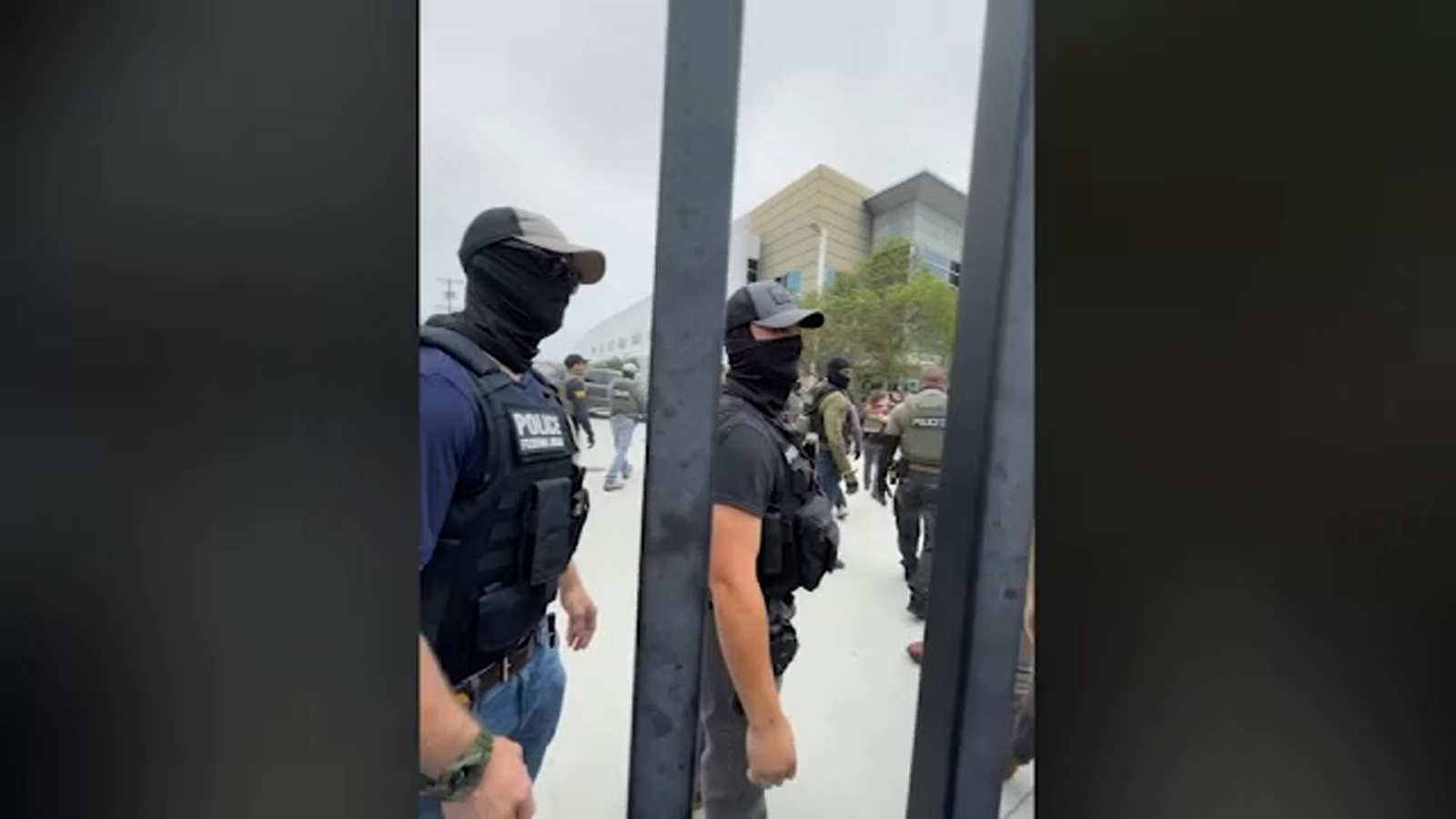
The U.S. Department of Justice asked a federal judge to halt a newly enacted California law that bans federal officers, including immigration agents, from wearing masks, arguing the statute interferes with federal enforcement and attempts to regulate federal officers. DOJ attorneys warned of a surge in doxxing and threats—citing an 8,000% increase—and said facial‑recognition and AI tools are being used to identify agents, while California says the ban promotes accountability and prevents abuse after masked federal detentions tied to the Trump deportation initiative. The court signaled the federal government has a strong preemption argument because some state officers are exempt, and a ruling is expected “sooner rather than later,” raising potential precedent risk for state limits on federal operations.
Market structure: This is a narrow legal clash with downstream effects concentrated in cybersecurity/identity, biometric surveillance vendors, and government IT contractors. If injunctions force federal agencies to preserve agent anonymity, expect incremental spending of $0.5–2bn/year across identity-protection, secure communications and counter-doxxing services over 12–24 months; conversely, pure-play facial-recognition vendors face contract churn and pricing pressure.
Risk assessment: Tail risks include a binding judicial precedent allowing states to regulate federal operational practices (low-probability but high-impact), which would force federal agencies into fragmented state procurement, raise compliance costs 10–30% and prolong litigation for 1–3 years. Key catalysts are the district judge ruling (weeks), Ninth Circuit appeal (months) and any federal legislation; hidden dependency: contractor revenue lags mean Q4 bookings may already be baked in.
Trade implications: Favor cyber/identity exposure and diversified security ETFs while avoiding small-cap facial-recognition names that rely on law-enforcement contracts. Use 1–3 month to 6–12 month timeframes: immediate volatility around the district ruling, reprice on appeals; options can hedge political/legal binary risk.
Contrarian angle: Market consensus treats this as localized politics; missed is the potential for a DOJ-driven procurement surge for privacy-protection tools (analogous to post-9/11 security spend). If courts limit state action, upside is muted; if courts constrain federal anonymity, demand shifts to privacy/operational-security providers, creating 20–40% relative winners within 6–12 months.
AI-powered research, real-time alerts, and portfolio analytics for institutional investors.
Request DemoOverall Sentiment
neutral
Sentiment Score
0.00
