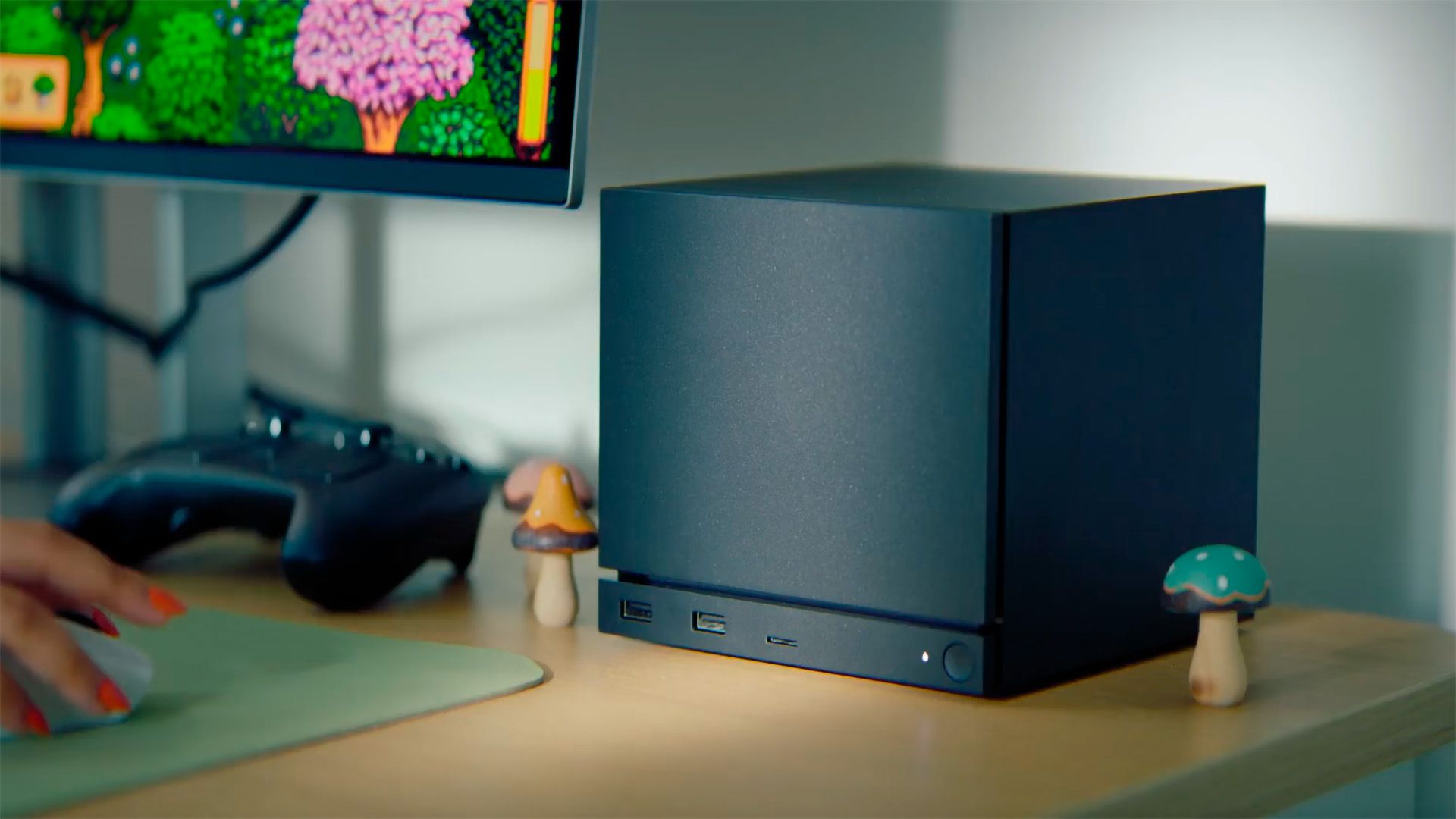
On AMD's Q4 2025 earnings call (Feb 3), CEO Lisa Su said Valve’s AMD-powered Steam Machine is “on track” to begin shipping early this year, citing the device as part of AMD’s semi-custom SoC pipeline. The living-room PC is reported to use a semi-custom six-core Zen 4 CPU and an RDNA 3 GPU with 28 CUs and 8 GB GDDR6 (Valve claims 4K/60 with FSR), while AMD noted a “double‑digit percentage” drop in SoC revenue amid a strong console cycle; NAND supply constraints leave pricing uncertain (an unconfirmed retail listing suggested ~$950–$1,070). Implication: a timely Steam Machine launch could modestly support AMD’s SoC revenue and diversify end markets, but near-term impact is limited by supply headwinds and unclear unit economics.
Market structure: Short-term winners are AMD (AMD) and Valve’s supply chain (GDDR6/NAND suppliers) as a semi‑custom Zen4/RDNA3 SoC gains an exclusive living‑room design win; the direct revenue impact is likely modest (low hundreds of millions annually) versus AMD’s >$100B market cap, but it strengthens semi‑custom backlog into early 2026 and helps offset console SoC softness. Pricing power is limited — retail ASPs implied ~$950–1,070 and NAND shortages may force higher BOMs, so margins could compress unless AMD captures SoC licensing/premium.
Risk assessment: Tail risks include a supply delay (slips past Q1 2026), poor reviews that collapse demand, or renewed NAND scarcity that raises unit cost >10% and forces higher retail price; probability moderate but impact material on near‑term revenue and AMD sentiment. Time horizons: immediate (days) for stock/option moves on confirmations, short (1–3 months) for preorder signals and reviews, long (2–8 quarters) for recurring semi‑custom revenue and ecosystem effects. Hidden dependency: consumer acceptance hinges on FSR upscaling perception — perception failures could reduce lifetime attach rates for games/accessories.
Trade implications: Tactical direct play — establish a modest long in AMD (2–3% of tech sleeve) into shipment confirmations (expected early 2026); size options exposure with a defined‑risk 3–6 month call spread representing ~1% NAV to capture upside on positive launch news. Relative value: long AMD vs short INTC (1:0.5 weight) for 6–12 months — AMD benefits from semi‑custom wins and Zen4 OEM traction while INTC execution risk persists. Cross‑asset: monitor implied vol spikes in AMD options and GDDR6/NAND spot >10% moves that would warrant adjusting positions.
Contrarian angles: The market may overestimate unit volume and underweight margin compression risk — Steam Machine could be a halo product with low units (estimate <500k units in year one) yet outsized PR. Historical parallel: Steam Deck was a strong PR win but limited revenue/margin upside for valve partners; if early reviews <7/10 or first‑month sell‑through <200k units, downside for AMD sentiment is asymmetric. Monitor preorders, retailer SKUs, and review scores as binary catalysts; positive surprises should re‑rate AMD modestly (target +8–15%), negatives could erase gains quickly.
AI-powered research, real-time alerts, and portfolio analytics for institutional investors.
Request DemoOverall Sentiment
mildly positive
Sentiment Score
0.12
Ticker Sentiment
