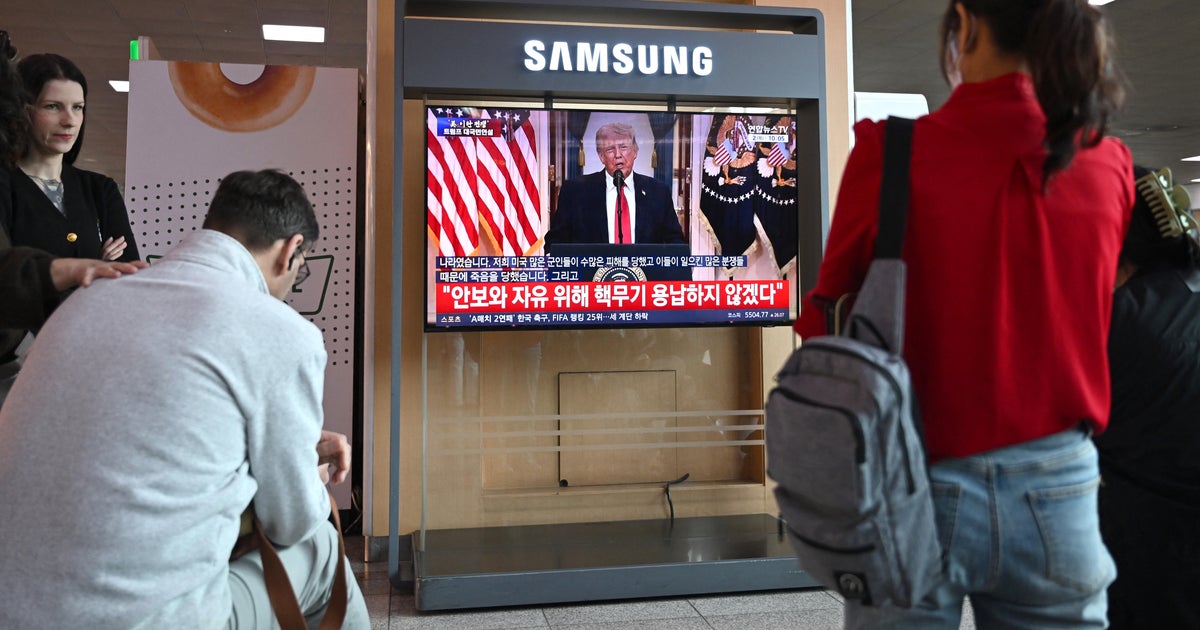
Brent crude surged ~6.9% to $108.15/bbl (U.S. crude +6.4% to $106.55) after President Trump said U.S. strikes on Iran will continue for 2–3 weeks and offered no plan to reopen the Strait of Hormuz. Asian equities dropped sharply (Nikkei -2.4%, Kospi -4.5%, Hang Seng -1.3%) and U.S. futures were off >1.2%, signaling a global risk-off move; U.S. gasoline already averages >$4/gal, adding upside pressure to consumer inflation and supply-chain costs. Iran vowed more destructive retaliatory attacks while regional diplomacy (Pakistan, China, GCC) seeks de-escalation, leaving elevated near-term oil-price and geopolitical tail risks.
The immediate market reaction understates where economic pain concentrates: insurance and rerouting costs are a multiplier that hits trade-exposed sectors non-linearly. Rerouting around the Cape of Good Hope adds days to voyages, raising bunker fuel and working capital needs for tankers and shippers; expect VLCC/Suezmax time-charter equivalents and tanker equities to price in scarcity well before physical crude balances tighten. Refinery economics will bifurcate — coastal refiners with flexible feedstock and product market access can capture outsized crack spreads, while inland/refinery complexes tied to specific crude grades face feedstock bottlenecks and margin squeeze.
Diplomatic developments remain the dominant binary catalyst and operate on different clocks: security escalations or tactical ceasefires can swing markets within 48–72 hours, whereas de-risking via restored insurance, reflagging, or multinational convoy arrangements unfolds over 4–12 weeks. Macro secondaries — EM FX stress, higher shipping/insurance premia, and pass-through to food/agriculture logistics — crystallize over 1–3 quarters and are the channels that convert energy shocks into recession risk. Central bank and fiscal responses will lag the initial shock; policy tightening to defend currencies or fight inflation becomes the realistic policy mix if energy prices stay elevated beyond 90 days.
Consensus is pricing an open-ended blockade; the more probable path is episodic disruption with increasingly efficient market workarounds. That implies asymmetric trade opportunities: short-duration volatility plays and premium-selling around clear diplomatic news, plus selective structural exposure to sectors that benefit from higher freight/energy spreads. The trade-off is clean: front-load option-premium spend to hedge immediate tail risk while keeping directional exposure limited to three-month windows unless signals confirm persistence past that horizon.
AI-powered research, real-time alerts, and portfolio analytics for institutional investors.
Request DemoOverall Sentiment
strongly negative
Sentiment Score
-0.75
