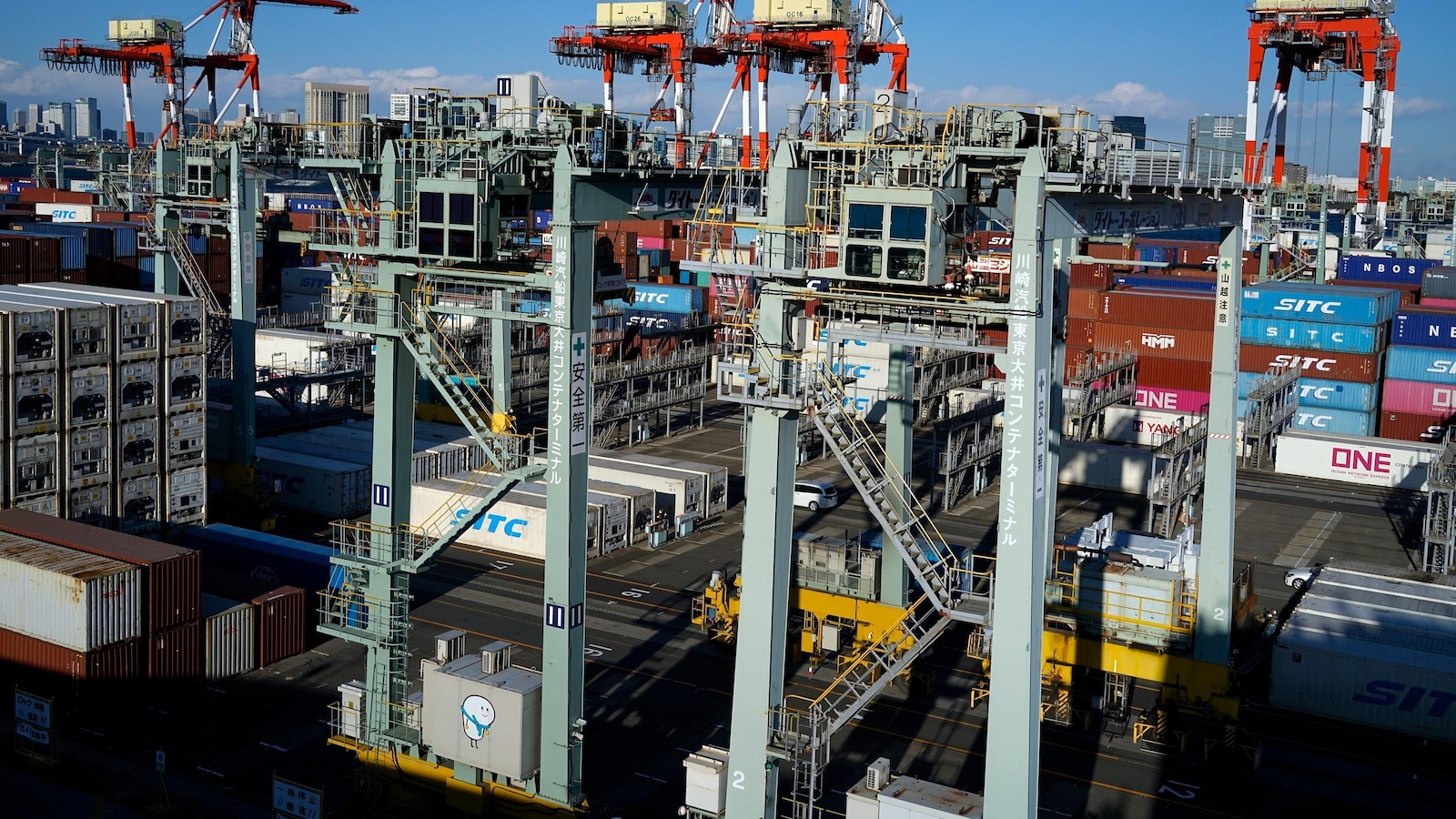
Japan's exports rose 6% year‑on‑year in November while imports increased 1.3%, producing a preliminary trade surplus of 322.2 billion yen (~$2.1bn); exports to the U.S. climbed nearly 9% (the first rise since March), exports to the EU jumped about 20%, and shipments to China fell 2.4%. A tariff agreement with the Trump administration—setting a 15% baseline instead of a feared 25%—helped revive auto shipments (vehicle volumes +8% while value rose only 1.5% as producers absorbed costs), even as U.S. oil and food imports surged. Analysts warn tariffs could continue to restrain trade, but expect exports to recover next year, supported in part by robust U.S. AI‑related and machinery demand.
Japan's exports rose 6% year‑on‑year in November while imports increased 1.3%, producing a preliminary trade surplus of 322.2 billion yen (~$2.1bn); the article also reports a separate surplus figure of 739.8 billion yen ($4.7bn), up 11% year‑on‑year. Exports to the United States climbed nearly 9% — the first rise since March — supported by cars, chemicals and cameras, exports to the European Union surged about 20%, and shipments to China fell 2.4% amid heightened political tensions.
A tariff agreement with the Trump administration that set a 15% baseline instead of a feared 25% appears to have materially boosted passenger vehicle shipments (volumes +8%) while vehicle values rose only 1.5%, indicating automakers absorbed tariff costs rather than passing them to consumers. Imports of U.S. oil nearly tripled and U.S. imports overall rose more than 7%, signaling commodity-driven import swings that can affect margins and the trade mix.
Analyst Norihiro Yamaguchi cautions higher tariffs could still weigh on exports but forecasts improvement next year and highlights spillovers from robust U.S. AI‑related spending as supportive for machinery and tech-related exports. The mixed regional performance and the volume/value divergence in autos make near-term export momentum conditional on future tariff developments, U.S. tech capex trends and commodity price movements, which are key catalysts and risk factors to monitor.
AI-powered research, real-time alerts, and portfolio analytics for institutional investors.
Overall Sentiment
mildly positive
Sentiment Score
0.28
