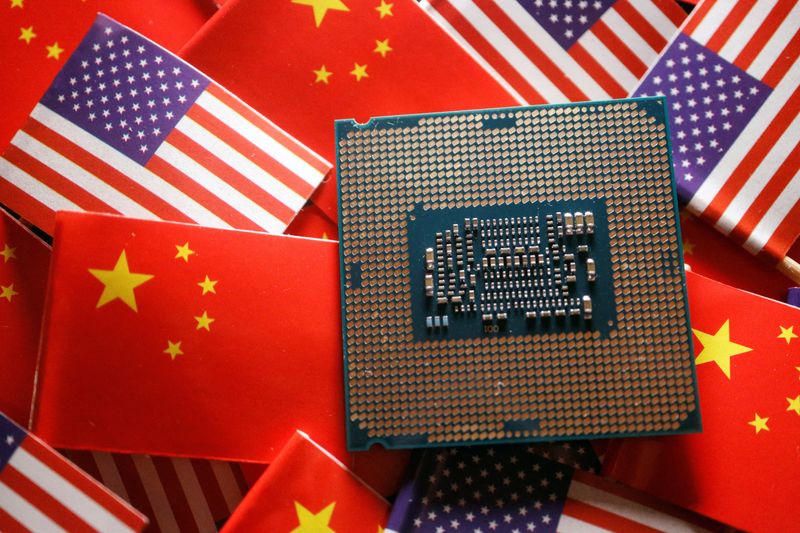
A US strategy to trade access to downgraded AI chips, like Nvidia's H20, for relaxed Chinese rare earth export controls has failed, as China banned H20 purchases, effectively cutting Nvidia off from its AI chip market. Jefferies analysts note that China's priority is securing Wafer Fab Equipment (WFE) to build its own semiconductor industry, not more US AI chips, underscoring its long-term goal of tech independence. This breakdown highlights China's leverage with rare earths and its determination to reduce reliance on US technology, while potential easing of WFE restrictions, though unlikely, could significantly impact the global WFE market outlook.
A U.S. strategy to trade downgraded AI chips for relaxed Chinese rare earth export controls has failed, creating a significant near-term headwind for Nvidia (NVDA). According to Jefferies analysts, China has banned purchases of Nvidia's H20 chip and other downgraded U.S. AI products, a move that will likely prevent Nvidia from generating any AI chip revenue from China until a broader trade agreement is reached. This breakdown reveals Beijing's strategic priority is not acquiring foreign chips, but rather securing Wafer Fab Equipment (WFE) to build its domestic semiconductor production capabilities and achieve long-term technological independence. This is underscored by China's $227 billion semiconductor trade deficit, which grew 6% year-over-year despite significant import volumes. While a relaxation of WFE export controls by the U.S. and its allies is considered unlikely, it is flagged as a potential "deal maker." Given China already accounts for approximately 40% of global WFE capital expenditures, any easing of these restrictions could reverse the currently bearish demand outlook for the global WFE market for 2026, representing a major unexpected event for investors.
AI-powered research, real-time alerts, and portfolio analytics for institutional investors.
Overall Sentiment
moderately negative
Sentiment Score
-0.50
Ticker Sentiment
