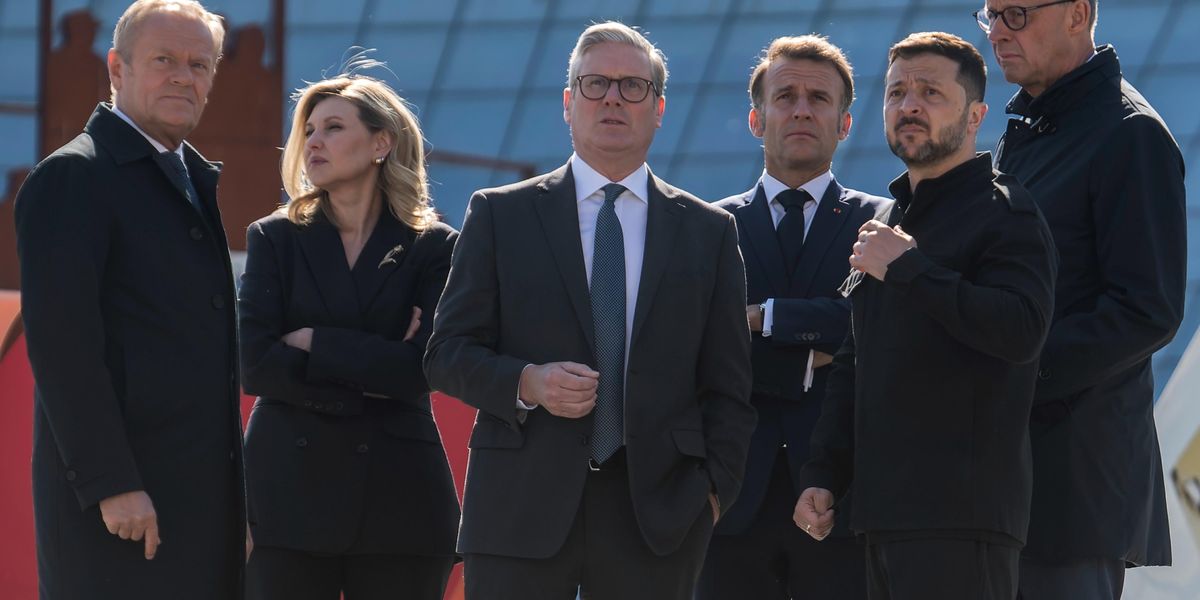
European leaders have publicly dismissed but privately maneuvered to undermine the Trump administration’s 28-point peace plan for Ukraine, seeking to preserve maximalist demands for Russian capitulation rather than negotiate compromises that could halt the fighting; senior figures in the UK, Germany and France have joined Kyiv in rejecting elements of the proposal while Berlin is reportedly crafting a counteroffer more aligned with Ukraine. The U.S. plan—criticized as imperfect—includes pragmatic provisions such as a sustainable 600,000-strong Ukrainian army, careful handling of Donbas and Crimea that avoids forced legal recognition of Russian sovereignty, and a mechanism to direct about $100 billion of frozen Russian assets to reconstruction, and Moscow has signaled willingness to discuss it. If Europe continues to scuttle the only substantial diplomatic opening, the likely outcome is protracted warfare that favors Russia, further destruction in Ukraine and the risk that Washington and Kyiv will conclude a deal that sidelines European influence, leaving Europe strategically marginalized unless it accepts painful compromises.
The Trump administration's 28-point Ukraine peace plan has prompted swift rejection from key European leaders—Keir Starmer, Friedrich Merz and Emmanuel Macron—while Berlin is reportedly developing a counter-proposal and the EU's Kaja Kallas articulated a two-part strategy of weakening Russia and supporting Ukraine. Market signals register a mildly negative tone (sentiment_score -0.35) but limited direct market disruption (market_impact_score 0.3), reflecting geopolitical uncertainty rather than immediate economic shock.
The U.S. proposal contains concrete, pragmatic elements: a 600,000-strong Ukrainian force aligned with analysts' sustainability estimates, calibrated handling of Donbas and Crimea that avoids forced de jure recognition, and a mechanism to channel roughly $100 billion of frozen Russian assets to reconstruction; Putin has acknowledged receipt and signaled readiness to negotiate, and outside experts describe the plan as imperfect but potentially negotiable. Kyiv's political vulnerability—reported corruption scandals in President Zelensky's entourage—raises the odds that Washington could pressure Kyiv toward compromise, increasing the probability of a negotiated outcome without full European alignment.
The article argues that continued European efforts to hollow out the plan would likely produce a protracted conflict that favors Russia, risks escalation, and could politically marginalize Europe if Washington and Kyiv conclude a deal without it. For investors this yields elevated tail risk to European political stability, sustained upside to defense and reconstruction-related spending, ongoing sanctions and asset-control themes tied to frozen Russian funds, and episodic energy-market volatility tied to negotiation outcomes.
AI-powered research, real-time alerts, and portfolio analytics for institutional investors.
Request DemoOverall Sentiment
mildly negative
Sentiment Score
-0.35
