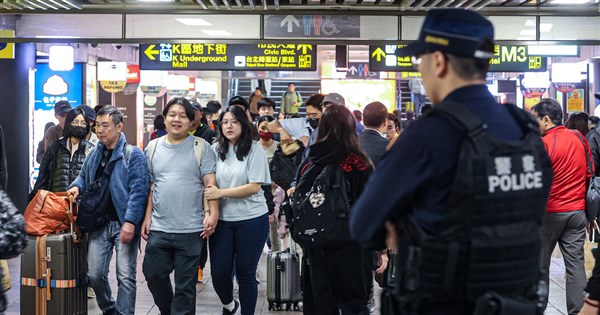
A lone assailant carried out a smoke-grenade and knife attack in downtown Taipei on Dec. 19, killing two people and injuring several others before jumping to his death while being pursued by police. The suspect, a man in his 20s with a criminal record, was reportedly wearing body armor and carrying Molotov cocktails; President Lai and Premier Cho ordered heightened security at MRT stations, railways and airports as authorities investigate motives. The incident creates near-term transport and security disruptions and could prompt increased public-safety measures and short-lived risk-off sentiment for Taiwan-focused travel and consumer activity.
Market structure: Immediate winners are security/defense contractors and cybersecurity vendors as demand for visible protection services and surveillance rises; losers are travel & leisure, mall retail landlords and transit-reliant small caps where footfall can drop 5–15% in the next 1–3 months. Pricing power shifts modestly toward private security providers and insurers (claims spike risk) while large exporters (TSM/2330.TW) will see only transient multiple compression if sentiment-driven sell-offs exceed 5–8%.
Risk assessment: Tail risks include politicization/escalation that could cut tourism 15%+ for a quarter or trigger cross-strait rhetoric that impacts FDI — a low-probability high-impact event with >10% equity downside. Immediate horizon (days): volatility and risk-off flows; short-term (weeks-months): revenue dips in travel/tourism; long-term (quarters-years): potential +5–10% incremental defense spending and structural cybersecurity budgets. Hidden dependencies include insurer solvency for clustered claims and merchant rent covenants that can amplify retail landlord stress.
Trade implications: Implement short-duration hedges (30–60 days) and relative trades: buy puts on iShares MSCI Taiwan ETF (EWT) 30-day 5–7% OTM or establish a 1–2% notional 30-day VIX call spread (VXX/VIX futures) to protect Taiwan exposure. Long ideas: 2–3% tactical allocation to defense/aviation-systems ETF (ITA) and select cybersecurity (PANW, CRWD) for 6–12 months. Reduce Taiwan travel exposure (short/put 2610.TW, 2618.TW) sized 2–4% and hedge FX by buying USD/TWD forwards if TWD falls >1%.
Contrarian angles: Consensus may overprice prolonged weakness — if probe shows lone actor with no political motive, expect mean reversion in 2–4 weeks; a buying opportunity arises if TSM (TSM, 2330.TW) or broad Taiwan falls 5–8% without macro deterioration. Beware: defense/cyber names can be crowded; avoid buying rallies past +10% and use staggered entries and profit targets (take 50% off at +12% within 6–12 months).
AI-powered research, real-time alerts, and portfolio analytics for institutional investors.
Request DemoOverall Sentiment
moderately negative
Sentiment Score
-0.45
