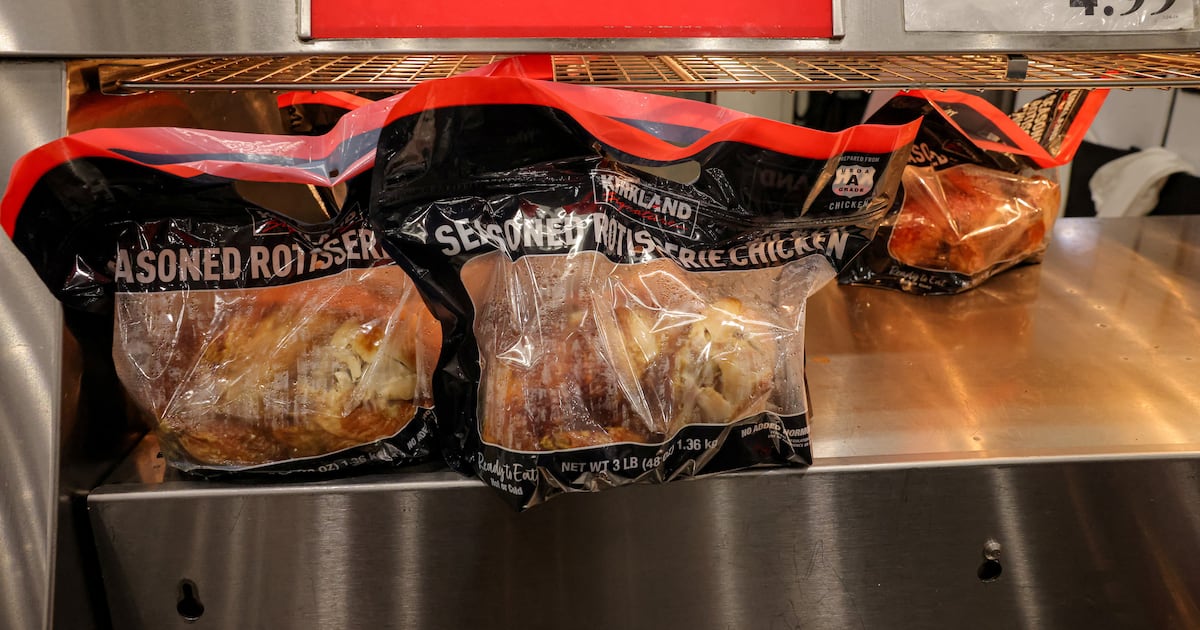
Costco is facing a lawsuit alleging that its labeling of chicken as "preservative-free" is misleading, raising potential legal exposure and reputational risk for the retailer. While the claims could result in regulatory scrutiny, litigation costs or consumer remediation if successful, the dispute appears to be a product-labeling legal matter that is unlikely to materially affect Costco's core fundamentals or revenue absent escalation into a large class action or regulatory sanctions.
Market structure: The lawsuit is a reputational/legal shock concentrated on COST and its private-label perishables; near-term winners are large omnichannel grocers (WMT, KR) and national poultry suppliers (TSN) that can emphasize transparent sourcing. Pricing power is unlikely to shift materially unless membership churn exceeds ~1–2% annually; expect volatile footfall/transactions in the first 4–8 weeks, then reversion. Cross-asset: expect small IV uptick in COST options (+3–6 vol points), negligible bond spread moves for investment-grade retail debt, and limited commodity impact unless recalls force supply adjustments.
Risk assessment: Tail risks include a class-action settlement >$500m or regulatory labeling changes that add 50–200 bps to grocery COGS industry-wide; both would be high-impact but low-probability within 12 months. Immediate (days) effect: small selloff (1–4%); short-term (1–6 months): legal fees, potential settlement pressure and media cycles; long-term (>12 months): minimal fundamental hit unless recall/regulatory cascade occurs. Hidden dependencies: supplier contracts, membership retention elasticity, and state AG investigations could amplify outcomes. Key catalysts: complaint filings, class-certification decision (30–180 days), SEC inquiry or recall announcements.
Trade implications: Tactical hedges favored over directional shorts. Buy limited-duration protection (3-month 5% OTM puts or tight put spreads) to guard 1–2% portfolio exposure; if COST stock drops >5% within 30 days, scale into a long position for a 12-month recovery thesis. Consider a relative trade: overweight WMT (2% OW) vs underweight COST (2% UW) for 3–6 months if COST underperforms by >3% over a two-week window. Options sellers can write 6–12 week covered calls if holding long-term exposure to monetize elevated premium.
Contrarian angles: Consensus likely overstates financial damage — historical “natural/preservative” labeling suits (Whole Foods, others) settled low relative to market caps (<$50m) and had limited share impact; if COST moves >5% on this news it may present a value entry. Unintended consequences include industry-wide labeling costs that could benefit vertically integrated producers (TSN) or premium-certified brands, creating asymmetric winners. If class-certification occurs, reassess within 30–90 days; absent that, expect mean reversion.
AI-powered research, real-time alerts, and portfolio analytics for institutional investors.
Request DemoOverall Sentiment
moderately negative
Sentiment Score
-0.30
Ticker Sentiment
