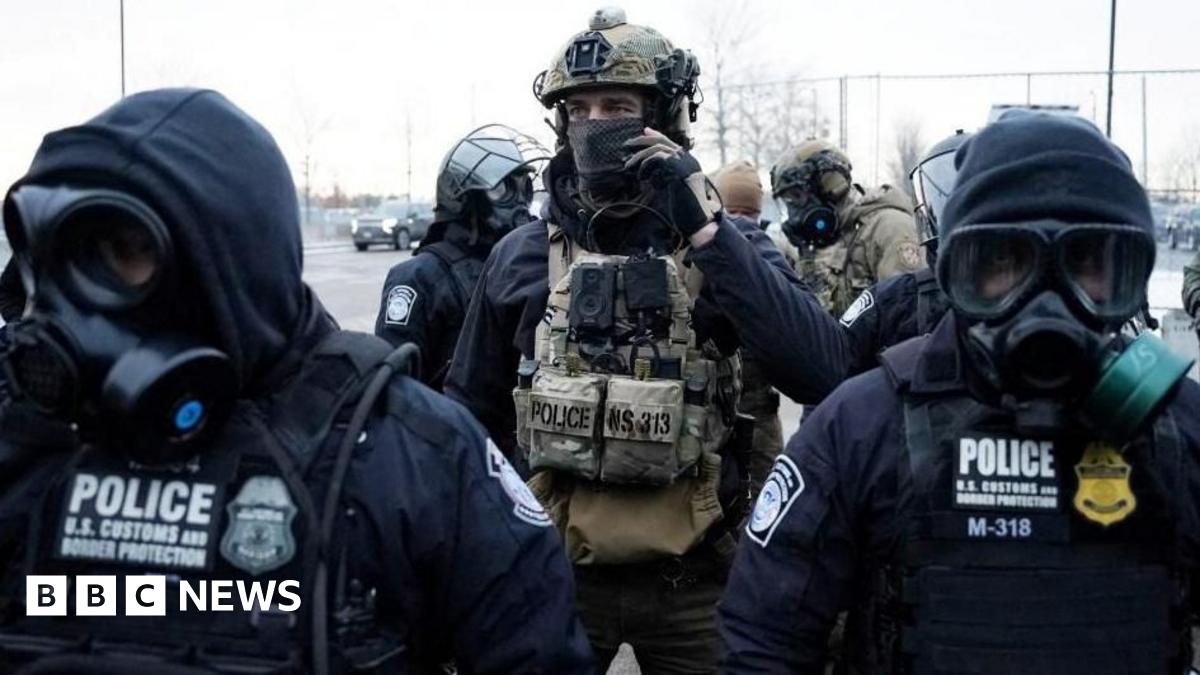
Approximately 1,500 soldiers from the 11th Airborne Division at Fort Wainwright, Alaska are on standby for possible deployment to Minneapolis amid continuing anti-ICE demonstrations sparked by the Jan. 7 shooting death of Renee Good. No presidential decision has been made; Minnesota's National Guard has been mobilised and a federal judge restricted certain ICE crowd-control tactics toward peaceful demonstrators, raising the prospect of prolonged civil unrest and heightened political and operational risk in the region.
Market structure: Domestic unrest centred on Minneapolis shifts demand toward public-safety, surveillance and short-term security services while depressing local consumer-facing revenues (hospitality, retail) for days-weeks. Expect modest relative winners among law-enforcement tech suppliers (AXON, PLTR) and short-term local revenue losers (regional retailers, tourism businesses) — large defense primes (LMT, GD) see little direct revenue change absent sustained federal procurement actions.
Risk assessment: Tail risks include escalation to multi-city unrest or a presidential order to federalize response, which could widen municipal credit spreads by 10–30bp and push a near-term equity volatility spike of 10–20% in regional names; immediate window is 0–14 days, medium 1–3 months for litigation/regulatory outcomes, long-term depends on policy shifts (6–24 months). Hidden dependencies: judicial limits on ICE crowd-control could reduce detention-related contracting (negative for GEO, CXW) even if ICE operations increase in volume.
Trade implications: Favor small tactical longs in law-enforcement tech and data analytics (AXON, PLTR) with 3–6 month horizons, hedge with short positions in private-detention operators (GEO, CXW) and local-exposed banks (USB). Use short-dated Treasuries/IEF as a low-cost hedge if deployment is announced; buy protective put spreads on regional bank exposure sized to 1–2% portfolio risk.
Contrarian: Consensus assumes temporary local disruption only; markets may underprice legal/regulatory drag on detention contractors and insurance losses. If protests trigger contract cancellations or heavier litigation, expect 15–30% downside in GEO/CXW over 6–12 months — conversely an absence of federal escalation should compress implied volatility and present short-vol opportunities in security-tech names that ran up.
AI-powered research, real-time alerts, and portfolio analytics for institutional investors.
Request DemoOverall Sentiment
mildly negative
Sentiment Score
-0.25
