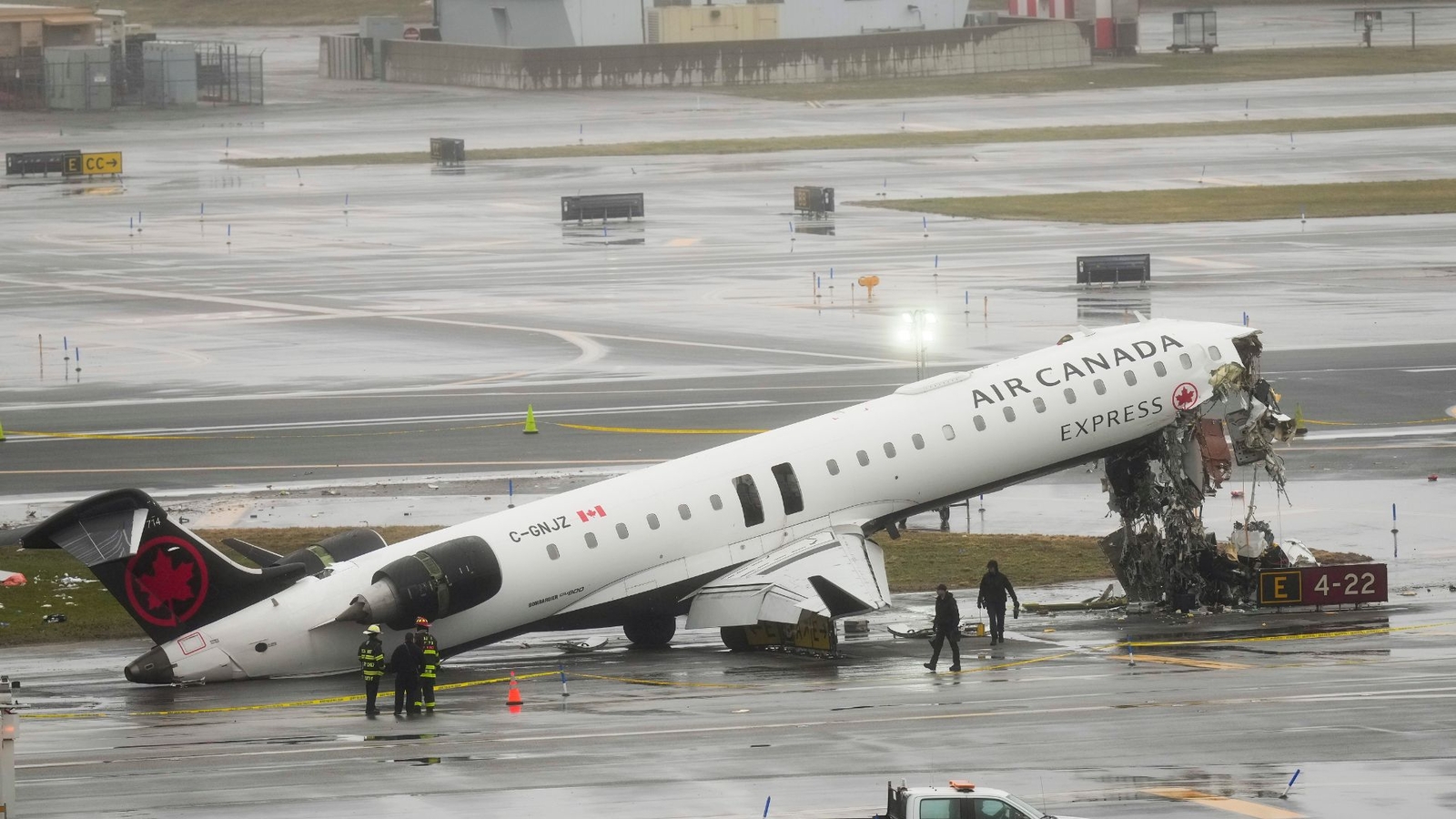
Cockpit voice and data recorders were retrieved from the Air Canada aircraft and sent to Washington, D.C.; a team of 25 NTSB investigators is on site. NTSB Chair Jennifer Homendy reported a "tremendous amount of debris" across taxiway and runway that could keep operations closed for days while evidence is collected. The NTSB and FAA are collecting surveillance video and Airport Surface Detection Equipment replay and will release verified staffing, communications and pilot background info on Tuesday.
This incident creates a concentrated, time-staggered shock: immediate operational disruption (days) from runway closures and investigation logistics, followed by regulatory and litigation pressure (weeks-to-years) once black box and ATC data are released. Expect a compressed window where incremental capacity reallocation benefits airlines able to deploy spare frequency/capacity into LaGuardia and nearby markets; that advantage will last only until schedules normalize (likely 2–6 weeks). Second-order cost hits that matter to Air Canada beyond ticket refunds: accelerated insurance claims and legal reserves, potential incremental training/crew-documentation costs, and mandatory equipment or procedure upgrades if ATC or vehicle protocols are implicated. These can represent a multi-quarter drag on margins — think low-single-digit percentage points of unit cost uplift over 6–18 months for the operator most exposed to the event. Insurers and airport contractors may also face claims and reputational effects that reprice coverage and service contracts. Competitive dynamics are nuanced: short-term ticket pricing power can swing to competitors with flexible transborder/NYC capacity, but persistent reputational damage or a finding of operational fault could cause corporate clients to reallocate share over quarters. Conversely, vendors that supply firefighting/ground-vehicle telematics, surface detection and cockpit-safety analytics stand to see step-change procurement cycles if the NTSB/FAA promulgate new requirements — a 6–24 month tailwind for specialist suppliers. Key catalysts and timeframes to watch: black box readouts and ATC audio within days (market-moving), NTSB preliminary staffing/causal statements in 1–8 weeks, and final probable cause in 9–18 months. Tail risks that would materially widen losses include criminal or egregious negligence findings, regulatory operational restrictions at major hubs, or multi-jurisdiction class actions; any of those would flip a short-term operational scare into a multi-year earnings hit.
AI-powered research, real-time alerts, and portfolio analytics for institutional investors.
Request DemoOverall Sentiment
neutral
Sentiment Score
0.00
Ticker Sentiment
