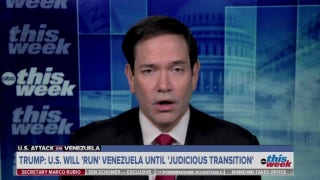
House Foreign Affairs Committee Chairman Rep. Brian Mast defended the Trump administration's targeted operation that captured Venezuelan leader Nicolás Maduro, arguing the action was carefully risk‑weighted and consistent with past narrowly scoped U.S. operations. Republican lawmakers cited legal precedent and the involvement of U.S. law enforcement to argue Congress need not be notified for arrests of indicted individuals, while Democrats criticized the operation as unlawful, raising questions about war powers and potential geopolitical risk that investors should monitor.
Market structure: A rapid, targeted removal of Maduro is a net-positive for U.S. defense contractors (Lockheed Martin LMT, Northrop Grumman NOC, Raytheon RTX) and private security/intel vendors; expect a 5–12% re-rating tailwind in a 1–3 month reaction if conflict-risk premium persists. Energy markets face asymmetric upside: a sustained Venezuelan export outage >200–300 kb/d should lift Brent $2–6/bbl within weeks and widen heavy/light crude differentials, benefiting midstream/diluent suppliers (ENBL/ENLC-type names) and U.S. shale producers that can scale within 1–3 quarters. Financials: EM risk premium likely ticks up short-term (EEM underperformance, LATAM sovereign CDS wider), driving modest USD strength and a 5–15 bps rise in 10y UST if risk-off extends beyond 48–72 hours.
Risk assessment: Tail risks include retaliatory asymmetric attacks (cyber, maritime) or a geopolitical escalation involving Russia/Iran that could push Brent +$10–15 and VIX +10–20 points — low probability but >$50bn market-cap shock to cyclical sectors. Immediate (days): volatility spikes and asset repricing; short-term (weeks–months): supply-chain and insurance costs adjust; long-term (quarters–years): potential shifts in defense budgets and energy sourcing. Hidden dependencies: Chinese/Russian leverage in Venezuela, insurance/shipping re-routing, and U.S. legal/legislative pushback that can reverse policy within 30–90 days. Catalysts: OPEC supply moves, congressional rulings, or confirmed disruption to exports >200 kb/d.
Trade implications: Tactical: establish 2–3% long positions in LMT and RTX for a 3–6 month horizon, funded by a 2% trim in EEM; size options as overlays — buy 3-month ATM call spreads on XLE (buy ATM, sell ATM+10%) sized 1–2% of portfolio to express oil upside while limiting premium. Fixed income: go 1–2% long TIPS or gold (GLD 1%) as inflation/flight-to-safety hedge if Brent >+$5 within 30 days. Credit: buy 3-month put spread on EEM (delta ~-0.25) or long EMB protection if LATAM CDS widen >50 bps.
Contrarian angles: The market may overpay for a sustained defense/energy rally; historical parallels (Panama 1990) show short-lived commodity spikes and limited long-term defense revenue growth absent prolonged conflict — trim if LMT/RTX rally >12% in 2 weeks. The legal/political backlash could constrain follow-on operations, reducing medium-term program wins; conversely, an underpriced scenario is specialty energy names that service heavy crude (diluent providers, cokers) which can see 20–40% upside if Venezuelan heavy flows stay offline for multiple quarters. Monitor fast-moving legal rulings and shipping-insurance spreads for reversal signals within 5–30 days.
AI-powered research, real-time alerts, and portfolio analytics for institutional investors.
Request DemoOverall Sentiment
neutral
Sentiment Score
0.00
