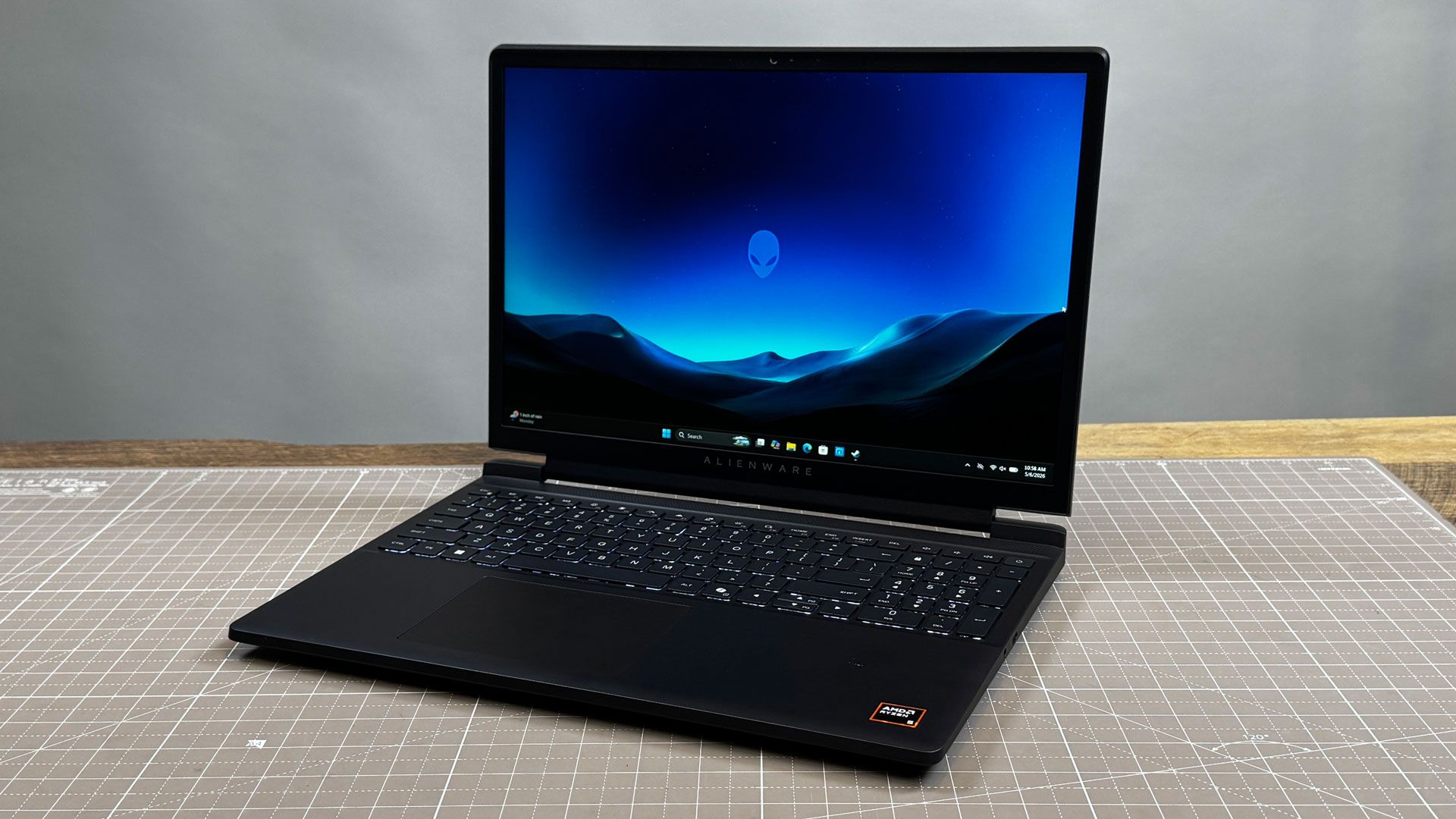
Alienware’s new 15-inch gaming laptop starts at $1,299 in the U.S. for a Ryzen 5 220, 16GB RAM, 512GB SSD, and RTX 4050 configuration, with Intel variants starting at $1,349. Dell is clearly targeting a broader mainstream audience, but the trade-off is older CPU/GPU options, a plastic chassis, and a dim 300-nit display that may weaken the premium Alienware brand. Higher-end trims rise to $2,299 for an Intel Core 7 / 32GB / 1TB / RTX 5060 model.
This is less a hardware launch than a brand-positioning test: Dell is trying to extend Alienware downmarket without collapsing the pricing power that justifies the halo. The risk is that the first-order volume lift in entry gaming notebooks is offset by a second-order brand dilution effect, where Alienware becomes harder to distinguish from mainstream Dell SKUs and loses the premium conversion engine that supports higher-margin peripherals and desktop upsell. The most important competitive dynamic is not against other gaming brands, but against the used/refurbished and prior-gen clearance market. A $1.3k starting price with constrained memory/storage and entry-tier graphics competes poorly with channel-discounted last-gen machines that can offer materially better specs for similar money, which can cap sell-through and force promotional intensity within 1-2 quarters. That also makes the launch more of a margin-management story for Dell than a true unit-growth catalyst. For AMD and INTC, the mix is mildly negative because the product uses “good enough” mobile CPUs to meet a price target rather than to showcase performance. The bigger issue is that this design signals OEMs are still willing to trade down on silicon quality to preserve ASPs, which is bad for attach rates and likely keeps notebook CPU pricing competitive through the back half of the year. For NVIDIA, the 6GB VRAM ceiling is the real choke point: it risks creating an underwhelming user experience that weakens upgrade satisfaction and compresses replacement cycles rather than expanding the gamer base. The contrarian angle is that the market may be over-focusing on the headline price and underestimating how much promotional flexibility Dell has left. If this becomes a back-to-school or holiday-driven doorbuster, the true launch price could be several hundred dollars lower, which would turn the product from brand dilution into a competent acquisition funnel. In that scenario, the short-term noise is negative, but the longer-term strategic value is a broader funnel into Dell’s gaming ecosystem.
AI-powered research, real-time alerts, and portfolio analytics for institutional investors.
Request DemoOverall Sentiment
mildly negative
Sentiment Score
-0.15
Ticker Sentiment
